North Carolina upgraded its crime victims’ rights law, but complaints persist
Every six months, Gloria Williams searches for peace while standing at her son’s roadside memorial, cars roaring past her on Durham’s Interstate 40.
On a still-dark February morning in 2022, a driver missed the curve on the Interstate 540 exit, launching his orange Dodge Challenger off the raised ramp.
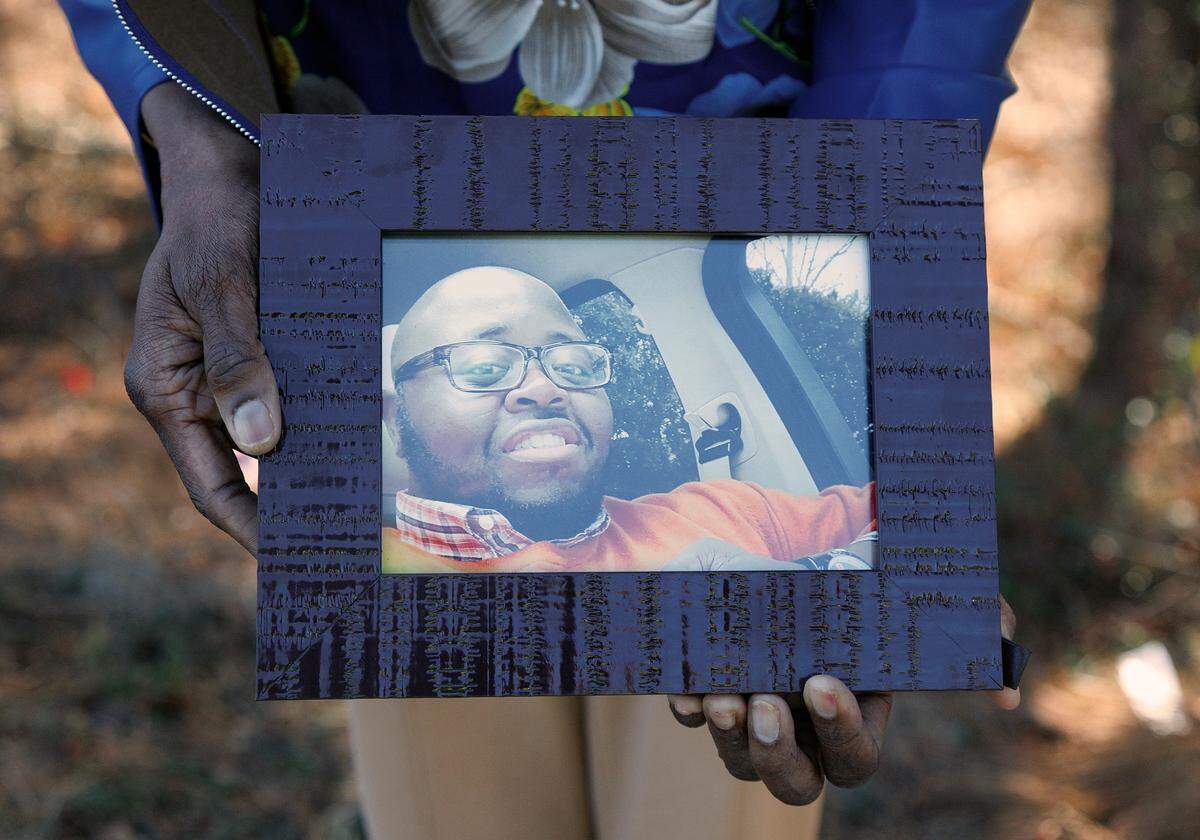
Timothy Hall Jr. was yanked from the passenger seat as the car flew down a wooded hill. Williams’ oldest son was pronounced dead where he landed at age 32. The driver was drunk and on prescription drugs, according to court documents.
The loss transformed Williams, 54. More than 120 pounds fell off her tall frame. It’s not just grief that haunts her. Her experience with the criminal justice system hurt her too, she said, especially encounters with prosecutors who she and a victim’s advocate say refused to update her on the driver’s criminal case and was unsympathetic when she asked questions.
“I am his mother of 32 years,” she said, still questioning months after the case was closed in November.
North Carolina voters in 2018 amended the state constitution to expand and upgrade the rights of some of the 400,000 people who become crime victims each year in this state, which went into effect the following year.
More than five years later, many prosecutors across North Carolina describe improved relationships with victims, who better understand what they are entitled to.
But some victims say they are still excluded and mistreated, as several conflicts that unfolded in the Durham County Courthouse in recent years make clear.
Act requires prosecutors to reach out
Requiring law enforcement agencies to engage with victims wasn’t new to the North Carolina constitution, but the amendment brought an upgrade and an expansion.
The 1998 North Carolina Crime Victims’ Rights Act directed prosecutors, police and others to treat victims of crimes in North Carolina with dignity and respect and to notify them when criminal cases were close to concluding.
The 2018 amendment ingrained new requirements amid a national wave of victims’ rights legislation, known as Marsy’s Law.
The amendment clearly maps law enforcement’s, court officials’ and prosecutors’ responsibilities. For prosecutors, that includes informing victims before each hearing, providing information about crimes and allowing them to present views and concerns.
In Durham, victims who believed prosecutors have not met those responsibilities have turned to nonprofits such as Mothers Against Drunk Driving, local judges and the North Carolina State Bar to hold prosecutors accountable.
One of those individuals survived a rape many years ago in Durham. The News & Observer, which rarely names the victims of sex crimes, is referring to her as L.S.
In early 2022, L.S. opened a letter from a nonprofit agency at her out-of-state home.
It said the man convicted of assaulting her in 1972 claimed he was innocent and he sought assistance from a North Carolina nonprofit with having his assault with intent to commit rape conviction overturned. That was startling and odd, she said, because a jury convicted David Felton of first-degree rape before sentencing him to life in prison.
As the trauma came flooding back, L.S. set out on a fact-finding mission. When she called the North Carolina Victim Assistance Network, she learned that Felton’s charge had been downgraded before he was released from prison.
In an effort to address a life sentence for a rape charge, which is extreme compared with modern sentences, Durham County District Attorney Satana Deberry’s office had downgraded the charges.
L.S. ultimately understood why prosecutors changed the charges, she said, but was angry she had not been notified before or after the sentence change happened.
She filed a complaint with the state bar against Durham Assistant District Attorney Michael Wallace, the prosecutor who helped downgrade Felton’s conviction.
Deberry argued then — and argues now — that victims’ rights requirements don’t apply to the 1972 crime. But that didn’t stop the state bar from issuing an “admonishment,” describing Wallace’s failure to make “reasonable effort” to notify a victim as a violation of attorney’s Rules of Professional Conduct.
Deberry’s office enlisted training after L.S. and three other victims said prosecutors didn’t notify them before a conviction was downgraded, she told The News & Observer in 2022. But complaints continued.
‘Feeling frustrated and not heard’
Deberry emphatically denies that her office violates victims’ legal rights or otherwise fails them.
The office closes 30,000 cases per year. Prosecutors meet with families of homicide victims four times a year. Deberry makes herself available to victims and family “24/7,” she says.
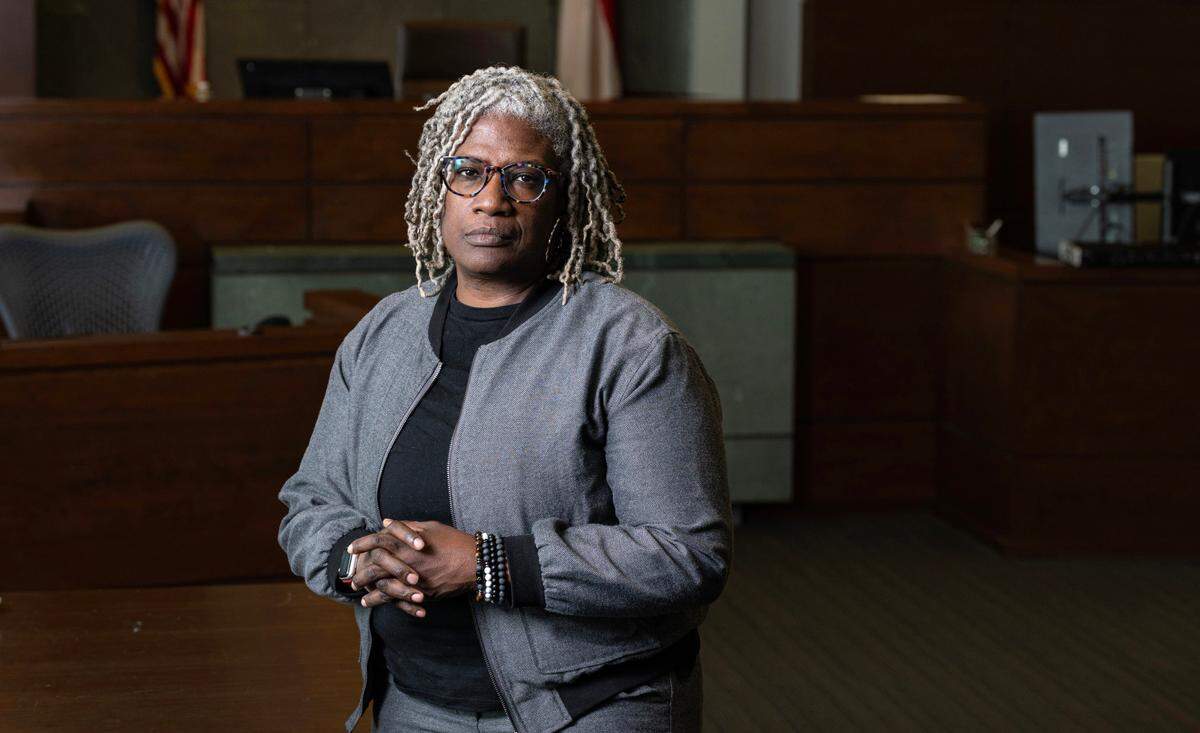
“People come here and sit in this room literally every day and talk to me after they’ve talked to their ADA, after they’ve had the legal assistance if they’re upset with plea bargains or if they’re upset with the trial,” Deberry said during a recent interview at the Durham County Courthouse.
“The idea that we are not responsive to victims to me is an attempt to call into question my character and my integrity and my ability to do this job,” Deberry said.
But other victims of crimes and their families — in interviews, formal complaints and filings to judges — say they weren’t treated with dignity and respect by Durham County prosecutors, which the constitutional amendment requires.
Or they weren’t informed of their rights, given information describing criminal court works or given the opportunity to give a victim impact statement, which are also required.
Leaders with MADD, which works closely with grieving family members in North Carolina, say they’ve seen problems in Durham.
“I’m concerned that our victims are feeling frustrated and not heard by that district attorney’s office, in particular,” said Emily Ferraro, interim director of MADD’s North Carolina affiliate. “They feel that it’s difficult to have a voice in the process, despite it being one of the rights that they do have.”
Motion to enforce victims’ rights
Under the amendment, people who believe a prosecutor violated their state constitutional rights can file a written complaint with the District Attorney’s Office.
If they are unsatisfied with the DA’s response, they can then also file a motion asking a judge for a hearing.
Three people turned to the new process and successfully got the two cases before a judge in November, marking the first two victims’ rights hearings in Durham, according to interviews.
One hearing involved a woman, who asked not to be identified by name, who sought in December 2023 a temporary restraining order against a man she had dated and then presented evidence to police for a felony charge of assault by strangulation.
The prosecutor dismissed the case without informing the woman of her rights, refused to take her statement or review evidence, and prevented her from talking in court, the woman said.
The prosecutor told the woman that she planned to take steps to move the case to superior court, but the woman didn’t believe her because the prosecutor expressed concern about perceived weaknesses in the case and wouldn’t share plans about future actions, the woman said.
“My rights as a victim were blatantly, intentionally, and repeatedly denied,” the woman’s filing reads.
District Court Judge Carol Jones ordered Deberry during that Nov. 19 hearing to comply with the victims’ rights act, provide the woman information about her rights, and allow her to file a victim’s impact statement.
Deberry said in court there hasn’t been a final disposition in the woman’s case, and it has been dismissed from district court for an indictment in superior court.
After the hearing, the woman received an envelope with an impact statement form and information from the district attorney’s office, she said. She later sent in a victim’s impact statement. But she did not hear back from the office, she said.
Those landing hearings don’t always win
In a second hearing, Bahjat Marayati, a local researcher, walked up to the witness chair and testified that in January 2024 he and his wife drove to see a Durham magistrate in an effort to end their neighbor’s alleged harassment.
The magistrate issued misdemeanor criminal charges for assault, stalking, injury to property and trespassing.
In May 2024, the couple met with Assistant District Attorney Monica Burnette, who assured them that the case wouldn’t be dismissed and that they would be kept informed, he said.
“Miss Monica Burnette was the most reasonable person that I’ve met in my life, and she promised to restore peace, in her words, to restore peace to the neighborhood, and that’s the goal of the DA’s office,” Marayati testified in the hearing.
But after that meeting, the neighbor’s behavior seemed to be escalating, Marayati testified. His attorney learned another prosecutor dismissed the case seven days after the couple had met with Burnette.
The attorney argued that prosecutors violated the couple’s rights by not providing information about the Crime Victims’ Rights Act, as well as by not notifying them of the dismissal.
Burnette testified she did intend to keep the couple informed but another prosecutor dismissed the case without her knowledge.
Deberry argued that prosecutors did notify the couple of one hearing and sent a letter within 30 days of the dismissal.
The judge ultimately agreed with Deberry’s arguments. The law says victims need to be informed prior to hearings but not dismissals.
“I know in a perfect world that would have been nice,” the judge said.
‘Just kindness. That could have helped her.’
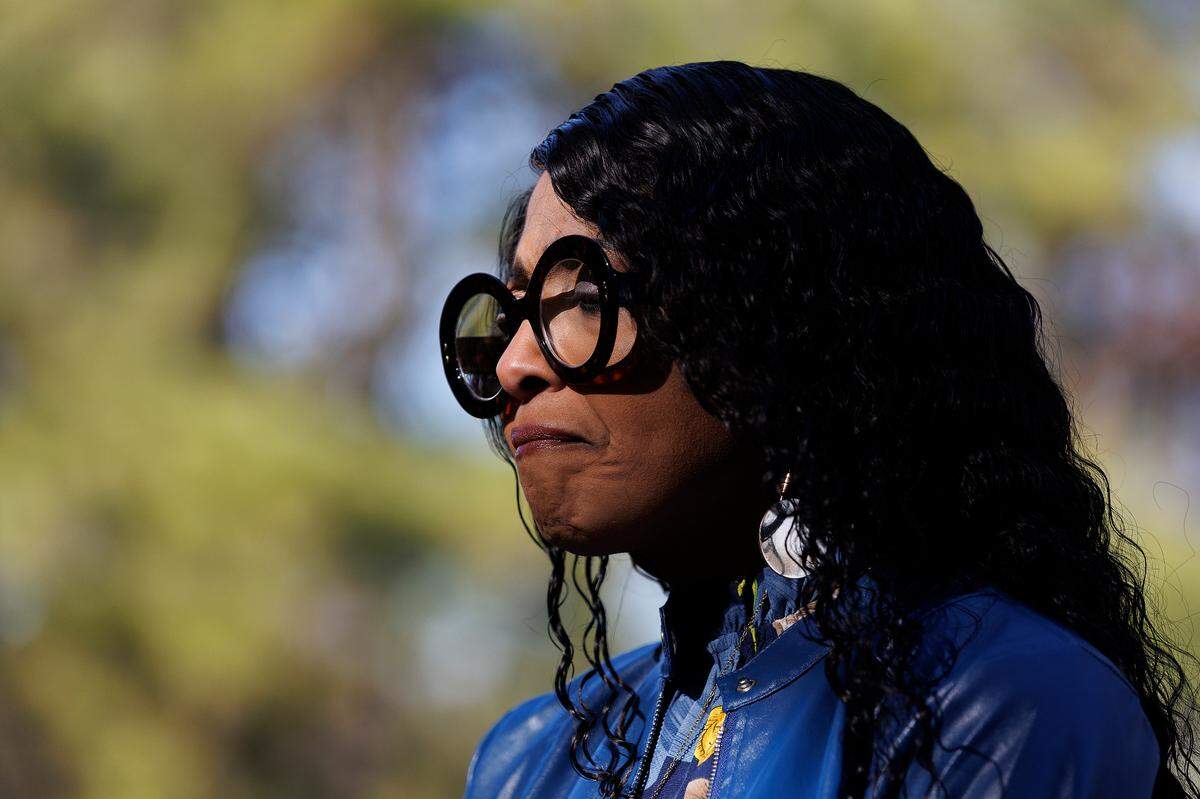
Gloria Williams, the mother who lost her son in the I-40 car crash, didn’t file formal complaints, but she linked arms with MADD when she concluded she wasn’t being treated fairly.
A few months after the March 2022 crash, Assistant District Attorney Dale Morrill met with Williams, Hall’s widow, his father, his brother and Ollie Jeffers of MADD via a Zoom meeting.
Morrill told them he would keep everyone involved and informed, Williams and Jeffers said.
But Morrill retired about a year later. When Burnette took over, Williams said she called and called Burnette, trying to learn about next steps.
When Williams approached Burnette after a hearing in the courtroom, she said, the prosecutor told her that she only had to share information with Hall’s widow and not the rest of the family.
Typically, the wife would share information with the rest of the family, but Hall’s wife and other families weren’t talking to each other, according to interviews.
The law does indicate that a deceased crime victim’s spouse is considered the victim, but other prosecutors typically use a broader interpretation and try to help other family members, Jeffers said.
Deberry said that MADD’s criticisms are inaccurate. Her office still notified all members of Hall’s family about pending hearings and invited them to speak at the sentencing, she said.
“They went above and beyond,” Deberry said about her staff’s interaction with Williams and her family.
Williams and her younger son, Johnathan Hall, insist they were left in the dark. Hall, a principal in the Atlanta area, said he was coming to Durham for every court hearing, never knowing if it would be a continuance or if something substantial would happen, he said.
Jeffers said Williams would call her in tears from the frustration of not knowing what was happening during the prosecution.
In November, Jamez Hoke pleaded guilty to felony death by motor vehicle and was sentenced to 75 days in prison after participating in a restorative justice program.
Williams is still grieving. On each visit to a memorial at the site of where her son was killed, she and her husband bring a freshly painted white cross covered in flowers to replace older ones, which turn black from road dust.
“Just kindness, that could have helped her,” Jeffers said of what she saw Williams experience while trying to track developments in the criminal case. “It would have been so much better than not telling her anything or being disrespected.”
Virginia Bridges covers criminal justice in the Triangle and across North Carolina for The News & Observer. Her work is produced with financial support from the nonprofit The Just Trust. The N&O maintains full editorial control of its journalism.
This story was originally published April 16, 2025 at 5:30 AM with the headline "North Carolina upgraded its crime victims’ rights law, but complaints persist."