
After Helene left her home unlivable, FEMA trailer is lifeline for Black Mountain woman
FEMA money, private insurance payouts and lots of private donations have helped many of the thousands of people displaced after Helene’s historic destruction in Western North Carolina. The state expects $1.4 billion in federal block grants will in time serve as last-resort aid for disaster repairs, most of it for housing.
For now, many people are still not back at home, including Karen Kumle Schmid.
Karen Kumle Schmid is grateful to FEMA.
To see how much the federal disaster relief agency has helped many whose homes were damaged by Helene, people need only consider her own experience, she said.
Up until Sept. 27, Schmid lived in what she fondly calls her “shanty” — a one-room log cabin in Black Mountain built by family members and a family friend.
Helene’s winds damaged the door and roof and toppled the metal flu pipe that vented the wood stove. As a result, the house was badly flooded. The storm also carved ruts in her driveway and muddied the spring she relied on for drinking water.
FEMA proved to be a lifeline. Schmid spent much of her time after the storm in hotel rooms in Charlotte, Marion and Asheville, with FEMA paying the cost through its Transitional Sheltering Assistance program.
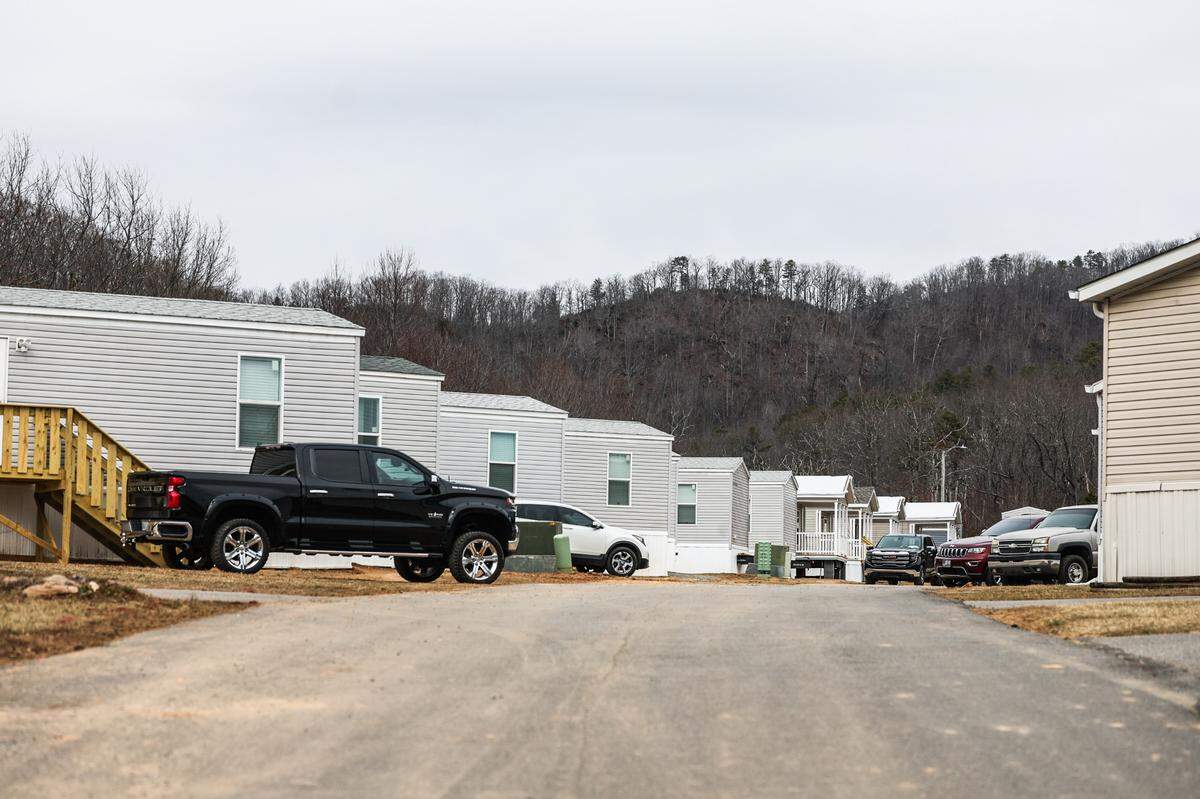
But after months of living in hotels and with family and friends, Schmid needed a place she could call her own. In late January, FEMA provided that, handing her the keys to a temporary trailer at a quiet mobile home park in Black Mountain.
A gourmet cook, she now has a place where she can cook for herself and enjoy some time alone.
‘It’s all I need’
Perched on a steep hill just north of Interstate 40, Schmid’s tan-walled trailer is eight feet wide and a bit longer than a school bus. It came furnished with a small dining table, a dresser and a full-size mattress. It’s about 15 miles from her house and FEMA says she’ll be able to use it until March 2026.
“It’s basically a hotel room with a kitchen,” said Schmid, 63, who has been unable to work for years because of a knee injury she suffered during her previous work for the U.S. Forest Service. “It’s small but it’s all I need.”
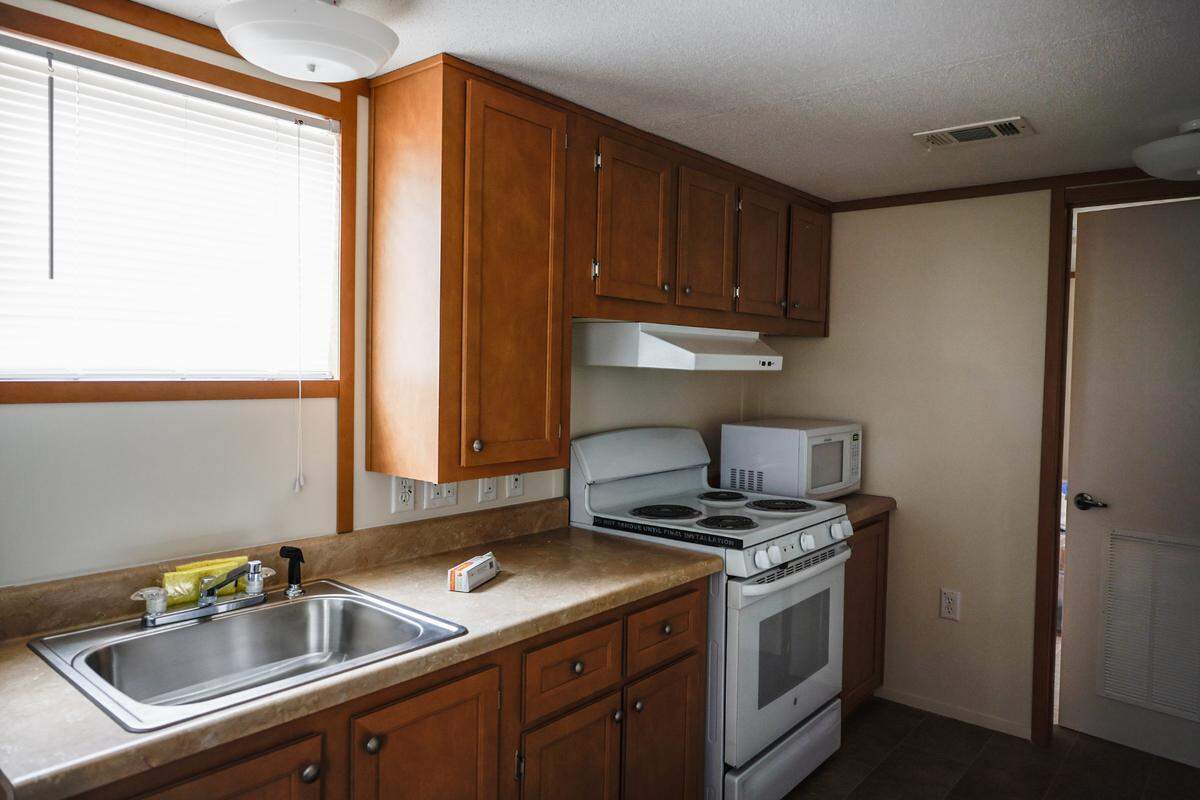
As she sat on the camel-colored loveseat that also came with the trailer, she reflected on what her new temporary home means to her as she works on getting her cabin repaired.
“It’s just a space I don’t have to share with anybody else,” she said. “I can just be here and focus on what I need to do to get my place back in order.”
Others contend FEMA has taken too long to make trailers like these available to people who need them. As of Feb. 19, FEMA had set up trailers and other short-term living spaces for 175 displaced families in North Carolina. Twenty six of those — including Schmid’s — were at the Laurelwood mobile home park.
Schmid says she has also received financial assistance from FEMA — about $12,000 to repair damage to her house and cover other expenses. She’s grateful.
“I think they’ve been great,” she said of FEMA. “It’s been irritating to see the negative stuff people were saying.”
This story was originally published March 19, 2025 at 5:00 AM.
.JPG)