‘I don’t feel like I have a home’. Family still in donated trailers months after Helene
FEMA money, private insurance payouts and lots of private donations have helped many of the thousands of people displaced after Helene’s historic destruction in Western North Carolina. The state expects $1.4 billion in federal block grants will in time serve as last-resort aid for disaster repairs, most of it for housing.
For now, many people are still not back at home, including Delia Lytle Bayley and her family.
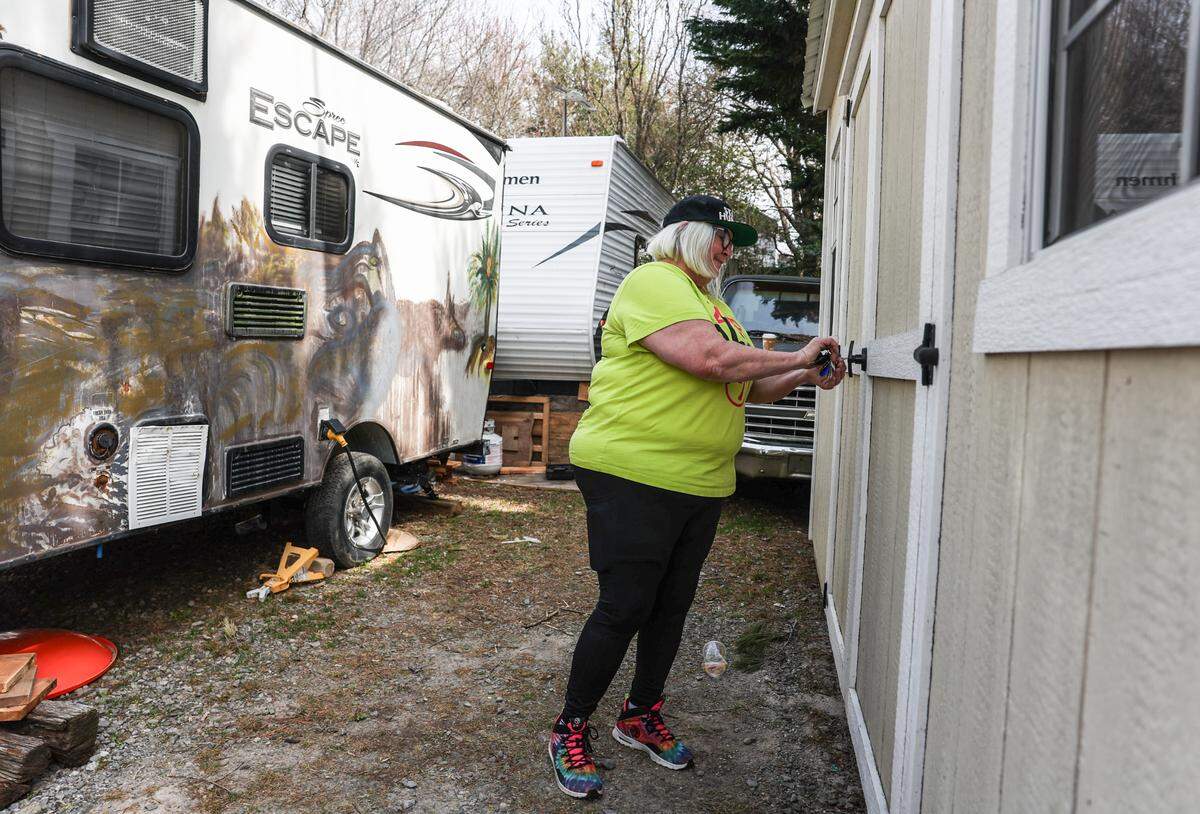
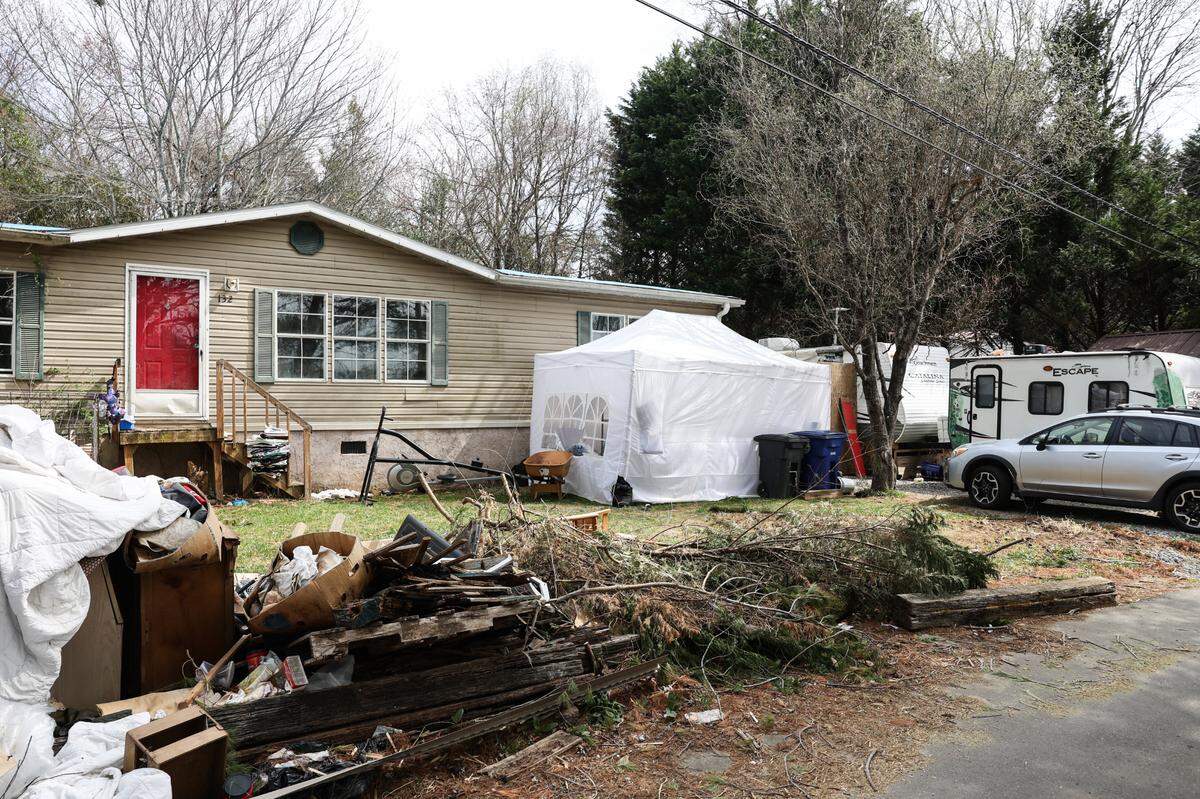
Since Helene’s floods wrecked her family’s mobile home in Black Mountain, Delia Lytle Bayley has been living with her husband and 16-year-old son in two donated trailers on their front lawn.
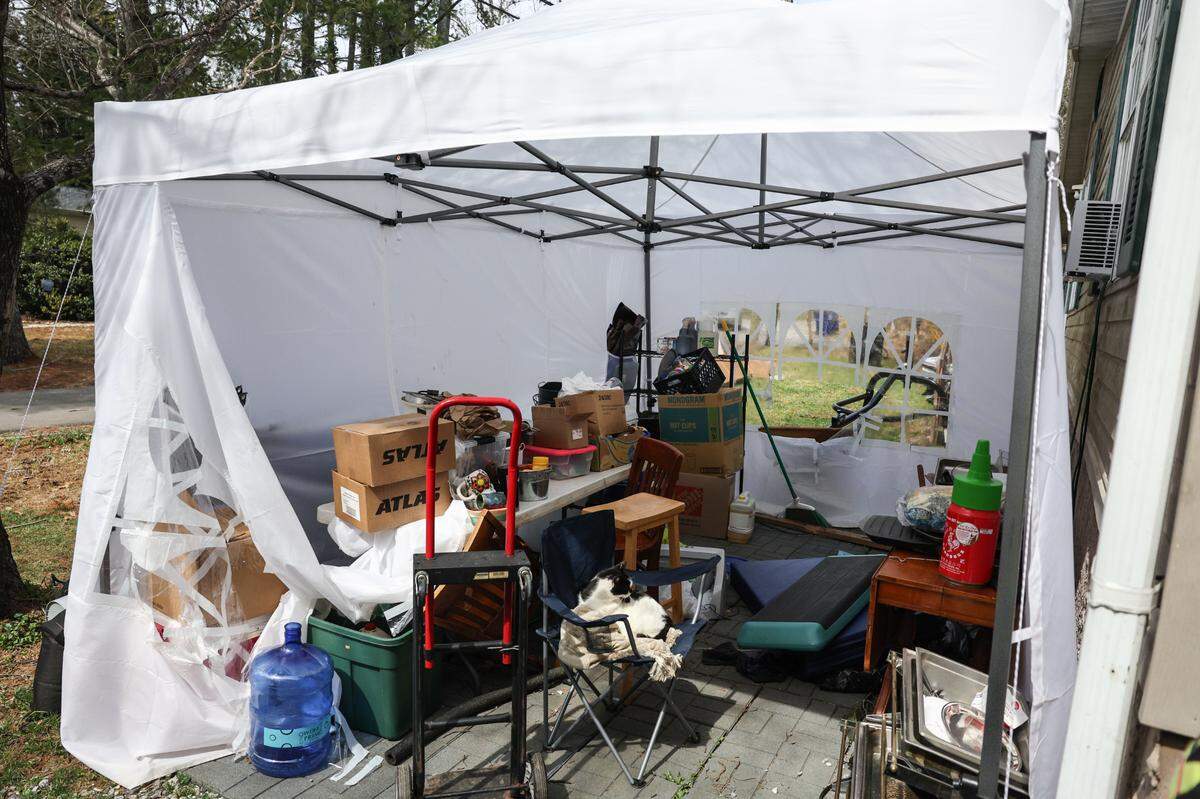
They can use water and electricity on the property, but there’s no hot water. The makeshift kitchen they set up under a tent wasn’t practical in the cold weather so they created another in a shed. It’s been difficult, especially for Bayley’s son, who has autism and struggles with change.
“When you’re a teenager, especially when you have special needs, you just want your house. You just want your home. You don’t understand what is happening and how these processes work,” she said.
At the same time, Bayley has spent at least four hours a week — and around 25 hours some weeks — working on paperwork and speaking with her insurance company and Federal Emergency Management Agency staff trying to get help to replace the double-wide home.
“I’m not stupid, I know a lot of resources and things, but I can tell you that there are people that just really don’t know how to navigate the system, and they’re not doing too well,” she said.
FEMA gave her an initial $750 emergency stipend, a few thousand dollars for temporary housing and $10,000 to repair her home, she said. But inspectors determined the home was uninhabitable because it shifted off its foundation and filled with mold.
When Bayley asked FEMA if she would be allowed to spend the $10,000 toward replacing her home, she heard mixed messages from various FEMA representatives, she said. Some said they didn’t know and others told her not to spend the money because she would be asked to return it.
Her appeal to FEMA to receive money to compensate for the loss of her home is still processing, she said.
Bayley’s also been approved for a Small Business Administration loan of $37,000 after weeks of documents and paperwork, but that won’t be enough to replace her double-wide. It will cost around $10,000 to tear it down, Bayley expects she will need to take out another $150,000 loan to replace her home.
“It’s exhausting,” she said.
Amid the struggle of daily life, Bayley’s husband, who developed heart failure last year, had to have surgery for a hernia at the end of January. Luckily, he works in the kitchen in a nearby hotel and was able to stay there while recovering, she said. She couldn’t imagine how he could heal in the trailers, she said.
It could take over a year to replace her home, even if she’s approved for the loans she needs, Bayley said. In the meantime, she’s just trying to get through each day.
“This thing of not having a house is dragging on,” she said. “I’m hoping, I’m really hoping and hoping that I’m near the end of the nightmare.”
This story was originally published March 19, 2025 at 7:00 AM.