Peak cicada season is coming to NC. When should you prepare for the noise?
AI-generated summary reviewed by our newsroom.
- Annual cicadas emerge in NC during July and August, drawn to deciduous trees.
- Cicadas use loud mating calls reaching 90 decibels, but pose no harm to humans.
- Cicadas feed on tree roots early in life; adult phase lasts two to four weeks.
North Carolina is in the middle of a hot summer, which means it won’t be long before annual cicadas make their first appearance of the year to serenade us with their never-ending songs.
Annual cicadas, sometimes referred to as “dog day” cicadas, usually emerge in July and August every year, Chris Hayes, an extension associate of structural pest management at NC State University who specializes in educating the pest management industry on critter habits, previously told The Charlotte Observer.
Their loud calls might be irritating, but there’s a purpose behind all that buzzing.
Here’s what to know about annual cicadas – and whether they pose any real threat.
Where are annual cicadas found in NC?
Cicadas begin life as eggs laid in twigs and usually stay near their birthplace as juveniles, Hayes said. After hatching, they drop to the ground and burrow into the soil to feed on plant roots.
“They can actually go up to eight feet into the soil underneath those plants,” Hayes explained. “And typically, what baby cicadas will feed on is roots. They’ll pierce and suck fluid and nutrients from the roots that they develop.”
Annual cicadas prefer deciduous hardwood trees like ash, elm, maple, and oak, according to the N.C. State Extension, but Hayes said once they can fly, they may turn up almost anywhere outside.
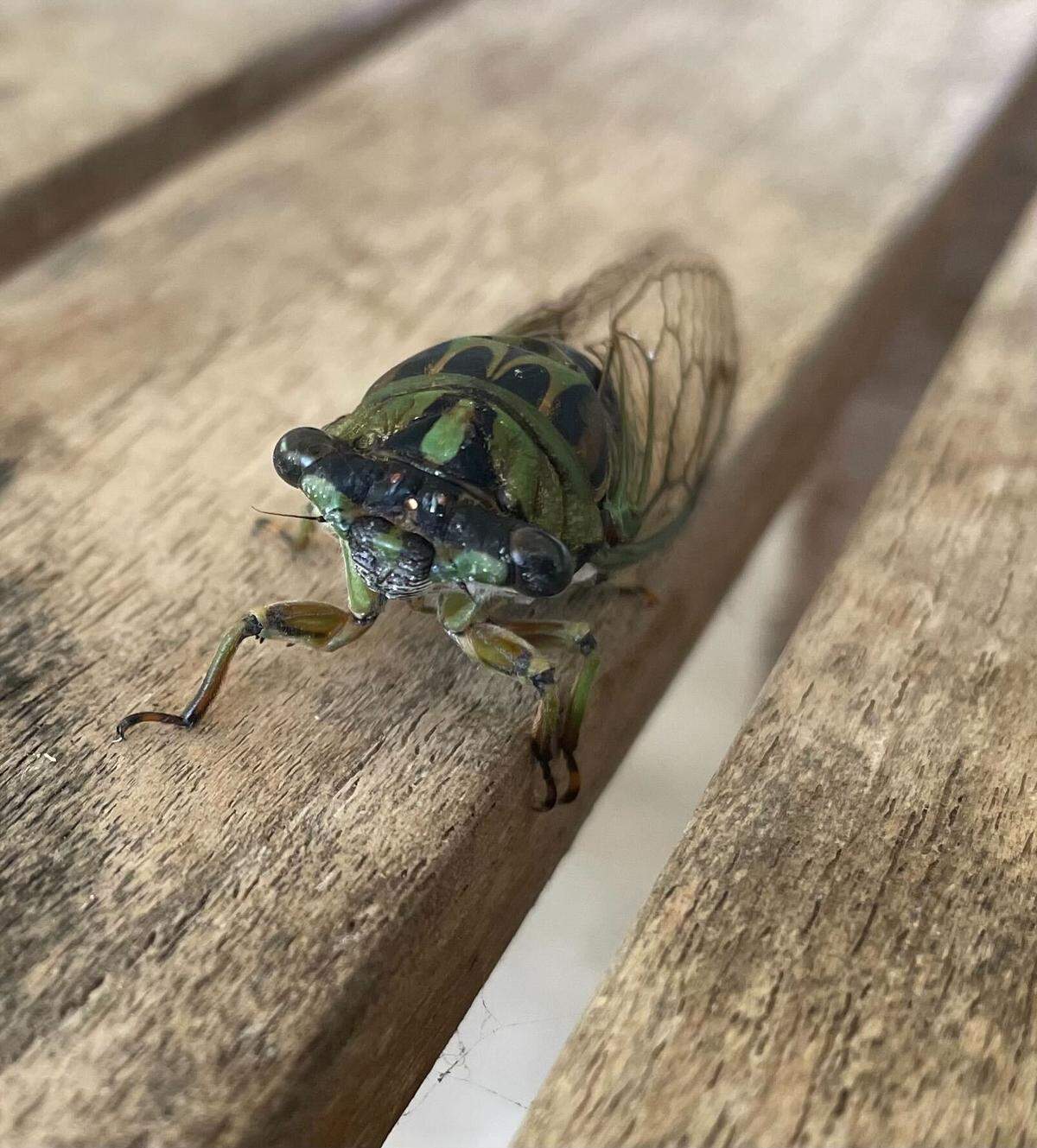
What do annual cicadas look like?
Annual cicadas typically have green bodies with black markings and are larger than periodical cicadas, Hayes said.
He noted they’re noticeably bigger than Brood XIX cicadas, which emerged in North Carolina last year after 13 years underground.
Why do annual cicadas “sing?”
Cicadas sing primarily to attract mates, Hayes said.
“They are actually one of the loudest insects in the world,” he explained. “The females are totally silent, and they will go to the males who are singing the song.”
According to the U.S. Department of Health and Human Services, their calls can reach up to 90 decibels – about as loud as a lawn mower or motorcycle.
Hayes described the sound as “an alien spaceship from an old movie” and said each male has a unique song to attract females.
“It would be like if a woman was attracted to a specific type of cologne,” Hayes said. “A lot of insects use this system that they make these very small changes in pitch or in tone or in frequency to their mating calls, and they can tell it’s a completely different species. They’re speaking a completely different language.”
Are native NC cicadas dangerous?
North Carolina’s annual cicadas aren’t typically considered pests, though they can harm trees by feeding on their roots, Hayes said.
“If it’s a strong tree, they’re not going to bother it. But they can cause damage to trees over time depending on the size of the brood that’s feeding on them,” said Hayes, adding that cicadas rarely enter homes, so infestations aren’t a concern.
He added that cicadas rarely enter homes, so infestations aren’t a concern.
“They can be scary because of how loud they are and unexpected, but they are totally harmless,” Hayes said. “You could pick one up and hold it in your hand all day, and all it would do is buzz or scream at you to let it go.”
How long do cicadas stay around?
When they emerge from the soil and become adults, the insects stick around for only a few months, N.C. State Extension says.
Adult cicadas live for two to four weeks, according to Ohio State’s extension office.
What about periodical cicadas?
Unlike annual cicadas, periodical cicadas, represented by “broods,” emerge every 13 or 17 years, according to the N.C. State Extension.
This year’s brood, “Brood 14,” emerged in April and May, Matt Bertone, an entomologist and director of the N.C. State Plant Disease and Insect Clinic, said.
After this summer, the next brood of periodical cicadas isn’t scheduled to arrive in North Carolina until 2030, Bertone said.
This story was originally published June 23, 2025 at 12:38 PM.