These sharks frequent NC beaches. Know which ones bite & how to avoid them
AI-generated summary reviewed by our newsroom.
- North Carolina waters host at least 14 shark species, varying by region and season.
- Bull sharks cause most local bites due to size, aggression and fresh water access.
- Avoid shark encounters by steering clear of fishing areas and swimming in groups.
On any given day during summer months, North Carolina’s coastal waters could be filled with sharks looking for their next meal.
Most sharks aren’t anything to worry about (and don’t want to make you their dinner), though bites occasionally happen.
A swimmer was recently bitten at Sunset Beach in May, The Charlotte Observer previously reported. The Sunset Beach Fire Department later said in a statement that marine life, including sharks, are natural inhabitants of our nearby waters, and it’s crucial to take precautions to minimize potential risks.
Here are some of the sharks you could run into at North Carolina beaches and how to avoid bites.
Sharks at NC beaches
According to the North Carolina Sea Grant, an organization that advocates for healthy aquatic life in the state, there are at least 14 shark species that can be found in the state’s waters.
The types of sharks you could encounter in the water largely depend on what area you’re in, Larry Cahoon, a marine biology professor at the University of North Carolina at Wilmington, told The Charlotte Observer.
“We see great whites offshore occasionally but essentially never right off the beaches,” Cahoon said. “Tiger sharks also occur offshore and rarely near the beaches. Inshore waters typically have blacktips and some bull sharks, along with smaller species like dogfish and bonnetheads.”
Some shark species can be found in North Carolina’s sounds and oceans, while others rarely venture into the state’s estuaries, the North Carolina Sea Grant says.
Sharks in NC sounds
According to the North Carolina Sea Grant, the following sharks can be found in North Carolina sounds and estuaries:
Atlantic sharpnose: Among the most common in North Carolina’s coastal waters, especially in summer and fall, with adults reaching 4 feet and pups often found in southern sounds used as nurseries.
Blacktip: Often 6-8 feet long, these sharks are fast predators found in the state’s ocean and sound waters from late spring to fall. They’re also known for leaping while feeding and sought out by anglers for their strong fight.
Bonnethead: Closely related to the hammerhead, these sharks can grow up to 5 feet long, and they’re found near beaches and in southern North Carolina sounds. They use their rounded heads to hunt crustaceans like blue crabs.
Bull: These sharks, which can grow more than 10 feet long, are powerful apex predators found throughout the state’s coastal rivers and sounds. They’re able to tolerate fresh water and known for attacking large prey, including fish caught by anglers.
Smoothhound: These sharks can grow to be more than 5 feet long and are commonly found as juveniles in the sounds, where they feed on crustaceans.
Sharks in NC oceans
The following sharks can be found in North Carolina’s oceans:
Blacknose: These sharks can grow up to 5 feet, but they grow slower than most other species. They can be found near beaches south of Cape Hatteras in summer, easily identified by the black mark on their snouts and yellow coloring.
Dusky: They can reach 12 feet long and are heavily impacted by fishing, with juveniles found off Cape Hatteras in winter and adults offshore year-round. State law requires these sharks to be released if caught.
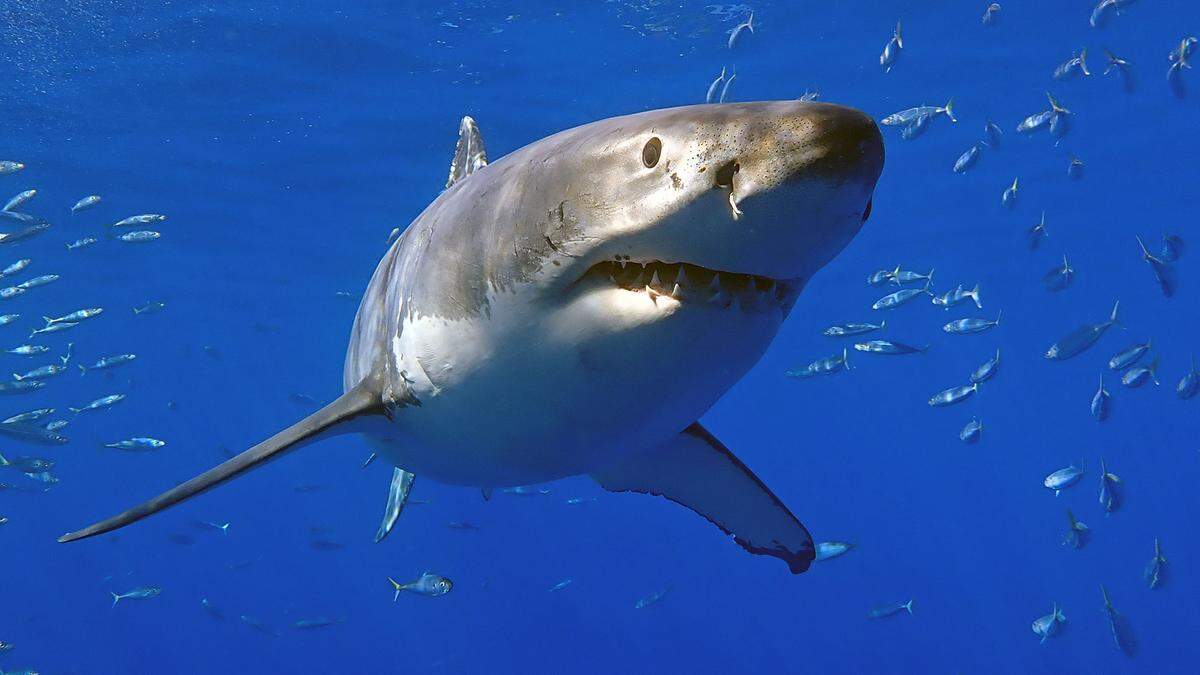
Great white: The ocean’s largest predatory fish at up to 21 feet, great whites occasionally appear near North Carolina beaches in winter and spring, and is characterized by its white belly, black eyes and triangular teeth.
Sandbar: These sharks can grow up to 8 feet and are commonly seen in late summer and fall. The population has declined from overfishing, but evidence shows they are starting to recover.
Sand tiger: They can grow up to 12 feet, are found year-round in North Carolina near wrecks and reefs, and though they have a fierce look and cannibalistic beginnings (they consume their siblings in the womb), they’re typically docile and popular with divers.
Scalloped hammerhead: They’re the most common large hammerhead species in the state, but the population has dwindled recently due to overfishing. They can be distinguished from other hammerhead species by the shape of their “hammers,” which are curved with a notch in the center.
Spinner: Relatives of blacktips that grow up to 10 feet, they’re known for spinning leaps and can be distinguished by their longer snouts, dorsal fins set further back and black-tipped anal fins.
Tiger: These dangerous predators, known for their striped bodies and square snouts, can grow to be up to 18 feet long. They’re known for their broad diet, which includes other sharks, large fish, sea turtles and garbage.
Thresher: Threshers are known for their long tails that stun prey, and they typically move close to North Carolina shores in winter and spring. Like blacktips, they’re popular with anglers for their strong fight.
Learn more at ncseagrant.ncsu.edu/coastwatch.
Which sharks in NC bite the most?
Bull sharks are likely responsible for the bulk of the bites at North Carolina beaches, Cahoon previously told the Observer.
These are the sharks “we worry about the most,” Cahoon explained. They’re cousins of great whites, but they’re nowhere near as big.
“They’re known to be very aggressive sharks for their size. The biggest ones are about 10 feet long,” he said.
How can you avoid a shark attack?
Though there are many shark species in North Carolina, bites are rare, Cahoon said, noting that most shark bites occur in very shallow water.
▪ One of the best ways swimmers can avoid sharks is by steering clear of fishing areas, Cahoon said.
“Sharks are not terribly bright,” he said. “If they’re hungry, they’re going to be less selective about what they try to eat. ... So it’s a good idea to try and separate people from fishing activity.”
▪ Sharks are less likely to approach swimmers who stay fully underwater, as sounding “big” can deter them, Cahoon said.
“The thrashing and smashing around stuff may, may, to a slight degree, tend to draw them in, but I wouldn’t be terribly worried about that, especially if there’s a lot of people in the water.”
▪ Swimming alone at night can also increase your risk of a shark bite, as they’re more likely to strike when unseen.
While swimmers often run the risk of encountering a shark, there’s good news for scuba divers.
▪ “Sharks almost never bother scuba divers, because scuba divers, number one, go down in pairs,” Cahoon said. “And they’re big, they make a lot of racket and they tend to go during the day, when visibility is better.”
Inspired by a story from The Island Packet in South Carolina.
This story was originally published July 2, 2025 at 11:09 AM.