This NC snake may be listed as a threatened species by US Fish and Wildlife
AI-generated summary reviewed by our newsroom.
- U.S. Fish and Wildlife Service proposes listing southern hognose snake as a threatened species.
- Proposal cites habitat loss, road deaths, invasive species and climate change impacts as threats.
- Conservationists want the agency to designate critical habitat for the snake.
The U.S. Fish and Wildlife Service wants to add federal protections for a non-venomous snake that lives in North Carolina.
The agency proposed listing the southern hognose snake, which is found in the Carolinas, Georgia and Florida, as a threatened species under the Endangered Species Act. A threatened species is likely to become an endangered species within the foreseeable future throughout all or much of its range.
In its species status assessment, the Fish and Wildlife Service reports that the species has declined across its range over time. Its analysis showed that the trend was likely to continue.
Listing the snake as threatened would prevent, with exceptions, “take,” which includes killing, harming, harassing, pursuing, hunting, capturing, collecting or attempting to engage.
Take would be permitted during activities such as prescribed burns, sustainable forestry practices, invasive plant control, tree harvest, herbicide application to control woody or invasive vegetation, and certain utility maintenance, according to the Fish and Wildlife Service.
The wildlife service also said designating critical habitat for the species is “prudent but not determinable at this time.” If the snake is deemed a threatened species, the agency would have a year to designate critical habitat, which refers to specific areas within and outside of the area the snake occupies that are essential to conserving the species and may need special management or protection.
Federal agencies are required to avoid destroying or harming designated critical habitat. But that designation doesn’t necessarily restrict further development, and it only affects activities that involve a federal permit, license or funding.
Where does the southern hognose snake live in NC?
Within North Carolina, where the southern hognose snake is state-listed as threatened, the southern hognose snake is often found in the sandy fields and woods of the Coastal Plain and Sandhills.
Primarily active from late morning to early afternoon, the snakes often eat frogs and toads, and spend most of their time underground, looking for prey and avoiding predators.
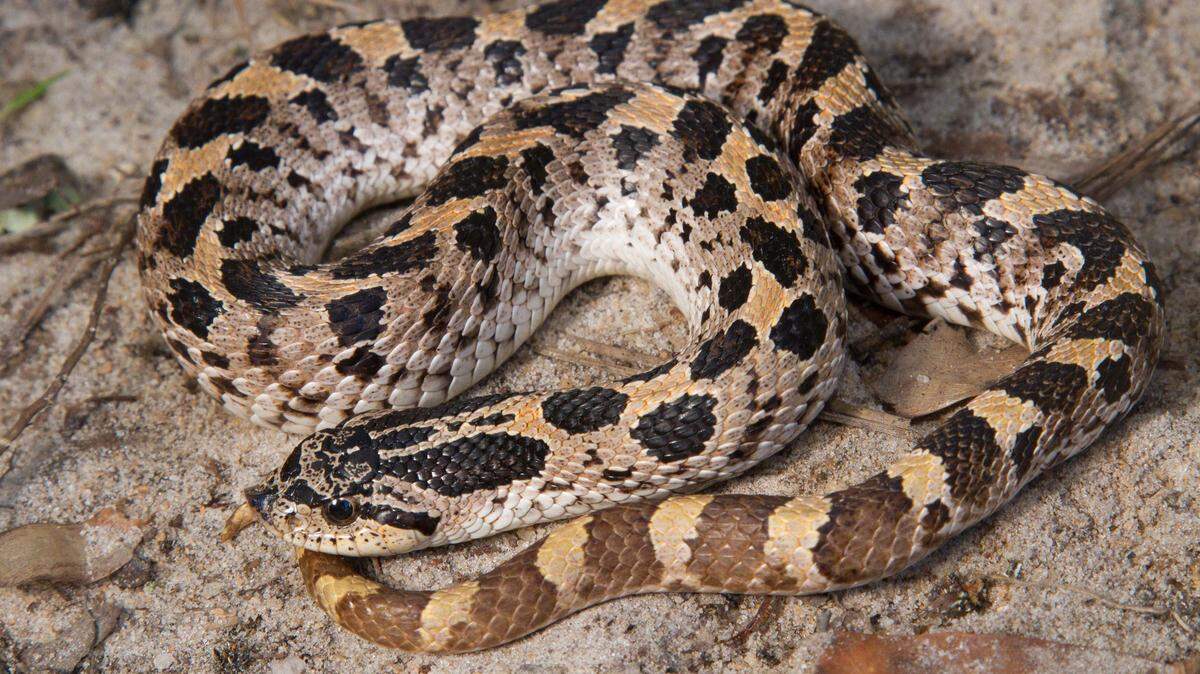
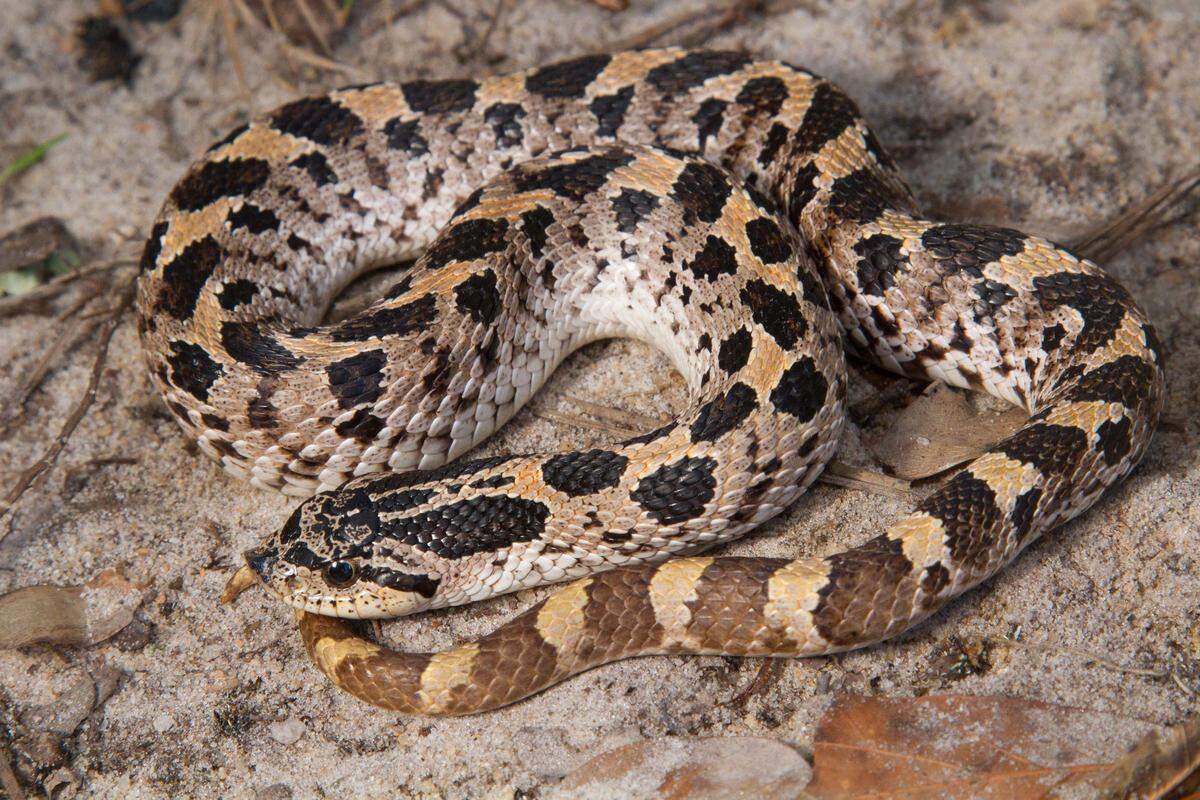
These snakes, which usually grow to between 13 and 20 inches, have patterns of large, dark brown blotches on a tan or light gray background, and have upturned snouts. A dark stripe extends from the corner of the eye to the corner of the snake’s mouth.
How could federal protections help the southern hognose snake?
Protecting critical habitat for the southern hognose snake would mean protecting the sandy uplands within the snake’s range, said Jeff Beane, a collections manager for herpetology at the North Carolina Museum of Natural Sciences. And that’s difficult to do.
“It’s hard to say whether listing is going to benefit the species much,” Beane said. “It might if more land is purchased for protection of the species. It’s a habitat loss problem, really.”
But Beane, who said he has observed more than 900 southern hognose snakes in North Carolina, acknowledges that habitat loss is not the only factor causing the snake to decline.
Threats to southern hognose snake
The Fish and Wildlife Service outlined several potential threats to the snake:
- Habitat loss, conversion and fragmentation
- Road mortality: The southern hognose snake moves slowly, and it’s difficult for drivers to see them, Beane said.
- Invasive species including fire ants, which likely attack hatchlings and eggs: Many species in the Southeast have disappeared or are disappearing where fire ants are prevalent, Beane said.
- Effects of climate change including decreased precipitation, increased temperatures, increased severe weather events such as droughts and floods, changes in wildfire frequency and intensity, and sea level rise
Protections for the southern hognose snake
This is not the first time federal protections for the southern hognose snake have been considered.
The Center for Biological Diversity, a nonprofit conservation organization, petitioned the Fish and Wildlife Service in 2012 to protect the southern hognose snake by listing it as threatened or endangered. Three years later, the wildlife service documented that such a listing may be warranted.
But in 2019, “after a thorough review of the best available scientific and commercial information,” the service decided not to list the southern hognose snake. The agency acknowledged that the species would likely decline, and some populations be destroyed, but the species was “expected to retain viability with resilient populations across much of its current range.”
The Center for Biological Diversity sued the Fish and Wildlife Service in January 2023, alleging that the service’s failure to protect the southern hognose snake was unlawful, violating mandatory duties under the Endangered Species Act.
By June of that year, the Fish and Wildlife Service agreed to re-evaluate the status of the snake and determine whether it should be listed as threatened or endangered.
The August 2025 proposal, while complying with the agreement, falls short of including all necessary protections for the southern hognose snake, according to the Center for Biological Diversity. It shouldn’t include exceptions for logging and herbicide use, and it should include designated critical habitat, the center said in a news release.
“We will keep fighting for these extraordinary snakes and their longleaf pine forests,” Will Harlan, the center’s southeast director, said in a news release. “These snakes cling to survival in uniquely Southern landscapes that are vital to our own health.”
This story was originally published September 8, 2025 at 6:00 AM with the headline "This NC snake may be listed as a threatened species by US Fish and Wildlife."