Venomous NC snake bites caught in ultra-slow motion video for the first time
AI-generated summary reviewed by our newsroom.
- Scientists captured ultra‑high‑speed video showing vipers strike in under 0.1s.
- Copperheads occur statewide in North Carolina and cause over 90% of venomous bites.
- Homeowners should clear brush, remove rodent attractants and call for help after bites.
Venomous snakes strike faster than the eye can see — and now, scientists have the video to prove it. Authors of a recent study, which was published in the Journal of Experimental Biology, say this footage is the first of its kind.
The research found that vipers (such as copperheads and cottonmouths, which are native to North Carolina) often strike in under 0.1 seconds — faster than many mammals can react — by launching from a coiled position and sometimes reinserting fangs to optimize venom delivery.
Footage from the study includes video of a copperhead strike, with a top speed of 2.8 meters (about 9.2 feet) per second, researcher Alistair Evans, a professor of biological sciences at Monash University in Australia, told The Charlotte Observer.
While fast, it wasn’t the fastest in the study, Evans said — the top speed recorded was 3.5 meters per second. That record belongs to the Fer-de-lance, a Central American snake dubbed “the ultimate pit-viper.”
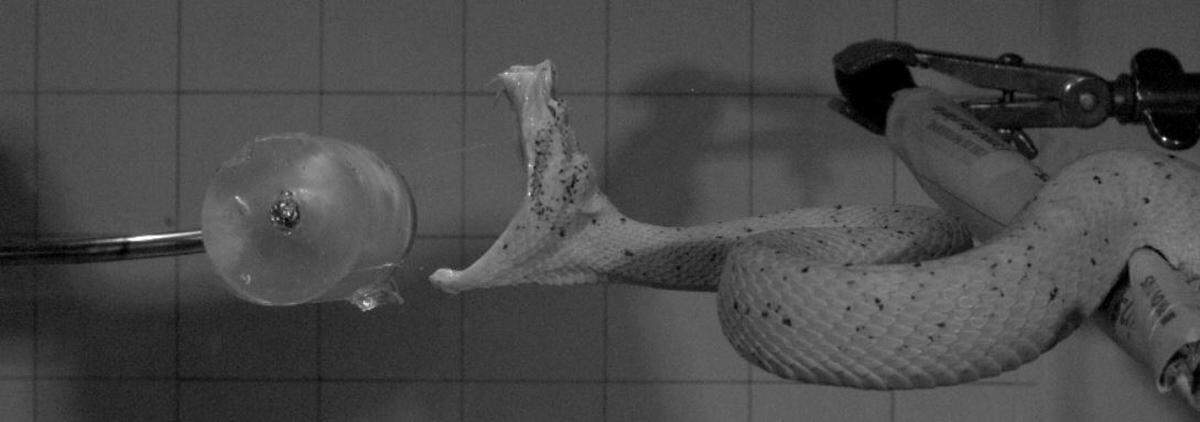
Copperhead bite video
Footage from the study shows vipers can break during strikes, and snakes have built-in mechanisms to deal with that: a replacement set of fangs tucked behind the active pair. If a front fang snaps during a strike, one of the replacements rotates forward and takes its place, ensuring the snake doesn’t lose its ability to inject venom.
Copperheads, the state’s most common venomous snake, likely account for more than 90% of venomous snake bites in North Carolina, according to the N.C. Wildlife Resources Commission.
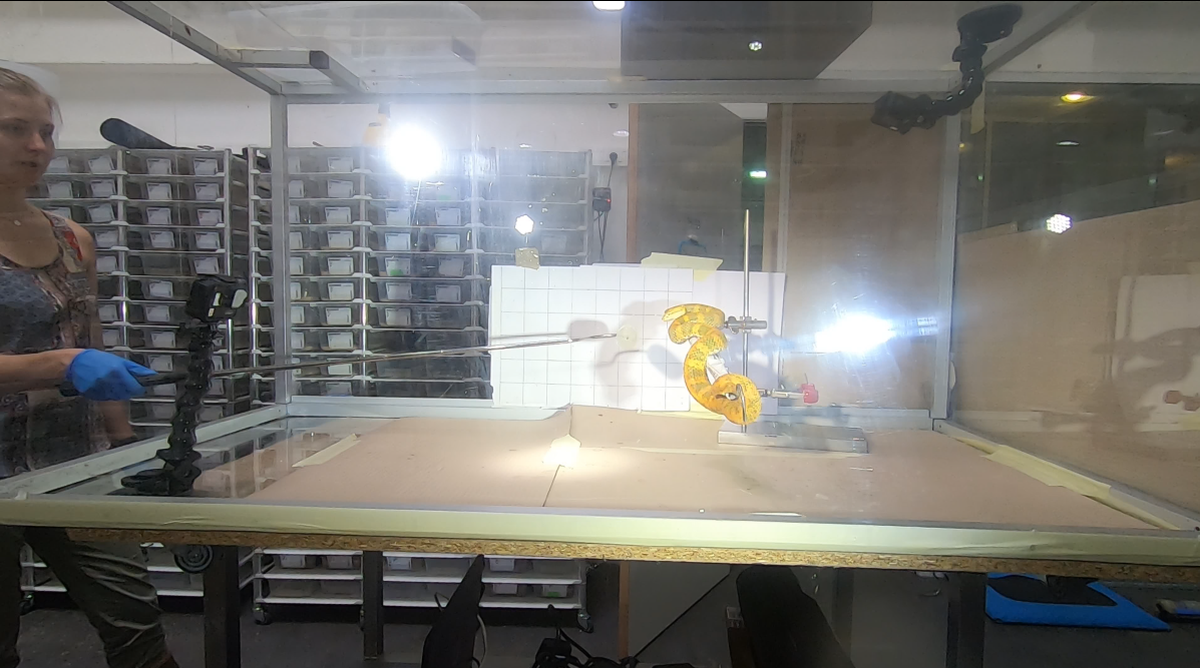
Conducted at Venomworld in Paris, researchers utilized medical gel mimicking prey and recorded strikes using high-speed cameras at 1,000 frames per second. They tracked the 3D coordinates of the snakes’ strikes to measure kinematic performance, comparing variables such as predation style, diet, activity pattern, diet, habitat type, temperature and first jaw contact with prey.
And while they’re usually more active during the warmer months, there’s still a chance you could encounter one during fall.
Here’s what you need to know.
Where are copperheads in NC?
Copperheads prefer wooded areas with lots of prey, but that doesn’t mean they’ll stay out of your backyard.
“They do pretty well in mature suburban neighborhoods, especially where there’s older landscaping,” N.C. Wildlife biologist Falyn Owens previously told the Observer.
Even in cities, they can also be found near bushes, trees and tall grass, she said.
These snakes can be found in all 100 counties across the state, according to N.C. Wildlife.
What should you do if you’re bitten by a copperhead?
If you get bitten by a copperhead, get medical help right away.
“You can’t predict how your body will react,” Owens previously told the Observer. “It’s not worth assuming you’re fine and then finding out later you’re not.”
NC Poison Control recommends a few simple steps if you’re ever bitten:
- Sit down and stay calm.
- Wash the bite gently with warm, soapy water.
- Remove any jewelry or tight clothing.
- Keep the area still and elevated to heart level.
- Call NC Poison Control at 1-800-222-1222.
How to keep copperheads away from your home
Owens said the best way to keep copperheads from hanging around is to clean up your yard, by cutting back tall grass and shrubs, and getting rid of anything that might attract rodents.
“Pet food and bird seed can draw in mice, and once you’ve got rodents, the copperheads will show up for an easy meal,” she explained.
And as tempting as it might be to try to move a snake yourself, Owens said that’s not a good idea.
“Most snakes don’t do well when they’re relocated,” she said. “They know how to survive in their home territory, and if you move them, they’ll usually just try to find their way back.”
This story was originally published October 28, 2025 at 1:53 PM.