
Weather vs climate: A snowy winter doesn’t mean the planet isn’t warming
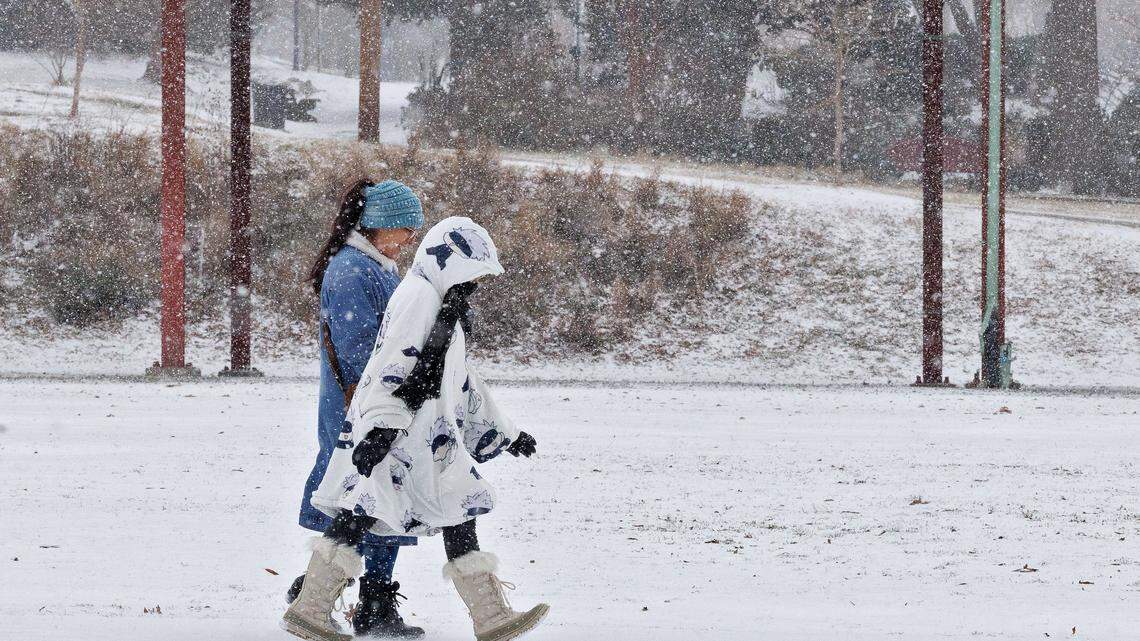
With nearly a month to go, North Carolina and much of the rest of the Eastern U.S. have seen such a snowy winter that some weather watchers wonder if global climate change suddenly has reversed.
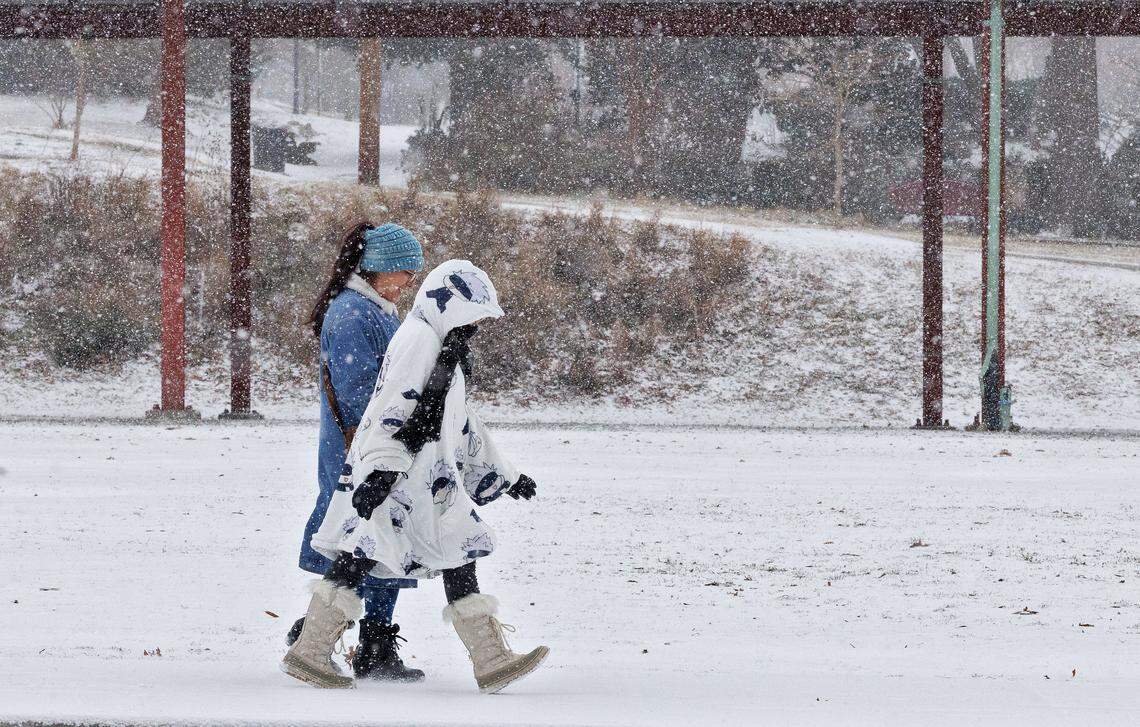
But those who study climate and weather say they are two different things — measured on different scales — and that even the blizzard that left record-breaking snow in some parts of the Northeast this week won’t budge the long-term statistical warming trend.
“The best analogy I have heard when you’re discussing the difference between the climate and the weather is, weather is your mood, how you feel in a given minute or hour or day. Your mood can fluctuate pretty quickly back and forth,” said meteorologist Tom Greene of the National Weather Service in Raleigh.
“Climate is your personality. That’s what you are over the long term.
“That’s not to say someone’s personality can’t change over me, because it can. But your personality is slower to change. It doesn’t have wild swings back and forth.”
Documenting climate change
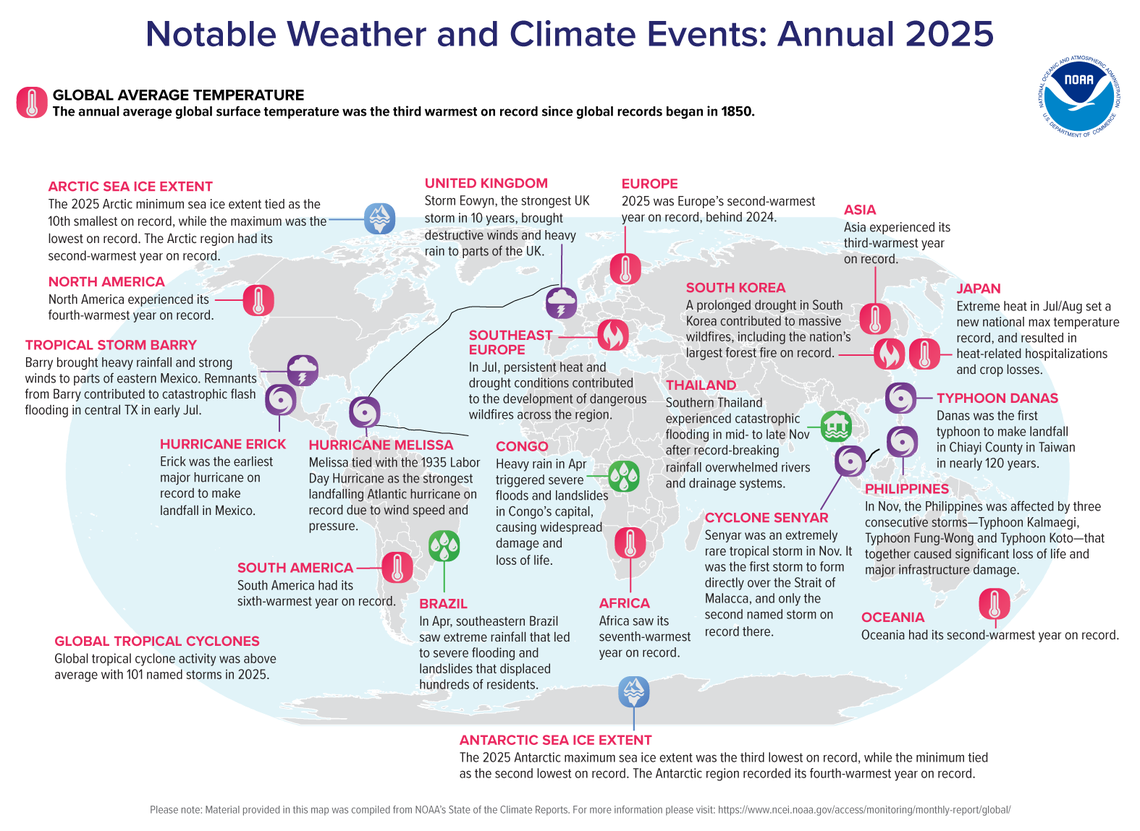
The Earth’s temperature has risen by more than a tenth of a degree per decade since 1850, or about 2 degrees total, according to the National Oceanic and Atmospheric Administration, and the rate of warming has accelerated since 1982. The 10 warmest years in the historical record have occurred in the past decade, NOAA says, with 2024 being the warmest on record.
In 2025, NOAA says, the average annual temperature for the contiguous U.S. was 2.63 degrees above the 20th-century average, making it one of the warmest years in the 131-year record.
Climate scientists say human activity is the biggest cause of climate change, especially the burning of fossil fuels such as coal, oil and natural gas. The process emits carbon dioxide and other greenhouse gases that work like a blanket to trap heat in the Earth’s atmosphere.
Earlier this month, President Donald Trump and Lee Zeldin, head of the Environmental Protection Agency, rescinded the federal government’s authority to regulate greenhouse gases, halting the enforcement of standards set to reduce pollution and slow climate change.
The president, who has mocked climate change science in the past, questioned it again in January as a powerful winter storm moved across the country. Trump posted on Truth Social: “Record Cold Wave expected to hit 40 States. Rarely seen anything like it before. Could the Environmental Insurrectionists please explain — WHATEVER HAPPENED TO GLOBAL WARMING???”
Weather is now; climate is long-term
Weather experts say the late January storm that resulted in all of North Carolina’s counties and much of the rest of the Southeast seeing snow or ice shows starkly how weather — a short-term phenomenon — can seem to contradict climate, a long-term one.
Despite those storms, January 2026 ranked as the fifth-warmest January around the globe in NOAA’s 177-year database. Globally, the agency says, the surface temperature was more than 2 degrees above the 20th-century baseline.
All of the 10 warmest Januarys on record have come since 2007, the agency says.
Global warming may even cause more extreme winter storms
Climatologists have long said that global warming likely is contributing to more frequent and more powerful tropical storms and hurricanes, in part because of the warming of the Atlantic Ocean that feeds those storms.
Drew Shindell, a former NASA scientist who is now the Nicholas Professor of Earth Science at Duke University, said it’s also possible that climate change is increasing the intensity of winter storms. That could be happening in two ways, he said.
One is that as the average surface temperature of the planet and the air around it warms, the warmer air holds more moisture than cooler air. So winter storms — just like those that come during hurricane season — can carry more moisture, which they can drop as rain, snow or ice.
The other factor, Shindell said, is wind. The Arctic has been warming at a faster rate than the rest of the Northern Hemisphere, and climatologists are studying whether that’s causing a complex shift in global wind patterns that ultimately allows cold polar air to “escape” and move south.
Why the difference between weather and climate is important
Another way to differentiate between weather and climate, Shindell said, is to think about the link between smoking and lung cancer.
“Somebody might think it’s OK to smoke because they had an uncle who smoked and lived to be 90,” he said. “Even though we know smoking kills people, there are people who will smoke and live a long life. That doesn’t mean that it’s actually safe to smoke.
“Within a broad distribution of statistics there are outliers and there will be cold days even on a warming planet. That doesn’t mean climate change is not real.”
“You can infer the wrong thing,” Shindell said, “which is that we don’t have to worry about climate change because the weather is cold today.
“That would be similarly incorrect.”
This story is available free to all readers thanks to financial support from the Hartfield Foundation and Green South Foundation, in partnership with Journalism Funding Partners, as part of an independent journalism fellowship program. The N&O maintains full editorial control of the work. If you would like to help support local journalism, please consider a digital subscription, which you can get here.
This story was originally published February 26, 2026 at 7:00 AM with the headline "Weather vs climate: A snowy winter doesn’t mean the planet isn’t warming."
