
Long-debated story of WWII U-boat attack on North Carolina finally gets its due
One of the most disputed moments of North Carolina history centers on whether a Nazi U-boat attacked a chemical plant near Kure Beach during World War II.
Witnesses swore it happened on the night of July 25, 1943, but wartime censorship long kept it from being confirmed.
On Thursday, March 12, an historical marker is being erected at the site the “incident,” and it makes a case that the attack was real and has been unjustly ignored.
“Both witness and circumstantial evidence showed that the U-boat (submarine) surfaced off of Kure Beach and fired three shells at the plant,” according to The World War II Wilmington Home Front Heritage Coalition. “This would be the only German attack on the United States (mainland) during WW II.”
Military historian and retired U.S. Naval Reserve Capt. Wilbur Jones is chairman of the coalition, and he pushed for the historical marker as part of nation’s 250th anniversary this year.
“I’ve always had fascination over the U-boat attack. I’m confident it happened. I was born and raised here in World War II, and I’ve done an enormous amount of research on it. It’s one hell of a story,” Jones told The Charlotte Observer.
“I wouldn’t say it’s been forgotten. It was never known in the first place. During the war, the federal government and cohorts on the local level blanked out a lot of news about German submarines sinking ships off Cape Hatteras like crazy.”
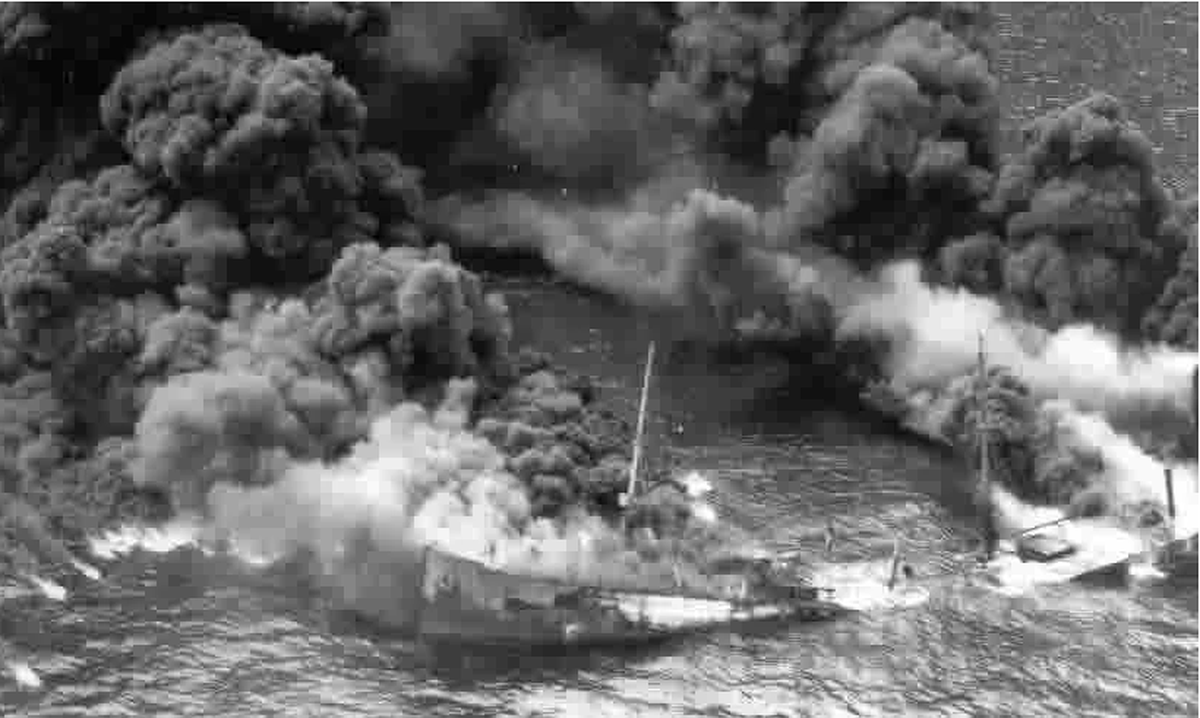
U-boats began attacking defenseless ships off North Carolina in 1942, resulting in 397 merchant vessels being sunk in six months, according to the National Park Service. The area became known as “Torpedo Junction,” historians say.
“The Germans themselves were astonished at the ease of their dominance. Yet, they continued to operate with little fear of retaliation, for despite the path of destruction being forged just offshore, the U.S. Navy’s response was a sluggish one,” the NPS reports.
Nazis in North Carolina
The Ethyl-Dow Chemical Plant was a prime target, as “the only one on the East Coast producing bromine from seawater for use in aviation gasoline,” historians say.
It was also highly vulnerable, sitting on a spit of land with the Atlantic to the east and the Cape Fear River to the west.
Some reports say five shells were fired, while others say it was three.
Among the witnesses were members of the Gregory family, and details of what they saw were recounted in a 2017 Smithsonian magazine article.
“John E. Gregory Sr. and his wife, Lorena, both of whom would have been in their mid-50s at the time, were sitting on the porch in their rocking chairs. ... Suddenly, as the couple gazed out on the water, a spotlight just offshore bathed their porch in blinding light,” the magazine reports.
“It moved to the left, then to the right, scanning the beach. Then they heard what Lorena would describe as ‘artillery fire,’ before poof! The light went dark. ... The next morning, a number of neighbors said they’d also seen the light, or heard the firing.”
Another witness, Carlton Sprague, was a platoon commander in C Battery, 558th AAA Battalion, the N.C. Division of State Historic Sites and Properties reports.
“Sprague ... remembered that while his unit was stationed at Fort Fisher, a German submarine surfaced under cover of darkness and lobbed five shells at the Ethyl-Dow chemical plant,” the division says. “All the enemy shells overshot their mark and plunged into the Cape Fear River.”
Just ‘a popular story’
Lack of clarity on what happened turned “a popular story” into an equally popular “legend,” the division says.
All the known witnesses are dead and the Ethyl-Dow facility was torn down decades ago, leaving “only a few bricks and some concrete” along the Cape Fear River, Wilbur Jones says.
The Gregory’s cottage remains on Atlantic Avenue and for years, it had a homemade historical marker about the attack out front. The sign vanished after the house was sold to someone outside the family, Jones says.
It’s that growing loss of connection to WWII that prompted Jones to spearhead creating the WWII Wilmington Home Front Coalition. The nonprofit has scheduled a series of events – including installing the historical marker – to celebrate Wilmington’s designation as America’s first WWII Heritage City.
Kure Beach is about a 15-mile drive south from downtown Wilmington.
“I’m 91, and I’m busting my butt to preserve history. And it’s an uphill battle,” Jones says, “but if I didn’t do it, no one else would.”
Marker Dedication
The historical marker about the U-boat attack on Kure Beach will be dedicated at 5 p.m. Thursday, March 12, at Ocean Front Park, 105 Atlantic Avenue in Kure Beach. The event is open to the public.
Kure Beach is about a 145-mile drive southeast of Raleigh.
This story was originally published March 9, 2026 at 9:51 AM.