
12-foot alligator sat waiting at family’s front door, North Carolina police say
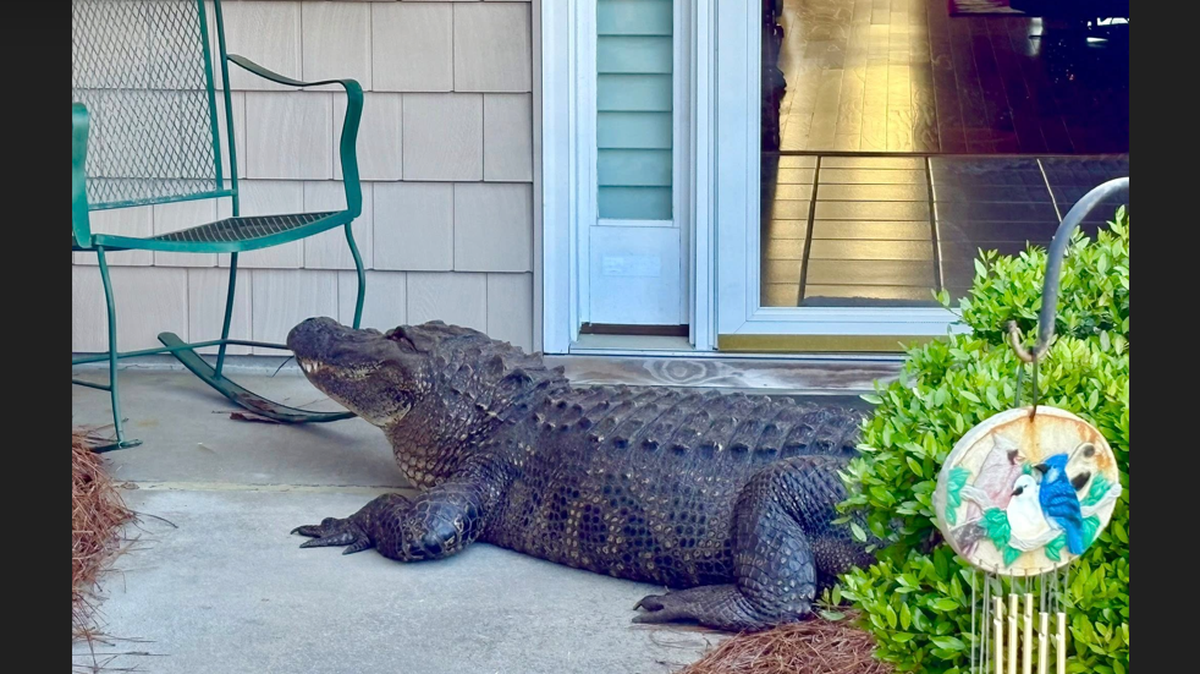
An extremely nosy alligator was found sitting on the porch of a coastal North Carolina home, peeping through the glass storm door, photos show.
It happened around 3:30 p.m. Tuesday in Southport, and a 911 caller initially reported the reptile was in the driveway, Southport police reported in an April 14 Facebook post.
“Officers arrived and the alligator made it to the porch of a nearby home,” police said.
A photo shows the alligator was strategically positioned to trip anyone who stepped outside without looking down. Police didn’t say how the homeowners reacted to the sight.
“With the assistance of North Carolina Wildlife Officers, the 12-foot alligator was safely captured and is being relocated,” police said.
It took an hour and five people (three wildlife officers and two police officers) to catch the alligator. State wildlife officers aren’t sure where it came from, but it is being released in Green Swamp, officials said.
By some counts, the gator was more like 10 to 11 feet in length, state officials said.
“As summer time approaches and temperatures rise, alligators become more active and can find themselves in areas such as up against homes, on porches, under cars, etc. while they are on the move,” Master Officer Alexander W. Holbrook of N.C. Wildlife Resources Commission told The Charlotte Observer.
Alligators are native to the state’s coastal counties, where they are affectionately known as “swamp puppies.” Males can reach 13 feet and 500 pounds in North Carolina, the N.C. Wildlife Resources Commission reports.
Consensus on social media is that the family involved in the incident should move.
“Oh I would have gave him the whole house,” Tamiko Davis wrote on Facebook.
Southport is about a 160-mile drive southeast from downtown Raleigh.
Alligator safety in NC
The North Carolina Wildlife Resources Commission offers the following tips for alligator safety:
- Assume alligators are present. Alligators can live in any body of water within their range. Alligators are very good at hiding. They will see you before you see them.
- Never feed alligators. Feeding alligators on purpose or by accident may cause alligators to associate people with food. Intentionally feeding alligators is irresponsible, illegal in most states, and dangerous for you and others. Feeding other wildlife near water can attract alligators and cause alligators to lose their natural fear of people.
- Don’t dispose of fish or food scraps in water. Throwing fish scraps in the water is one of the most common ways that people unintentionally feed alligators.
- Never harass, capture, or handle an alligator. Attempting to approach, capture, or handle alligators increases your risk of injury or death. View and photograph alligators from a distance.
- Be responsible for people and pets in your care. Alligators do not know the difference between pets and their natural prey. Keep pets on a leash and away from the water’s edge. Supervise small children near water. Maintain awareness anytime you are in or near water.
- Stay away from the water if you see an alligator and keep your distance from alligators you see (at least 60 feet). Avoid swimming in areas with dense vegetation. Alligators hide in vegetation in and around the water. Only swim during daylight hours. Alligators are most active between dusk and dawn.
- If an alligator approaches you, immediately move a safe distance away. Report the situation to the appropriate authority.
This story was originally published April 15, 2026 at 6:24 AM.