
Young alligator shows up in NC man’s pool and refuses to leave. ‘He’s got dibs’
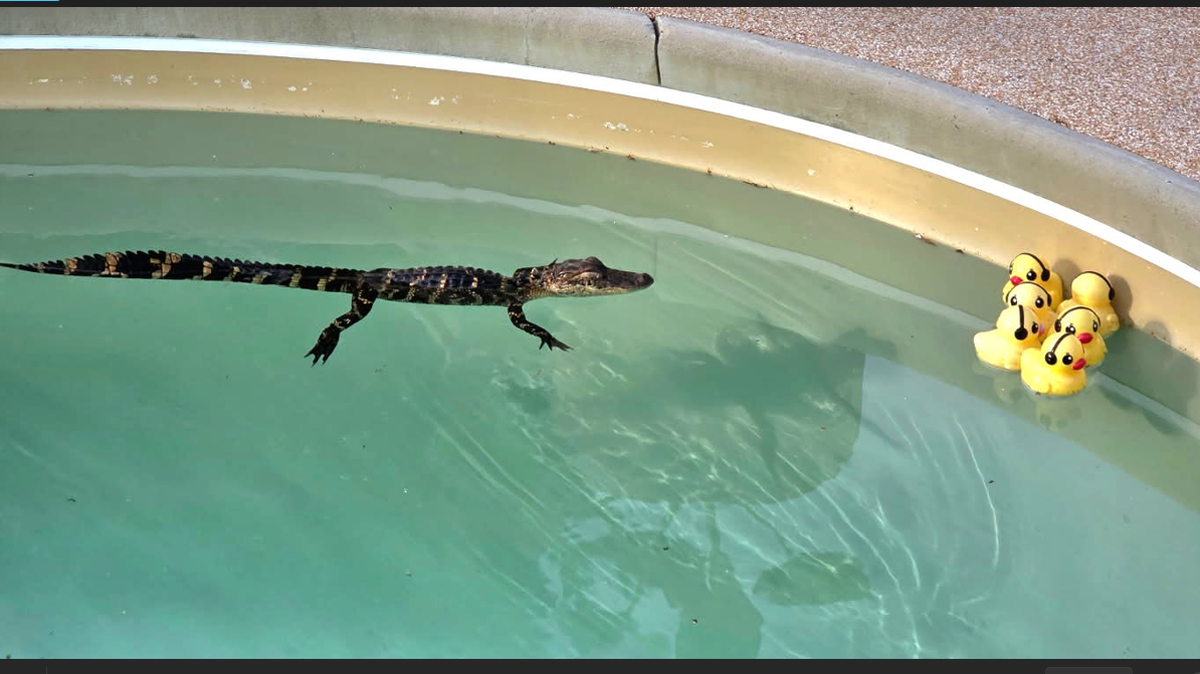
A swimming pool may be one of the worst places to encounter an alligator, but J.D. Leipold couldn’t help but be amused when the apex predator in his pool proved to be just 3-feet long.
The unusual discovery was made early Wednesday in Brunswick County, and comes at a time when eastern North Carolina’s alligator population begins a dramatic seasonal shift.
This is when the big ones start searching for mates, and the smaller ones try their best not to be eaten by the bigger ones, experts say.
The end result is alligators in yards, under cars, stuck in drainage pipes, and paddling around backyard pools like the one belonging to 73-year-old Leipold, a retired journalist.
“My morning routine is to get up, make coffee and look out back window. And, lo and behold, this morning I see an alligator floating around in the pool,” Leipold told The Charlotte Observer on May 27.
“I was pretty shocked. Since then, he’s been getting out to sun himself on the deck, then going back in the water when he feels like it. I was going to go for a swim, but he’s got dibs.”
The N.C. Wildlife Resources Commission is accustomed to strange alligator problems, and was ready with advice when Leipold called: “Spray it with a water hose.”
However, Leipold decided to take a different approach. “I’m waiting to see if he leaves on his own. He’ll eventually realize there’s no food in the pool and go back to his mother,” he said.
So far, the gator hasn’t taken the hint.
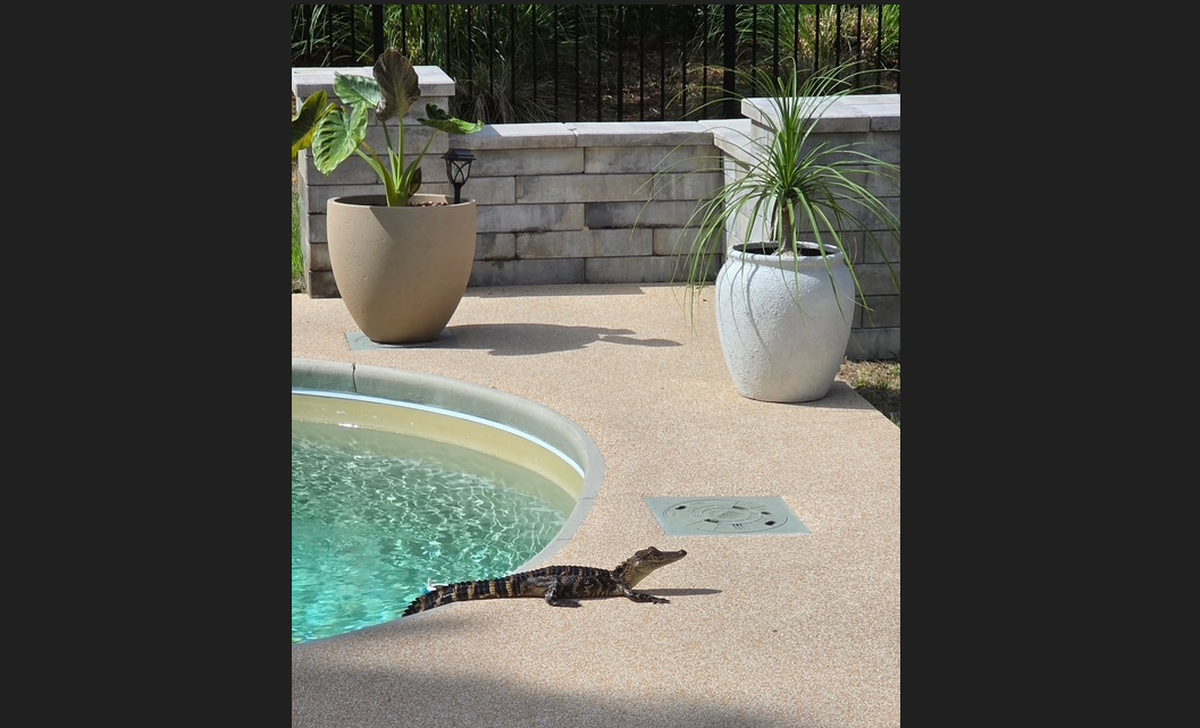
Alligators in love
May through June is mating season for North Carolina’s alligators, and it’s also the time when humans start recreating in coastal areas where alligators thrive.
As a result, the N.C. Wildlife Resources Commission is “currently receiving several calls per day as public encounters with alligators increase,” according to a May 27 news release.
John Henry Harrelson is a Wildlife Management District Biologist who covers nine counties in the southern Coastal Plain, and he says four to five alligators are found each summer in Brunswick County swimming pools. And those are just the ones that couldn’t find their way out of the pool, he says.
“Juvenile alligators (2 to 3 years old) get pushed out by mother’s and encouraged to disperse during this time of year to avoid conflicts with courting males. Adult males often kill juveniles during breeding season,” Harrelson says, noting the small ones are dangerous, too.
“Folks think because the alligator is small, they can handle the situation and take matters into their own hands. All alligators will bite, and they all hurt when they do.”
Harrelson has spent a decade in his current role with the state, and he says alligators are becoming less fearful of humans. That’s likely due to the predators learning to associate humans with a free food, he says. Feeding alligators is illegal in North Carolina.
“Communities are reaching out to us concerned about animals that are approaching or being ‘aggressive’ towards humans. Most of these behaviors are directly linked to animals being fed by people,” he said.
Return of the pool gator
Leipold lives in St. James Plantation near Southport, which is home to alligators in the 12 to 13-foot range.
A fence was constructed to keep such monsters out of Leipold’s backyard, but there’s a 5-inch gap in the perimeter that is a perfect fit for a 3-foot alligator, he says.
The little squatter vanished from the yard midday Wednesday, giving Leipold the sense he’d triumphed.
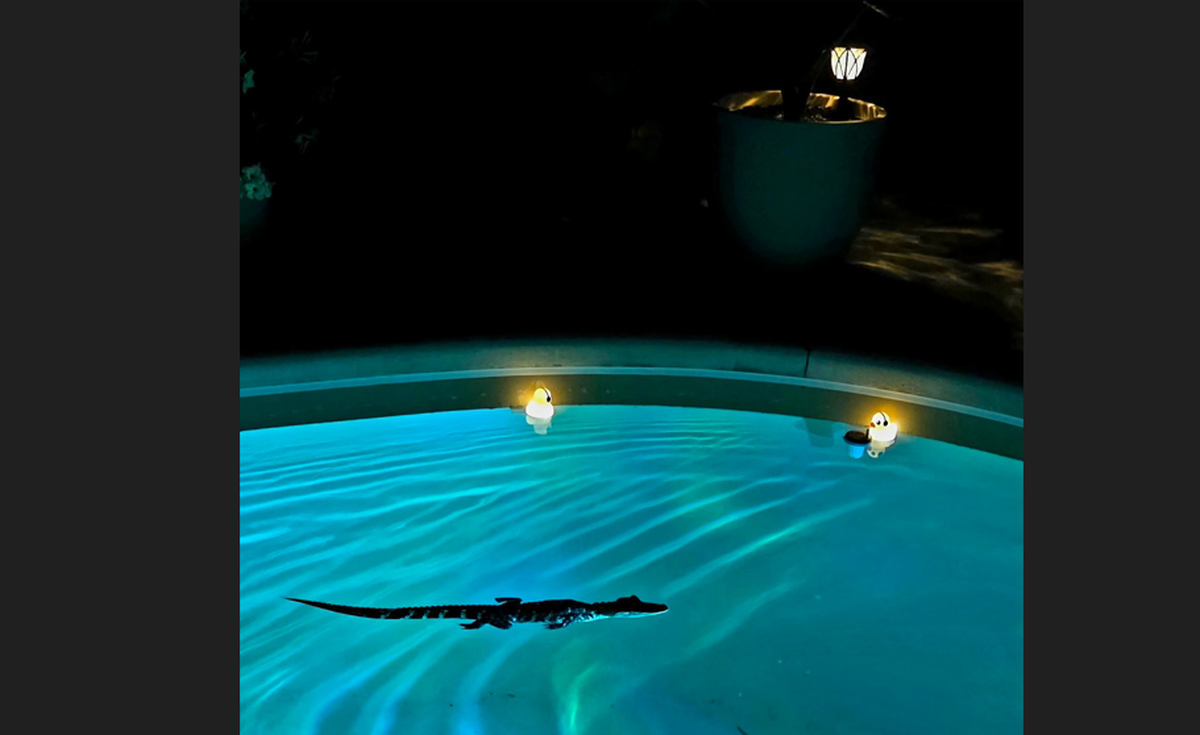
However, it returned later that day, and even took advantage of pool lights to go for a dip in the dark, photos show.
Leipold continues to assume it will realize the accommodations don’t include a buffet and move on. Or maybe it will get too plump to fit through the gap in the fence.
“I don’t mind sharing a pool with him, but something will have to be done as he gets bigger. I don’t want him terrorizing the neighborhood,” Leipold said.
“He’s looking through the screen doors at me right now.”
St. James Plantation is a golfing community about a 160-mile drive southeast from uptown Raleigh.
Alligator safety in NC
In response to the rising number of human-alligator encounters, the N.C. Wildlife Resources Commission developed the GatorWise program in partnership with 10 other wildlife agencies in states where alligators live.
Here are the six “GatorWise Basics” to avoid conflict.
Assume alligators are present: “Alligators can live in any water body within their range. Alligators are very good at hiding. They will see you before you see them. There could be alligators in places you have never seen them before, especially after storms or floods. The best way to stay safe around alligators is to keep your distance,” the commission says.
Never feed alligators: “Feeding alligators on purpose or by accident may cause alligators to associate people with food. Intentionally feeding alligators is irresponsible, illegal in most states, and dangerous for you and others. Feeding other wildlife near water can attract alligators and cause them to lose their natural fear of people,” the commission says.
Don’t dispose of fish or food scraps in water: “Throwing fish scraps in the water is one of the most common ways that people unintentionally feed alligators. Properly dispose of bait, fish scraps, and food items away from alligators and other wildlife,” the commission says.
Never harass, capture, or handle an alligator: “Attempting to approach, capture, or handle alligators increases your risk of injury or death. These behaviors are irresponsible, illegal, and dangerous, regardless of the alligator’s size. View and photograph alligators from a distance,” the commissions says.
Be responsible for people and pets in your care: “Alligators do not know the difference between pets and their natural prey. Keep pets on a leash and away from the water’s edge. Supervise small children near water,” the commission says.
Maintain awareness anytime you are in or near water: “Stay away from the water if you see an alligator. Avoid swimming in areas with dense vegetation. Alligators hide in vegetation in and around the water. Only swim during daylight hours. Alligators are most active between dusk and dawn. During summer months, female alligators may protect nests and hatchlings from perceived threats, including people getting too close. If an alligator approaches you, immediately move a safe distance away,” commission says.
This story was originally published May 28, 2026 at 11:41 AM.