Did ‘extraterrestrial body’ kill off ice age giants? Evidence found in South Carolina
Something happened about 13,000 years ago that killed off the giant mammals of the ice age, including sabre-tooth cats, mastodons, giant sloths and mammoths. One controversial theory is that a “cosmic impact” brought the demise of the ice age megafauna.
Researchers in South Carolina say they’ve found new evidence of an impact from outer space at a lake near Columbia. Archaeologists from the University of South Carolina and other institutions found evidence of an extraterrestrial strike that lines up with what’s called the Younger Dryas Impact Hypothesis, according to the school.
The study, published this week in the journal Scientific Reports, details platinum spikes the researchers found in a lake near Elgin, South Carolina.
Platinum is “associated with cosmic objects like asteroids or comets,” the university said in a press release. The finding aligns with similar discoveries in South Africa, Chile, western Asia, Europe and in other places in North America.
According to the university, “The conventional view has been that the failure of glacial ice dams allowed a massive release of freshwater into the north Atlantic, affecting oceanic circulation and causing the Earth to plunge into a cold climate. The Younger Dryas hypothesis simply claims that the cosmic impact was the trigger for the meltwater pulse into the oceans.”
“We continue to find evidence and expand geographically. There have been numerous papers that have come out in the past couple of years with similar data from other sites that almost universally support the notion that there was an extraterrestrial impact or comet airburst that caused the Younger Dryas climate event,” University of South Carolina archaeologist Christopher Moore said.
“We speculate that the impact contributed to the extinction, but it wasn’t the only cause. Over hunting by humans almost certainly contributed, too, as did climate change,” Moore said.
“Some of these animals survived after the event, in some cases for centuries. But from the spore data at White Pond and elsewhere, it looks like some of them went extinct at the beginning of the Younger Dryas, probably as a result of the environmental disruption caused by impact-related wildfires and climate change,” he said.
White Pond, in Elgin, is described in the paper “as one of the oldest and most complete paleoenvironmental records in southeastern North America.”
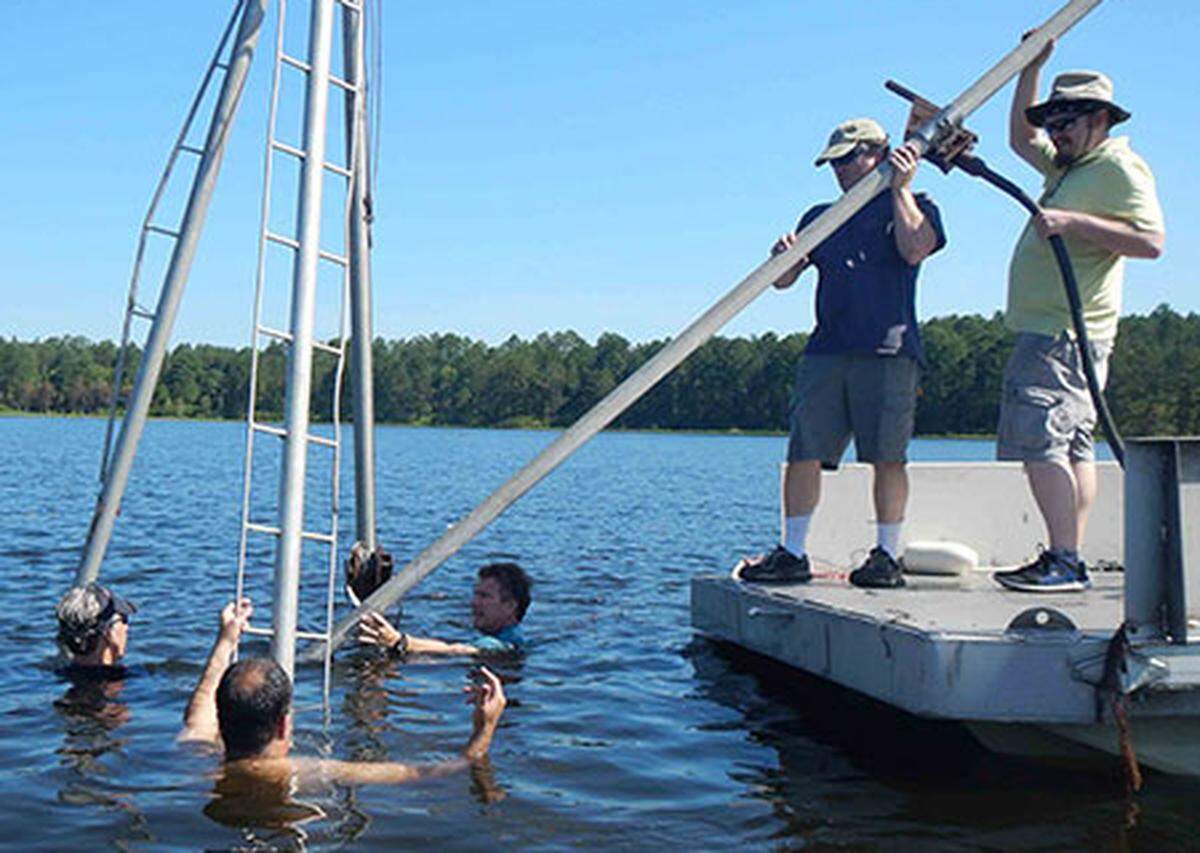
Moore and his researchers took core samples from under the lake to look at the ancient history recorded in the sediment.
“First, we thought it was a North American event, and then there was evidence in Europe and elsewhere that it was a Northern Hemisphere event. And now with the research in Chile and South Africa, it looks like it was probably a global event,” Moore said.
The team also found platinum and iridium around a crater in Greenland that may have been an impact point, the university said.
“Although the crater hasn’t been precisely dated yet, Moore says the possibility is good that it could be the ‘smoking gun’ that scientists have been looking for to confirm a cosmic event. Additionally, data from South America and elsewhere suggests the event may have actually included multiple impacts and airbursts over the entire globe,” according to the university.
This story was originally published October 25, 2019 at 2:48 PM with the headline "Did ‘extraterrestrial body’ kill off ice age giants? Evidence found in South Carolina."