Hilton Head fisherman found an ancient Megalodon tooth. He named it after Kobe Bryant
When Byron Sewell goes “hunting” for shark teeth along the banks of the rivers in Beaufort County, it’s a meditative experience.
“It’s quiet time,” he said. “Time to reflect by the water.”
On Wednesday, Sewell, 47, was walking along the banks of a nearby river (he won’t say where), when a shiny black object caught his eye.
He fished it out of the sand, unearthing a 4-inch Megalodon tooth.
He knew immediately what he’d call it: The Black Mamba.
The fossilized Megalodon tooth was the most perfect one he’d ever seen. It was smooth and shiny, with few imperfections caused by millions of years of tumbling through oceans and later, dredging machines.
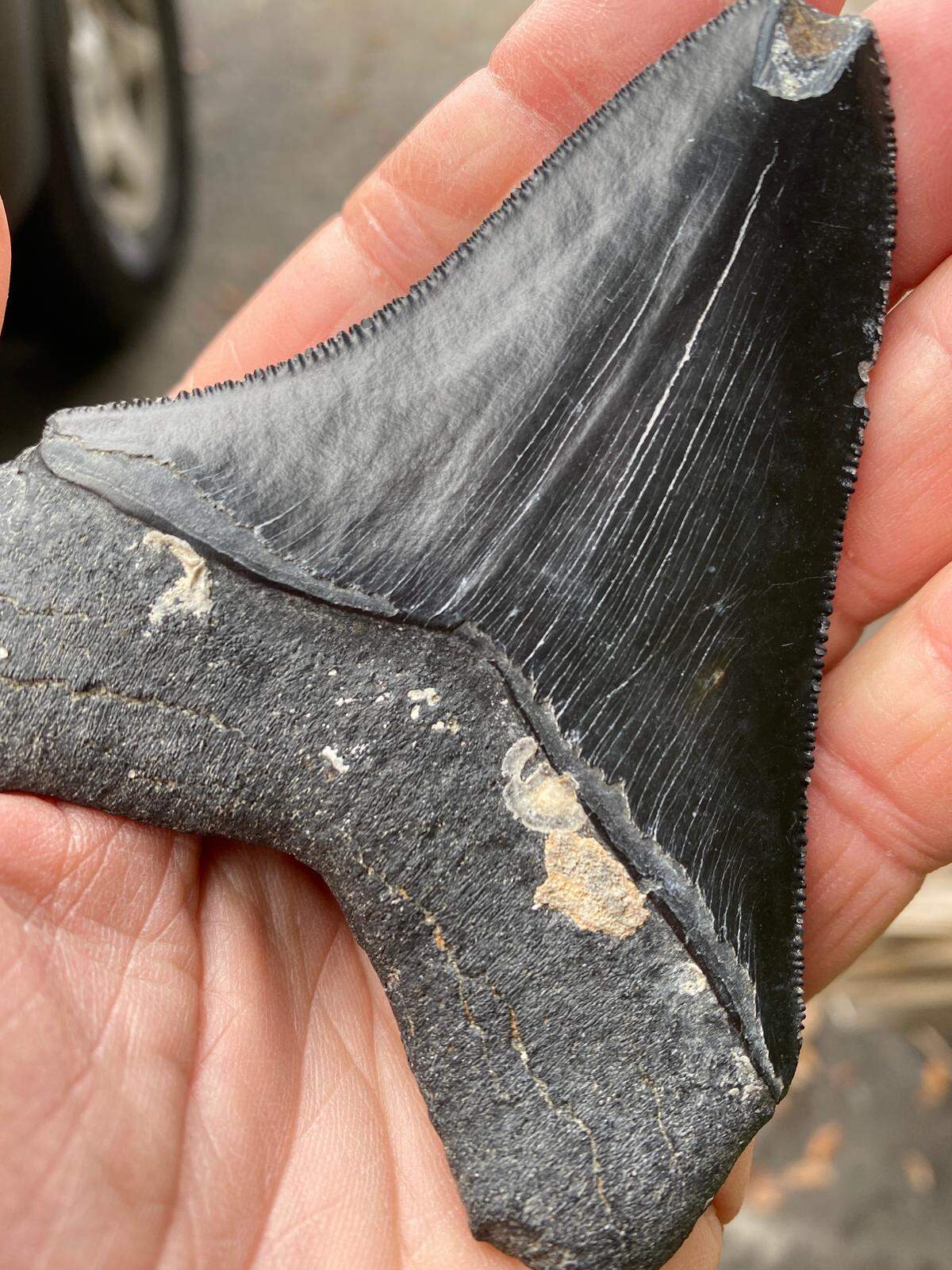
It brought to mind retired basketball legend Kobe Bryant, whose tirelessness and dedication to his sport resulted in nearly flawless play on the court. Bryant’s recent death was on Sewell’s mind Wednesday when he was taking his quiet walk along the water.
“I was just thinking about how everybody’s getting so inspired by what he did and his work ethic,” Sewell said. “I’m always trying to think about stuff like that.”
Bryant, 41, died Sunday in a helicopter crash that took his 13-year-old daughter Gianna’s life and the lives of seven others.
Since the crash, tributes have poured in from athletes and fans around the globe.
Sewell posted about his find in a Hilton Head Island Facebook group and said, “Well today was amazing! I was thinking about Kobe Bryant while treasure hunting and I found the coolest Megalodon of my life! “The Black Mamba” I have never found one so shiny and that black! Wow!! So stoked!”
Megalodon sharks in the Carolinas?
The tooth that inspired Sewell’s Bryant tribute once belonged to a prehistoric Megalodon, which measured 40 to 70 feet in length and ruled the ocean for more than 13 million years.
The species likely went extinct due to global cooling about 2.6 million years ago, according to the National History Museum.
A Megalodon had around 276 teeth arranged in five rows in each jaw, according to Two Oceans Aquarium.
“These rows enabled Megalodon to constantly shed worn out teeth and replace them with new, sharp ones,” the aquarium’s website said.
Scientists have said Port Royal Sound, in particular, is a hotspot for sharks because of its high salinity and abundant food supply.
Sewell, who has a collection of Megalodon teeth, said he rarely finds them on Hilton Head’s beaches now, though he did as a child growing up in North Forest Beach.
Now, he said the best place to find shark teeth is at The Sands in Port Royal and along the rivers after dredging operations dig up the riverbed and relocate the sand.
“With the dredging, you get down and get to these certain periods of time and bring it all up,” he said. He’s found ancient shells, whale vertebrae, Civil War artifacts and many, many shark teeth.
Sewell, the owner of Native Son Adventures, runs fishing trips, surfing programs and shark tooth-hunting experiences from Shelter Cove Marina.
This story was originally published January 30, 2020 at 11:11 AM with the headline "Hilton Head fisherman found an ancient Megalodon tooth. He named it after Kobe Bryant."