
She toured the world with her music but was forgotten. Can SC pianist give it new life?
Philippa Duke Schuyler was honored by Congress a day after her death in 1967, a senator saying she was “constantly putting America’s best foot forward.”
President Lyndon Johnson and his wife sent a basket of red and white flowers to the funeral, according to a biography. The New York mayor attended the ceremony, and the New York Times printed her obituary on the front page.
Today, Schuyler is largely forgotten, Dr. Sarah Masterson of Newberry College said.
“I had never heard of her before and almost no one that I’ve talked to has,” she said. “It’s especially interesting because ... she was so famous in her lifetime.”
Masterson, a pianist and music professor at Newberry, hopes to revive recognition for the composer whose music was left to gather dust in archives because of her race and gender. Her tragic death at only 35 years old ensured she was relegated to obscurity.
A biracial piano prodigy who played for audiences across the world, Schuyler published and recorded only fragments of her music.
Masterson plans to record what’s believed to be Schuyler’s final and longest composition, one that expresses the culmination of a life trapped between identities and torn by acceptance and rejection in her public life and by her mother. First, Masterson has to raise $2,500 to make the recording.
Masterson discovered Schulyer in a book about Black women composers. She later discovered that because so little is known of Schuyler’s music, the book wrongly identified her composition. But the book’s details about her storied life pulled Masterson in and started her three-year journey to bring Schulyer’s buried masterpiece to life.
“I had to know more about her,” Masterson said. ”It’s been like putting together a puzzle and a treasure hunt at the same time.”
Searching for a Black composer’s work
Masterson began researching Schuyler to write an article. In a collection of Schuyler family papers at the Schomburg Center for Research in Black Culture in New York, she discovered the first piece of sheet music for “Seven Pillars of Wisdom,” Schuyler’s unpublished, unrecorded composition written between 1964 and 1965 that was inspired by the life of T.E. Lawrence, a British military officer who helped Arabs overthrow the Ottoman Empire during World War I. Her own experience in conflict also influenced the music.
As she found other sheets for the composition and pieced them together, “the more it became obvious that this was a huge work, an important work,” Masterson said. But the end was missing. Schuyler’s opus had no resolution, a theme that haunted the composer.
Schuyler’s life and accomplishments from the 1930s to 1960s were accounted for and written about by a few dedicated people in the last 25 years.
Author Kathryn Talalay wrote a biography on Schuyler that was published in 1995 — “Composition in Black and White: The Life of Philippa Schuyler.”
In it, Talalay writes that Schuyler was born in 1931 in New York and raised in Harlem. Her father was Black and a journalist and her mother was the youngest child of a white, wealthy Texas family. An eccentric, never-satisfied ideologue, her mother believed her biracial child would be superior to single race children and that a diet of raw food, including uncooked meat, would give a young Philippa a developmental advantage.
By 4 years old, Schuyler was composing music on the piano, Talalay writes. She won major piano competitions with her own music. The American press raved about her as a prodigy. She toured concert halls into her teenage years and played with The New York Philharmonic. But in her mid-teens, her musical career stalled in the United States.
“Whether because of her own inadequacies or racial barriers or both, she had gone as far as she would go as a performer in America — she was a success with black audiences, but of limited appeal to whites,” The New York Times wrote in a review of Talalay’s biography.
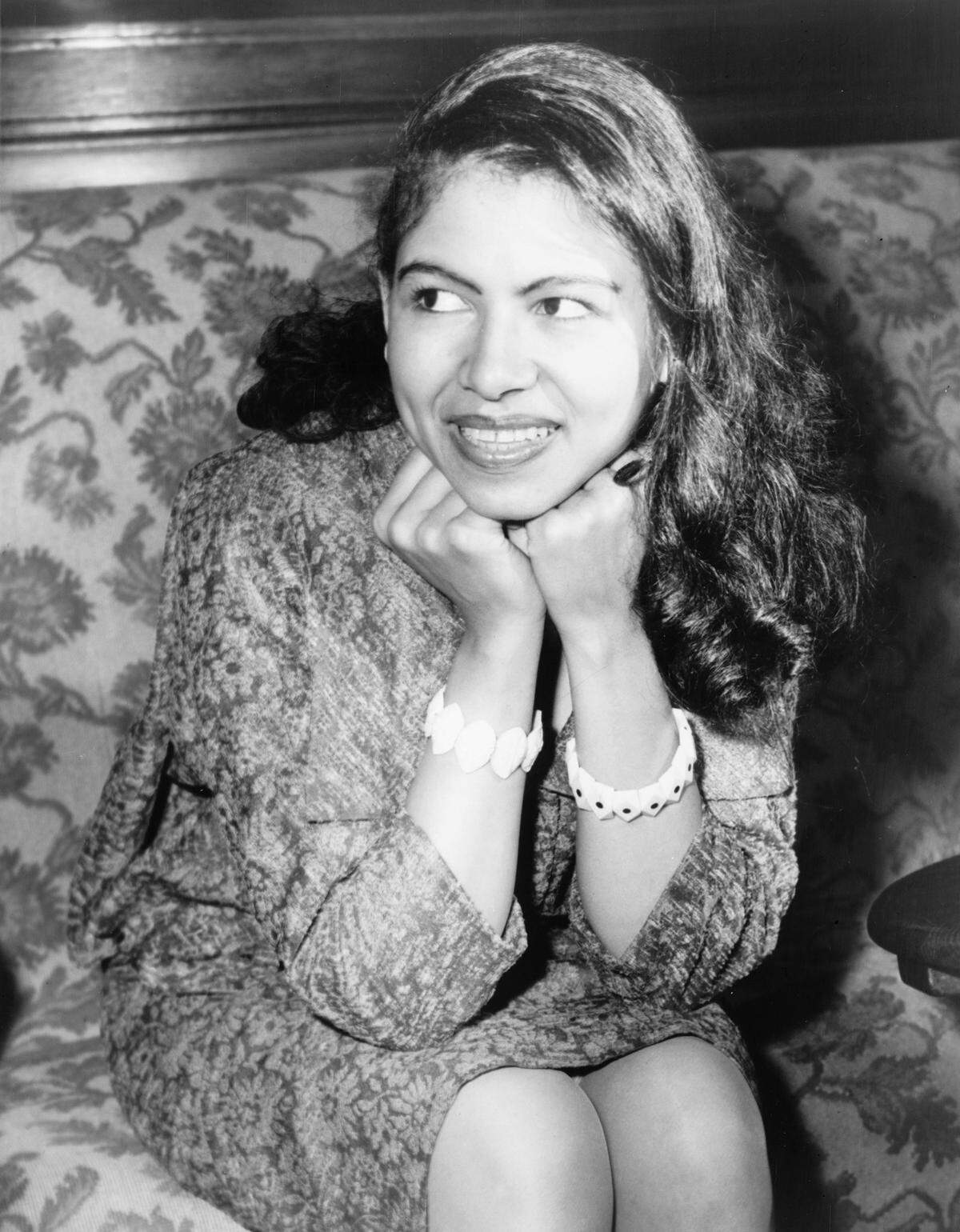
Schuyler toured abroad to make a living as a pianist, gaining acclaim equal to her early U.S. success. She began a second career in journalism and book writing as she came into her 30s, “Composition in Black and White” recalls. As she contended with being a war correspondent in Africa and maintaining a musical career, her mother’s controlling demeanor and demands for Schuyler to be great and an example of racial “hybrid vigor” destroyed their relationship. She began telling people she was white and changed her name in order to play in South Africa and to tour in the U.S. again.
In 1967, Schuyler traveled to southeast Asia to perform and report on the Vietnam War. She also went on religious missions to help children. On May 9, she was helping escort a group of Vietnamese orphans to safety when the helicopter she was flying in crashed and she died.
“Behind this scrim of awards and medals, of travel and applause, lay the tragedy of promise denied,” Talalay writes. Schuyler’s “life was an unending struggle” for perfection, recognition and acceptance. “Neither white nor black, she searched all her life for an identity, for a home.”
In her three decades as a pianist, Schuyler made only one album with what appears to be her own music, most of which seem to be sketches of not yet complete songs. The album is nearly impossible to find today. Masterson has found references to another release of Schuyler playing her own compositions. Again, it seems nonexistent. She published little of her work as sheet music, adding to the veil that surrounds Schuyler’s music.
During Schuyler’s life and with her talent, enough support existed for a woman of color to maintain a performing career, though it was less than the support for white men. But that support didn’t cross over for piano recordings and published music by women of color like it did for men, Masterson said. How far Schuyler could go was limited by her gender and race.
Wanting to share the music more broadly than Schuyler could, Masterson continued to search for the end of “Seven Pillars.” She found the final movement in an archived folder filled mostly with newspaper clippings. On it Schuyler had written “END” and circled it.
Complexity of the music
Finding the pieces of Schuyler’s composition was only part of the challenge. Once Masterson assembled the parts, she had to transpose the music and interpret handwritten notations from the composer, all with no recording of Schuyler performing the music.
On one piece of sheet music Schuyler hadn’t written any notes after a certain point. She wrote that the music needed to repeat another part but be played with the opposite hand. Schuyler used her own musical alphabet to write the music, creating another challenge for Masterson. Schuyler used the alphabet to put messages in the music that spelled out words in Arabic. In parts, Masterson thought the music was physically impossible to play until she completed the transcription. The complexity of the piece is hard to overstate, Masterson said.
After transforming Schuyler’s drafts into sheet music, Masterson had an hour-long composition consisting of a prologue, seven movements and an epilogue. She has rehearsed the composition for hours and performed it on piano at events.
The completed work is dark, she said. The music is challenging to play and challenging to listen to. It’s not easy listening classical, Masterson said. The music has frequent moments of dissonance, and Schuyler at times called for “tone clusters,” which means banging a bunch of piano keys at once.
The closest comparison would be the music of Bela Bartok, a 20th century Hungarian composer who incorporated folk music into his work, Masterson said.
Masterson believes the ominous tone of Schuyler’s piece and some of the African-like rhythms, chords and scales came from her experience as a journalist covering civil conflict in the Congo during the early 1960s. Schuyler fought off an attack by the Congolese, her Washington Post obituary recalled.
The darkness also certainly comes from Schuyler’s own lifetime of disappointments. She wanted accolades for her music but never overcame people regarding her as a spectacle for being biracial. Despite navigating that barrier as best she could and becoming an accomplished performer, she still never satisfied her mother. She became disillusioned with performing and turned to journalism, again splitting her dreams from realities.
“She talks a lot in her letters about how there wasn’t really anywhere where she fit in,” Masterson said.
With so much gone wrong for Schuyler, Masterson felt pressure to get Seven Pillars right. But she wondered if she was playing the music as the composer intended. How could she know without any recordings?
Weeks after assembling Seven Pillars, Masterson listened back to a cassette tape she’d found in a Colorado archive. She thought she was simply going to revisit a lecture Schuyler gave in the 1960s. But then Schuyler began to play the piano at a point Masterson hadn’t listened to. The music sounded familiar. It was four movements of Seven Pillars. After comparing her own version, Masterson learned that she had faithfully transcribed those movements of Schuyler’s composition. But like many parts of Schuyler’s life, the tape left the final pieces unresolved.
Masterson doesn’t want her recording to be a delayed, triumphant ending to Schuyler’s life. She wants the recording to be a beginning.
“I want this to lead to more people researching her music and playing it,” she said.
To help fund Masterson’s recording of Schuyler’s composition visit bit.ly/newberrycollegemusic, or contact Whitney Metz, assistant vice president for institutional advancement at Newberry College, at 803-321-5694.
This story was originally published June 2, 2021 at 12:12 PM with the headline "She toured the world with her music but was forgotten. Can SC pianist give it new life?."