Best ways to keep phones, laptops and tablets charged during a power outage
Triangle residents know a power outage during a hurricane or severe storm is not unusual.
If you’re not prepared, losing electricity at home can be disastrous.
Cell phones are crucial. They enable communication, allow us to access weather updates and other need-to-know information and can double as flashlights.
It’s one thing to plan ahead and charge cell phones, laptops and tablets before the storm comes. But there’s no telling how long it will take to restore power. That’s why it’s important to have a plan for recharging devices.
“Now is the time to prepare,” Justin Graney, the chief of external affairs and communications at North Carolina Emergency Management, told The News & Observer.
Here are some things you can do to prepare for power outages.
Invest in power banks
Portable chargers, or power banks, come in handy when you may not have access to an outlet, like when you’re traveling. But they’re also a good thing to have when you lose electricity at home.
Power banks, which may be purchased in stores or online, are available with all sorts of features. Some have ports where power cables are plugged in, and some come with cables attached. More expensive power banks sometimes have AC outlets, which can be used to charge larger devices such as laptops.
Before selecting a power bank, think about how many devices you’d need to charge if you lost electricity at home, and read the specifications of the chargers to find out how many times the power bank will be able to recharge your device or devices before the power bank runs out of juice.
Be sure to charge external batteries, in addition to phones, tablets and laptops, before severe storms, Graney said.
Try a power inverter
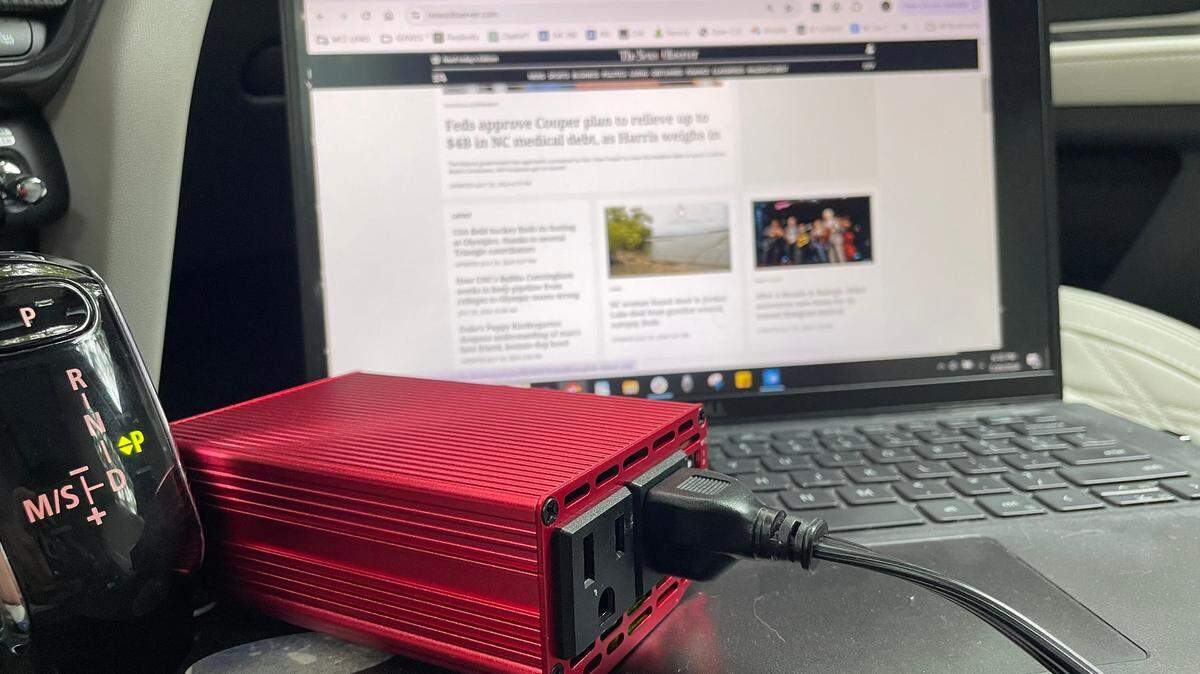
You may not have electricity in your home, but hopefully there’s gas in your car. If so, consider a power inverter.
These devices, which plug into the cigarette lighter in your vehicle, have ports that allow you to plug in multiple charging cables to power up phones, tablets, laptops and other devices.
If using a vehicle to charge devices, Graney said, do not park it inside your garage. Move it outdoors, away from your home, to avoid carbon monoxide poisoning.
Use laptops to charge
Laptops can be used as a power source for other devices.
Make sure your laptop is fully charged, and have the proper cables and converters to fit your devices.
Other good tips
Graney recommends taking other steps to conserve battery:
- Turn on low power mode.
- Close all nonessential apps.
- If you need to communicate with the outside world, limit conversation to essential disaster-related topics.
- Text, rather than call. Texting requires less battery than calling.
- Lower screen brightness.
- Turn off bluetooth.
This story was originally published August 7, 2024 at 9:45 AM with the headline "Best ways to keep phones, laptops and tablets charged during a power outage."