
What Carolinians can do about our changing climate. Charlotte summit will offer ways.
What can Carolinians do about our changing climate, with its more frequent and powerful storms and mountains-to-the-coast flooding?
It might seem overwhelming, too big to do anything.
A day-long gathering in Charlotte on Thursday will help provide solutions.
The 2025 Carolinas Climate Summit in uptown joins climate experts and folks working in their neighborhoods to combat the malevolent effects of the weather for a daylong series of panel discussions open to everyone.
Charlotte NPR station WFAE hosts the second annual event.
“No matter what your beliefs are on the science of climate, you can’t deny what you see happening with your own eyes,” Ju-Don Marshall, WFAE president and CEO told The Charlotte Observer in a recent interview.
.png "JEM-3 (2).png")
“I think despite all of the debate over climate, we see more people awakening to the fact that the world is changing, (asking) what can we do.”
Here’s more from our interview with Marshall about the summit and our climate. Her comments were lightly edited:
What is the goal of the summit?
A. As a result of the climate beat reporting we started in 2021, we recognized the need to make it real for people, to bring real voices and real impact into the conversation.
We also wanted to overcome the sense that people were having around climate apathy, which was becoming a growing trend in how people were viewing climate discussions. The problem seemed so enormous that it seemed outside the reach for most ordinary people.
And so the Climate Summit was designed to, one, look across the Carolinas at what’s unique to our topography that is creating real issues to people who live, work and play here.
The goal is really to spark more public engagement and awareness around some of these climate issues and how they’re affecting the Carolinas.
What are some topics and who are some of the notable speakers?
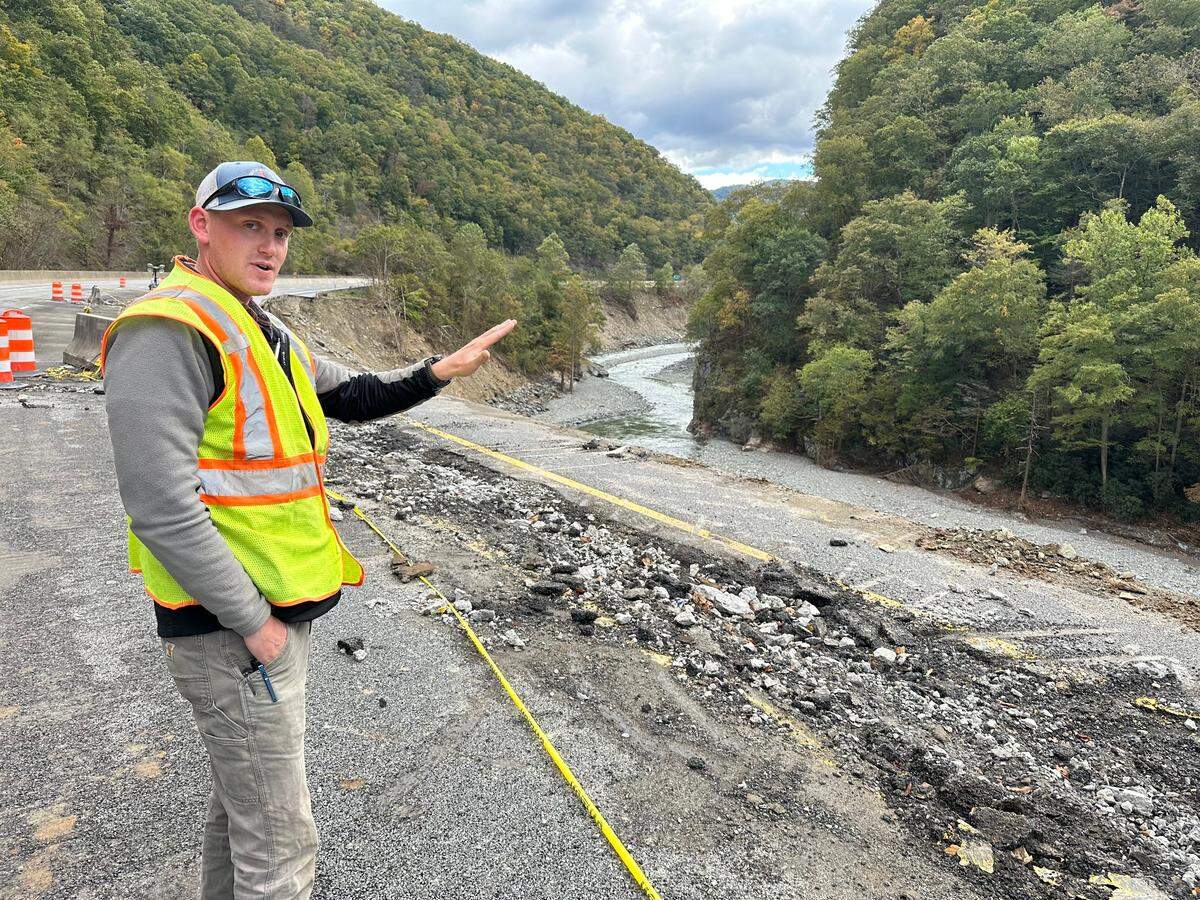
A. We’re going to look this year a lot at Western North Carolina and the recovery (from Helene). Last year when we did the Climate Summit, our lead panel was called “In the Eye of the Storm” and then, quite literally in this subsequent year, we’ve been in the eye of the storm.
We’ll look at the efforts to recover, what they’ve learned on the heels of Hurricane Helene, how are they thinking from a policy perspective to inoculate that area from future storms. We want to bring it to life for people in that regard.
We’ll talk about climate impact on indigenous communities, which have a unique relationship with the land and nature. What they are doing to try to preserve their sacred grounds and way of life.
We’ll talk to some corporations, explore climate innovations out of the corporate sector.
Obviously we’ll talk about the big policy changes happening out of the federal government and what impact that has both locally and on the state level. Former Charlotte Mayor Jennifer Roberts will speak to that.
(Marshall mentioned other notable speakers, including:)
Hayley Brezeale, food sovereignty coordinator for the Catawba Indian Nation.
Ethan Blumenthal, regulatory counsel for the N.C. Sustainable Energy Association. He works to advance clean energy policies at the N.C. Utilities Commission and other policy-making agencies.
Tim Anderson, Asheville-area division engineer for the N.C. Department of Transportation.
Allison Rhodes, executive director of TreesCharlotte; Amy Aussieker, executive director of the non-profit Envision Charlotte; and Tiffany Fant, executive director of the environmental justice organization Sol Nation.
And, from the corporate sector:
Emily Vesling, director of sustainability at Davidson-based Trane Technologies; and Meredith Bandy, vice president of investor relations and sustainability at Albemarle Corp., a global supplier of lithium used in lithium-ion batteries for electric vehicles and other applications.
How does climate change affect us in Charlotte and elsewhere in the Carolinas?
A. I think here in Charlotte, what’s most notable for me is the flooding that occurs. I also think about some of our more urban areas that have less tree canopy, and the environmental heating experience they have, either because we’re not replanting trees, trees have been removed or died.
But I think the region is so interconnected. I grew up in Charleston. I go to the North Carolina beaches. So I think about the flooding and that we see homes falling into the ocean as a result. Charleston, for example, gets a lot of rainy-day flooding.
And we think about what happens to the tourist industry in the mountains if there’s fewer and fewer days of snow.
It does seems overwhelming to people. If someone wants to help, what can they do?
Various panelists will highlight local initiatives that “push back against climate change,” Marshall said, including climate consultant and local volunteer Jean Blotnick.
Why did WFAE decide to hold the summit?
A. It’s sort of part of our DNA to look at opportunities to take our reporting and extend it to in-person conversations. With a topic that is so complex as the climate, it’s hard to do a one-hour panel once in a quarter. So we decided to package it in a day.
And even in a day, I have to tell you, we struggled to get all of the suggestions and ideas into a day, because there’s so much that we could discuss.
Who attends?
A: We see policy makers, community members who are just interested in the health of their community. We have a student exhibit. We see nonprofits, just a range of people, officials, people who are doing to the work in environmental sustainability.
Why is it crucial that people continue to talk about this?
A: One, it’s critical because there’s certainly a push to deny the science of what’s happening. That’s not a new argument. That’s been going on for years. And yet we see dramatic changes in the world around us.
I lived in Charlotte first in the early ‘90s. And I could be wrong, because maybe the technology wasn’t as robust, but I don’t remember tornado warnings the way that we see them now. There’s certain places in this country that I refuse to live in because of the prevalence of tornadoes. And now I’m back in Charlotte and it feels like we get them quite frequently now, that tornadoes are spotted.
What we’re trying to do is move people who are feeling that sense of overwhelming and apathy out of that place, to say, no, there are things that people are doing.
2025 Carolinas Climate Summit
When: 9 a.m. to 4:30 p.m. Thursday, April 10.
Location: Dubois Center at UNC Charlotte, 320 E. 9th St., Charlotte, NC.
Tickets Walk-ins welcome.