Here’s the official hurricane forecast for 2026. How many storms could NC see?
AI-generated summary reviewed by our newsroom.
- National Weather Service forecasts the Atlantic season will have eight to 14 named storms.
- The official outlook gives a 55% chance the 2026 season will be below normal overall.
- Colorado State University says NC has a 54% chance of being affected by a named storm.
The National Weather Service is predicting a below-normal hurricane season in the Atlantic Ocean this year, partly due to warming waters from an expected strong El Niño.
This hurricane season, which begins June 1 and continues through Nov. 30, has a 55% chance of being below normal, 35% of being near-normal and 10% change of an above-normal season, according to the official forecast released Thursday, May 21, during a press conference.
The official forecast is predicting:
- Eight to 14 names storms with winds of 39 mph or higher
- Three to six hurricanes with winds of 74 mph or higher
- One to three major hurricanes, a category 3, 4 or 5 storm with winds 111 mph or higher
But officials stressed that even one storm can cause destruction and loss of life.
“You don’t have to be along the coast to be in danger of the impacts of a tropical system, and we’ve seen it over and over again,” said Ken Graham, National Weather Service Director. “... I think people feel pretty immune inland. Go back to Helene. Go back to some of the pictures. Go look at some of the impacts there.”
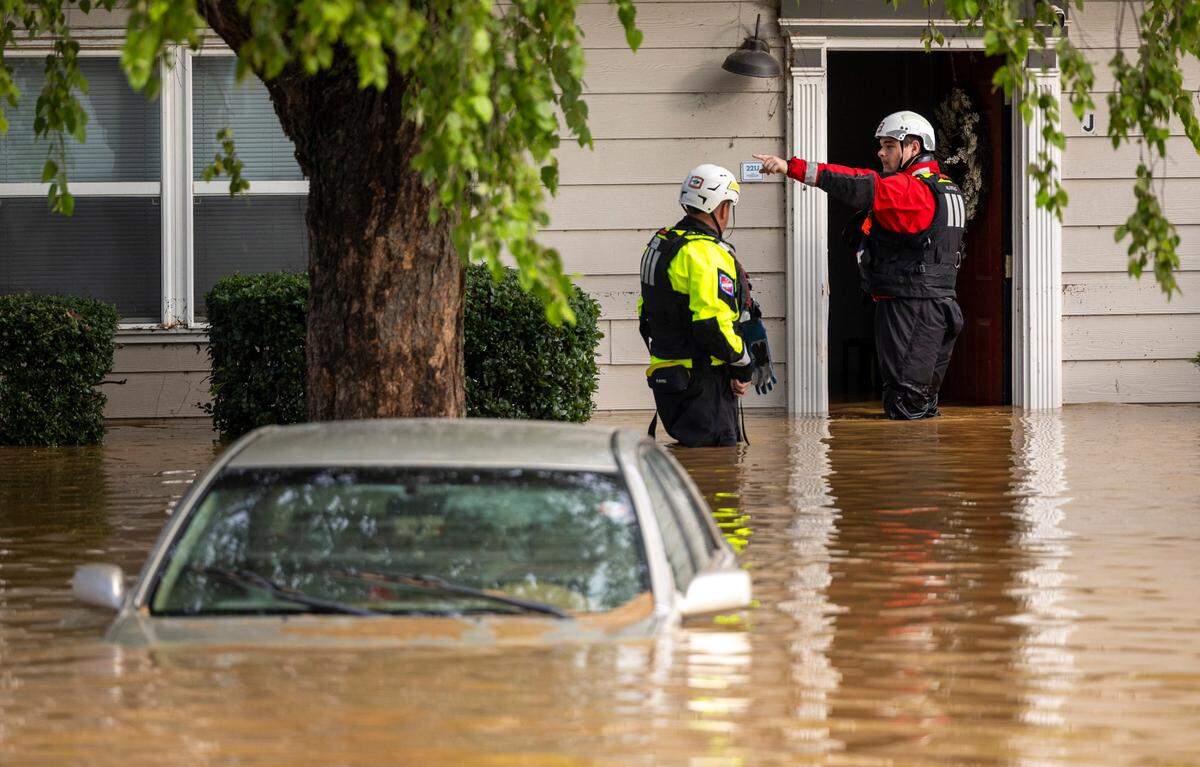
Helene struck western North Carolina in September 2024 resulting in 107 storm-related deaths and nearly $60 billion in damages, both the deadliest and costliest in state history.
Other early forecasts, including from North Carolina State University and Colorado State University, are also predicting average or below average seasons.
The Hurricane Center’s forecast doesn’t include landfall predictions, and that information would be worked on this summer. Colorado State University calculates the potential impacts of hurricanes for each state along the East Coast.
That data shows that in 2026 North Carolina has a 54% change of being affected by a named storm, 28% of being affected by a hurricane and 5% change of being affected by a major hurricane.
.JPG "IMG_CLYDEHELENE-NE-10162_3_1_F9PHM3DQ_L852435386 (1).JPG")
How could El Niño effect NC’s hurricane season?
A stronger and earlier El Niño, a climate pattern that usually brings wetter winters to the area, brings more warm water, and strengthens the jetstream, or air currents, moving toward the Atlantic Ocean.
“These upper level winds blow right across the tropical Atlantic, the same environment where tropical storms and hurricanes are formed,” said Corey Davis, Assistant State Climatologist at the North Carolina State Climate Office, in a previous interview. “As we get closer to the peak of hurricane season, those strong winds may actually hamper some of the tropical activity.”
On Thursday, Davis wrote that hurricane season could be split into two distinct halves with the first being more active and the second quiet due to El Niño.
“An active start to the hurricane season could be our best chance to see solid rainfall,” Davis wrote on the North Carolina State Climate Office’s blog. “In June, July, and August, the Carolina coast is one of the preferred areas for tropical storm formation thanks to the warm waters of the Gulf Stream and the tendency of stalled cold fronts offshore to become tropical, as Chantal did last year.”
2026 Hurricane name list
The World Meteorological Organization released the list of names to use in the 2026 Atlantic tropical cyclone season. The names are:
- Arthur
- Bertha
- Cristobal
- Dolly
- Edouard
- Fay
- Gonzalo
- Hanna
- Isaias
- Josephine
- Kyle
- Marco
- Nana
- Omar
- Paulette
- Rene
- Sally
- Teddy
- Vicky
- Wilfred
Tropical storm vs hurricane
These storms are categorized based on wind speed, which helps predict potential property damage, The News & Observer previously reported. Danger from other hazards like flooding, storm surges and tornadoes are not factored into the storm’s categorization.
According to the National Hurricane Center, storms are classified as:
- Tropical Depression: A tropical cyclone with maximum sustained winds of 38 mph or less.
- Tropical Storm: A tropical cyclone with maximum sustained winds of 39 to 73 mph.
- Hurricane: A tropical cyclone with maximum sustained winds of 74 mph or higher. In the western North Pacific, hurricanes are called typhoons; similar storms in the Indian Ocean and South Pacific Ocean are called cyclones.
- Major Hurricane: A tropical cyclone with maximum sustained winds of 111 mph or higher, corresponding to a Category 3, 4 or 5 on the Saffir-Simpson Hurricane Wind Scale.
Portions of this story were previously published in The News & Observer.
This story was originally published May 21, 2026 at 2:45 PM with the headline "Here’s the official hurricane forecast for 2026. How many storms could NC see?."