Freezers full of hope: After Helene, a renewed effort to protect at-risk seeds
As Jim Veteto wrestled an old freezer from the mud that swamped his mountainside barn when Helene struck last September, he began to write a song.
It felt like the land was speaking through him, he said, their shared resolve fixed on the hundreds of thousands of tiny seeds he’d kept in cold storage for years. So Veteto, founder of the Southern Seed Legacy and the Appalachian Institute for Mountain Studies, kept tugging as the walls crumbled around him, determined to save his collection and the stories it carried.
“You could bring hurricanes and fires and floods and weeds,” he sang in the style of Appalachian balladeers. “But I don’t want to die with a freezer full of seeds.”
A portion of the collection in question, stored at frigid temperatures to slow metabolism and prolong its lifespan by decades, was a quiet casualty of the hurricane that tore through the Blue Ridge Mountains last fall. But experts warn that such losses could have lasting consequences for the region’s agricultural diversity, the very mission to which Veteto and a subculture of preservationists have devoted their lives.
In a state where agriculture’s economic impact tops $110 billion, North Carolina’s small but dedicated community of seed savers say they play a critical role in protecting the food supply. Some safeguard rare varieties for study, while others trade and sell seeds to keep historic crops from extinction.
Seed diversity is the backbone of a resilient food system, providing the genetic range needed to withstand pests, disease and shifting climates. But the U.S. lost 93 percent of its seed diversity between 1903 and 1983, according to a study by Rural Advancement Foundation International that compared vegetable varieties available in USDA catalogs and inside the National Seed Storage Laboratory for each year.
Experts warn the decline threatens both food security and public health.
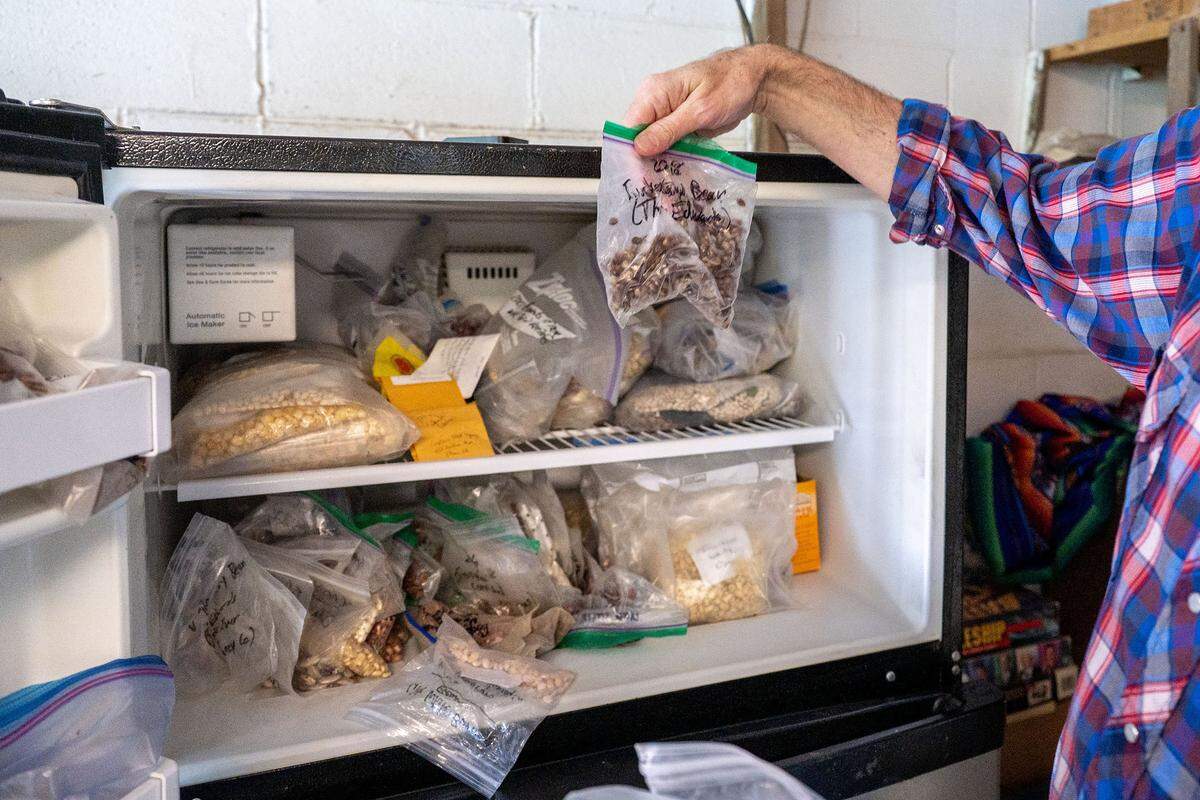
Chris Smith, executive director of The Utopian Seed Project in Leicester, said Helene’s devastation gave some farmers and gardeners a sharpened sense of urgency. He said that shift in priorities could prove vital in preserving agricultural diversity.
“If there had to be a silver lining, then it was potentially the hope that folks would maybe wake up and realize that climate change is real and here and we need to do something about it,” said Smith, whose nonprofit grows and distributes seeds to partner farms across the region. “But communicating how deeply important seeds are is just an ongoing battle.”
Dwindling seed diversity
North Carolina has a long tradition of seed sharing, rooted in its dependence on agriculture and families that passed down seeds much like they did songs or recipes. Today, that legacy endures in places like the state’s Native Seed Library, housed within the Department of Cultural Resources in Raleigh, where visitors can donate or borrow native seeds.
It also lives on through collectors like Jim Veteto. His collection spans hundreds of rare varieties gathered from Appalachian and Cherokee seed keepers, the product of four decades spent working with mountain communities and recording the oral histories tied to seeds.
Helene cost him less than 10 percent of that collection, thousands of seeds ruined when his freezers lost power and frost melted. Still, as he spread salvaged varieties across his porch to dry, he couldn’t shake the thought of what might have been lost.
“I was just thinking about how many of them are the last of their kind,” said Veteto. “And I’m sure a lot of people whose seed supplies were knocked out weren’t quite as lucky as me to be able to rescue most of them.”
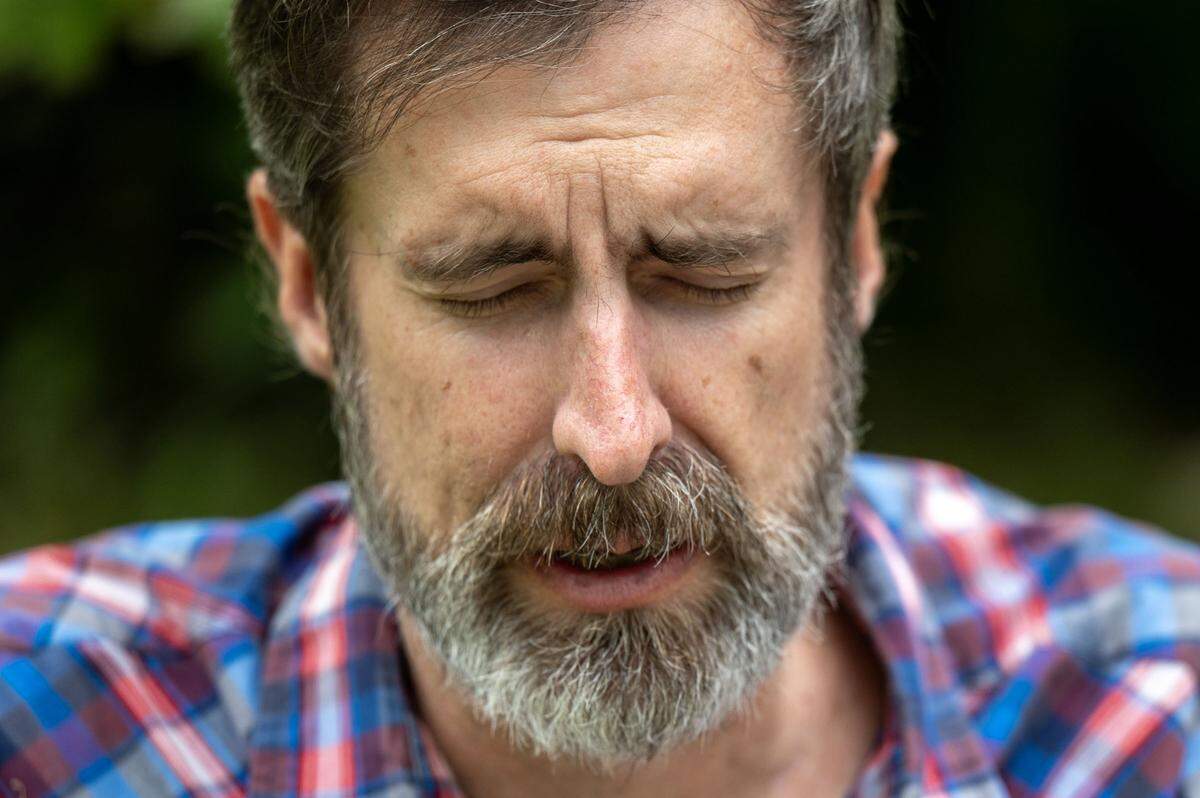
Smith says the dwindling seed diversity is a crisis manufactured by humans.
“There’s been a very intentional erosion of small, diversified farming systems in favor of industrial style agriculture,” he said.
The large farms Smith points to, those grossing over $1 million annually, account for just 3 percent of U.S. farms, according to the Department of Agriculture. But they dominate production, planting massive fields of just one crop to maximize efficiency.
The climate crisis and consolidation of seed production under a few large corporations compounds the problem, upending farmers’ ability to grow food. While some seed savers approach the work like historians, focused on collecting and documenting, Smith believes seeds must be planted and grown to truly survive.
“We have lots and lots of individual seed keepers that have been holding on to the heritage,” said Smith, whose personal seed collection was threatened when floodwaters filled his basement in September. “And it’s not uncommon for me to hear about an elder dying and leaving their basement with a freezer full of seeds.”
Lost seeds ‘affected me mentally’
So a few weeks after Helene, Smith met South Carolina farmer Rodger Winn in an Asheville parking lot.
Winn had suffered heavy losses in the storm, but it wasn’t the ruin of his commercial greenhouse that struck him hardest. Nor was it the tangle of beanpoles flattened to the ground, or the destruction of every senior oak and pecan tree that once shaded his home.
His most painful loss was the shorted breaker box in his shop, an outage that thawed the freezer where he kept hundreds of pounds of seeds. Three inches of water soaked pillow cases filled with corn and peanut seed, rotting them out.
“It was significant and it affected me mentally,” said Winn. “I still haven’t completely recovered.”
Winn brought Smith two boxes of Appalachian seeds to be shared with farmers across the region. Inside were speckled field peas and heirloom butterbeans, both products of a lifetime of growing and saving seeds within his community.
Winn’s love of gardening began early, planting cotton seeds for an elementary school project and helping his grandmother shell butterbeans on her porch. As a sailor in the Navy, he kept a small box of seeds in his pocket, their familiar shapes a reminder of home through long missions.
“It was just something to keep my sanity while I was on a submarine for months at a time,” Winn said. “To dream about what I wanted to plant when I got back.”
Some of Winn’s most cherished varieties survived Helene. Among them were the Zelma Zesta, a Southern legacy bean passed to him in 1981 by his wife’s uncle in a plastic sandwich bag, and a melon seed gifted by his friend Jim Kibler, later identified as a genetic match to Odell’s White, a historic melon grown during the Civil War.
When Winn bought his first computer in 1995, he immediately searched for the speckled butter beans he once shelled with his grandmother. That pulled him into online gardening forums, tomato discussion groups, and eventually weekly potluck dinners where enthusiasts traded Appalachian beans and swapped tips on pest control.
After decades of such exchanges, said Winn, it’s impossible to know what treasures might still be tucked away in local freezers.
“I’d like to find every member of this community that’s of that age group and just peek into their freezer,” said Winn. “I know there’s all sorts of treasures in there that hadn’t been planted in a while.”
Helene a wake-up call to seed savers
Winn never set out to keep the seeds for himself. But the storm pushed him to focus on spreading them into as many gardens as possible, a shift other seed savers are making as well.
Veteto said he’s become more responsive to swap requests and is increasingly willing to make a trip to the post office to mail portions of his collection to growers who will actually put it to use.
“I see a need to decentralize what I have,” said Veteto. “It showed me the impermanence of it, that it could all be gone in a day.”
That change is something William Ritter has noticed too, since floodwaters uprooted his gardens and apple trees. In the months that followed, he found himself talking more with neighbors, and in some cases, meeting them for the first time.
“It’s become such a siloed world that unless something terrible like Helene happens, you’ll find out a lot of people don’t even know their neighbors,” said Ritter, a musician and Bakersville native. “But people were stopping to talk to each other because we had no cell service and we had no power, and it was beautiful.”
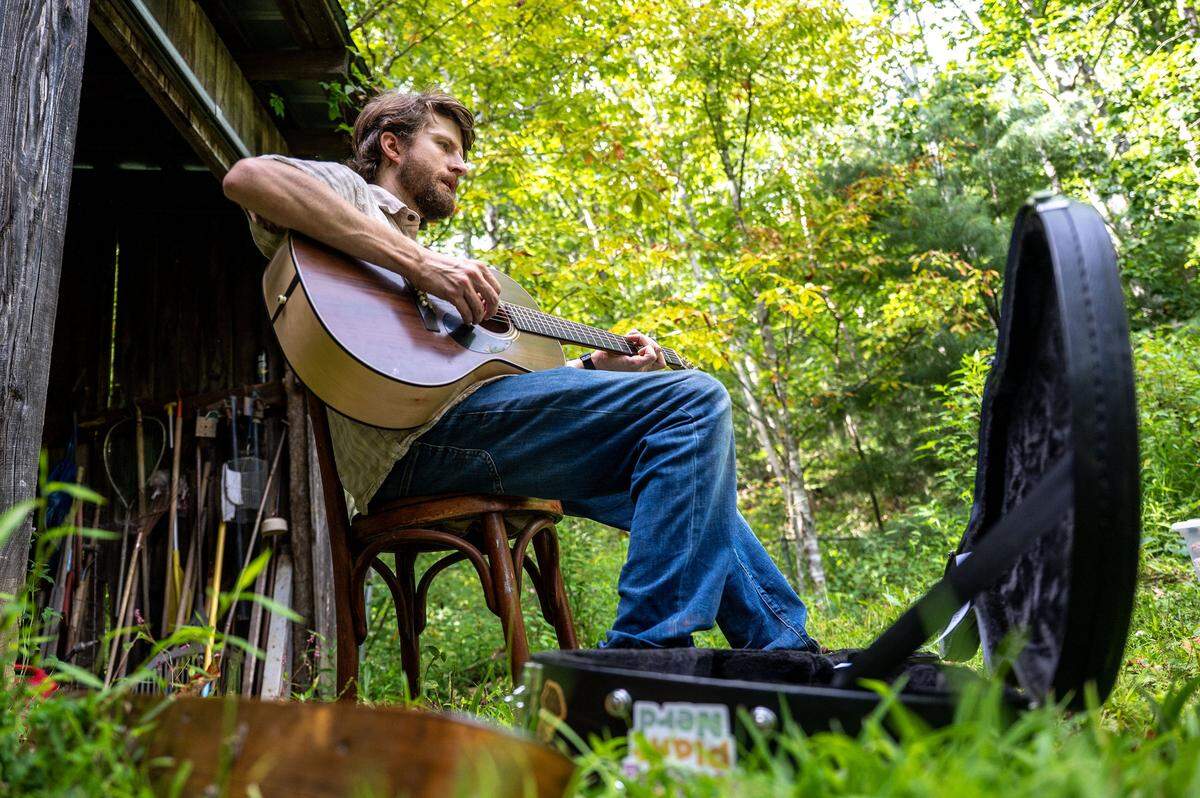
At 38, Ritter is considerably younger than many of the region’s best-known seed savers. But he’s devoted to the practice, working to revive systems of the past that he said once held communities together, and whose absence, he argues, has fueled their decline.
His fascination with traditional foodways, especially from his home in Mitchell County, also shapes the music he writes and performs. To Ritter, a ballad is much like a seed. Both carry stories and connections, he said, and both rely on people to keep them alive.
The older gardeners and farmers Ritter learned from weren’t always thinking about agricultural diversity as such, said Veteto. Many treated seed saving more like a neighborhood food bank – country people in overalls, eager to share their crops and the stories that came with them.
“It’s always been very unofficial, motivated by those who understand the importance of these things to their own culture and their own families and communities,” said Veteto. “But there’s just no way to stop these elders from passing on.”
Saving Thomas Jefferson’s favorite seed
Winn also feels the traditions slipping. At local swaps, he sees younger people drawn to sustainable produce but lacking both the knowledge or intention to save seeds themselves.
Still, he’s managed to introduce several of his most cherished varieties to Southern Exposure Seed Exchange, a cooperatively owned seed company. Among them is the bean his wife’s family grew for generations, now one of the exchange’s most popular sellers.
“I’m pretty excited to know that varieties I saved were actually old historic varieties that have now been brought back into commerce,” said Winn. “Seeds that have a special connection and a memory are the important seeds to me, and I want to make sure they get to people.”
In 2010, Winn shared a sugar pea seed he’d been gifted by a neighbor with Peter Hatch, the former curator of the restored gardens at Monticello, President Thomas Jefferson’s estate. Hatch identified it as the Early Frame Pea, long thought extinct, Jefferson’s favored variety.
This May, a crew filmed Winn’s land for a program on the pea, which he hadn’t been able to plant since Helene. Curious whether it survived elsewhere, Winn asked around and got a call back from the daughter of a gardener who said her father had what Winn was looking for.
The 94-year-old led Winn through his garden and into his shop, where a refrigerator held bags and pill bottles filled with seed. Winn left with a handful of Jefferson’s peas and two butterbean varieties, exchanging the seeds for the promise of his return.
Miles away, Helene had washed away Ritter’s garden. But after weeks of staring at bare ground, a few green shoots pushed through the dark silt. They were Betty Sue Parker’s Greasy Beans, named for Ritter’s late neighbor, who had received the seeds as a wedding gift from her grandmother.
“These seeds have been here longer than us, and I think they’ll outlive us,” said Ritter. “All they’re asking for is a chance.”
This story was originally published September 2, 2025 at 5:48 AM.