
The father was an ardent segregationist. His conservative son left a different legacy.
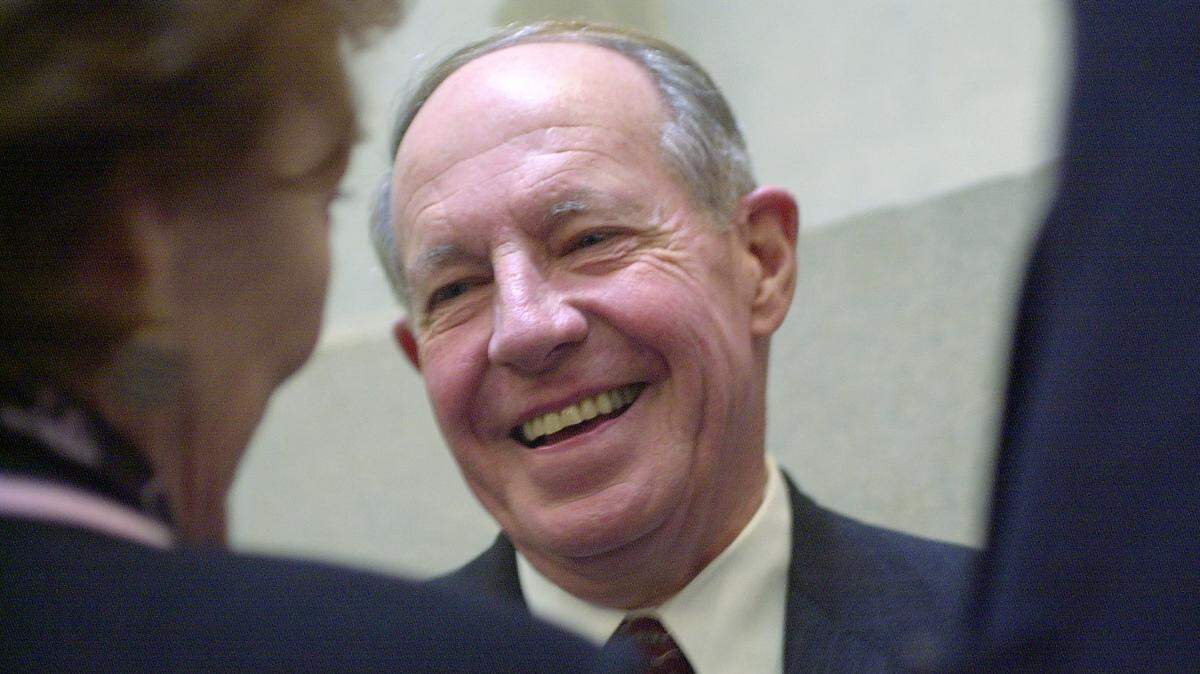
I. Beverly Lake Sr. was one of North Carolina’s most determined public segregationists of the 1960s. Lake twice ran competitive races for governor, losing both but leaving a mark as a vigorous voice for the Old South.
His son followed his father’s path and ran for governor in 1980. The elder Lake, recognizing how public sentiment had changed, urged a reporter not to portray his son’s campaign as an extension of his.
If only it were that easy for the son, with the same distinctive name, to emerge from his father’s segregationist shadow. The elder Lake’s views on race clung to his son’s campaign and to much of I. Beverly Lake Jr’s. life, which ended recently at age 85. The younger Lake lost that race for governor but was elected chief justice of the N.C. Supreme Court in 2000. It was there that he changed the legal system in a way that would have stunned his father.
The father was the last major statewide candidate in North Carolina to run on an ardently segregationist platform. His son wrestled with that legacy for decades. He insisted his father had been misunderstood, although for more than 40 years until he died in 1996, his father’s views could not have been clearer.
“If I become governor,” Lake Sr. said during one of his campaigns, “I shall use all of my powers and influence to terminate whatever integration occurs.” As he grew older and times changed, Lake Sr. doubled down on his views about race, a separatist till the end.
Lake Jr. revered his father, a former law professor who was admired by his students for his intellect, civility and integrity. The son could never bring himself to repudiate his father’s views.
“He was not a racist. I am not a racist,” Lake Jr. told me for a book about his father’s 1960 campaign. “He believed in segregation … and he was very fearful that forced integration would damage the public school system … The times were different. You have to judge him in light of the times.” He would have considered it a betrayal to criticize his father, whom he called “a fine Christian gentleman, the finest I’ve ever known. I would never repudiate him.”
The Baptist minister Marion D. Aldridge of South Carolina once wrote of another man with a segregationist father who led a public life: “He is caught in the terrible dilemma of trying to make his father look good and tell the truth at the same time.” Lake Jr. had the same dilemma.
While he was his father’s son in some ways, especially with his courtly personality, Lake Jr. was his own man in others. As chief justice, he became concerned when DNA tests and other evidence showed that some people in North Carolina had been wrongfully convicted. He credited newspaper reporters for uncovering many of these cases.
Lake Jr. created a commission in 2002 to study wrongful convictions. That led to the establishment in 2006 of the Innocence Inquiry Commission, a state agency that has exonerated 15 people, The Observer’s Jim Morrill reported.
Lake Jr. was a conservative Republican. Christine Mumma, Lake’s former law clerk, remembers opening his mail and reading angry letters from friends and supporters. “He got a lot of hate mail,” she said. “He was proud of himself for going against the grain.” When the justice system didn’t work, he moved to fix it, even if it upset his constituency that had elected him to the Supreme Court.
Lake Sr. said he believed in justice and opportunity, yet he was willing to deny both to many North Carolina citizens. His son never fully came to terms with his father’s legacy. But in establishing the Innocence Inquiry Commission and making North Carolina a national model for reviewing convictions, the younger Lake transcended his father’s painful past and forged a new commitment to justice.