
A president, his NC confidant, and the civil rights movement
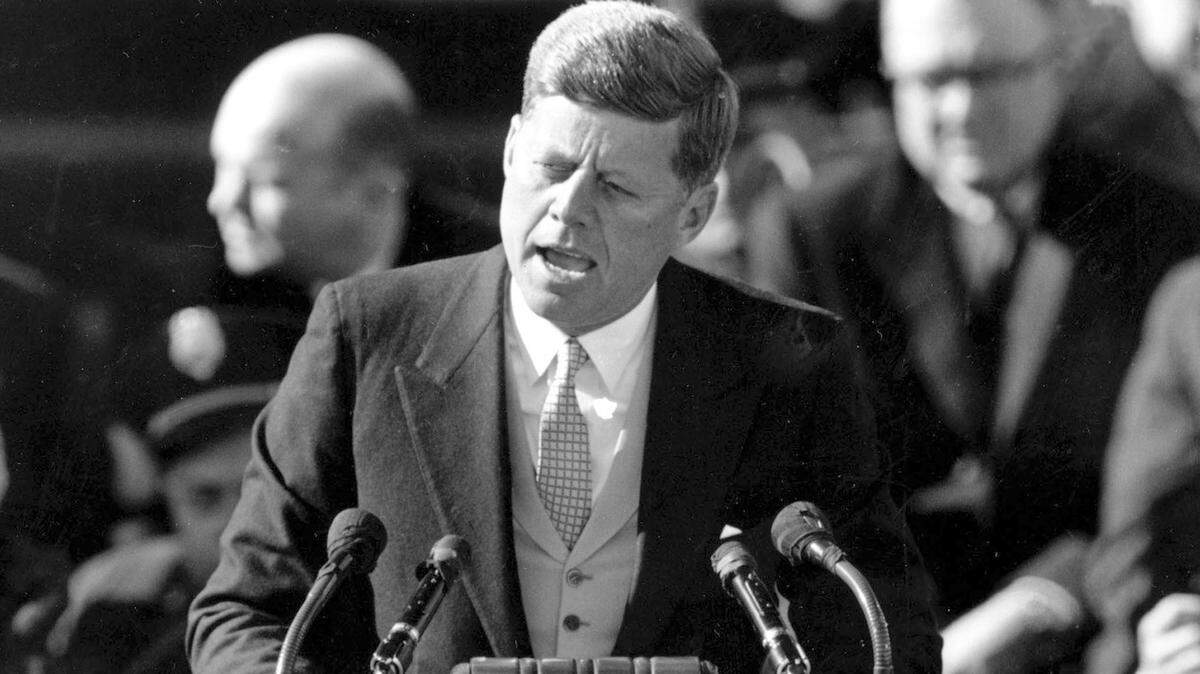
On Presidents’ Day, we naturally focus on the individuals who have served as the President of the United States, but in reality, no president is an island unto himself. Presidents receive advice from many people. In some cases, this advice comes from the official members of the Cabinet of the United States, but in other cases, the advice comes from unofficial advisors. During the administration of President Andrew Jackson, the term Kitchen Cabinet came into use when referring Jackson’s cadre of unofficial advisors, and the term has stuck. Such unofficial advisors range from talk show hosts and television pundits to noted scientists and prominent writers. North Carolina author Harry Golden played this type of advisory role for President John F. Kennedy, especially on the topic of civil rights.
Although widely recognized as one of North Carolina’s most influential writers, Golden did not grow up in North Carolina. He spent most of his boyhood and young adult days in New York City before moving to Charlotte in 1941. The next year he published a trial run of the Carolina Israelite, a newspaper intended primarily for North Carolina’s Jewish community. It was a success, and in 1944 he began publishing the newspaper on a regular basis. In addition to publishing his newspaper, Golden wrote numerous best-selling books. In many of his publications and public appearances, Golden spoke out against racial segregation and called for an end to the Jim Crow laws. It was this side of Golden’s career that brought Golden and Kennedy together in the late 1950s.
Golden and Kennedy began corresponding on a regular basis while Kennedy was still a senator from Massachusetts, and they continued corresponding until shortly before Kennedy’s assassination in November 1963. This correspondence is now housed in the Special Collections Department of the Atkins Library at UNC Charlotte. Some of these letters relate to Golden’s books. Golden, for example, sent Kennedy a copy of Only in America, and this gift sparked an exchange of letters. Most of their correspondence, however, dealt with the civil rights movement.
In his letters to Kennedy, Golden always encouraged Kennedy to promote the civil rights movement. In some of his letters to Kennedy, Golden would draw Kennedy’s attention to specific cases of racism. In other letters, he would praise Kennedy for taking action to end racial discrimination. Throughout their correspondence, Golden advised Kennedy to speak out in favor of the civil rights movement and to support legislation related to voting rights. Of course, Golden was not the only person who was advising Kennedy on such matters. Dr. Martin Luther King, for example, was also communicating with Kennedy on a regular basis. Still, an overview of the correspondence between Golden and Kennedy indicates that Golden played a significant role in shaping Kennedy’s increasingly pro-civil rights position.
One of Golden’s last letters to Kennedy was written on March 9, 1963. In this letter, he expressed his “appreciation to both you and Mrs. Kennedy for the gracious welcome during the recent Emancipation Proclamation Anniversary reception at the White House.” As this letter demonstrates, Golden not only corresponded with Kennedy about civil rights issues, but he also visited the White House to promote the cause of civil rights.
The relationship between Golden and Kennedy provides an inspiring example of how a well-informed writer and a well-read president can work together to change the course of American history for the better.