
100 years after suffrage, NC has fallen behind on electing women
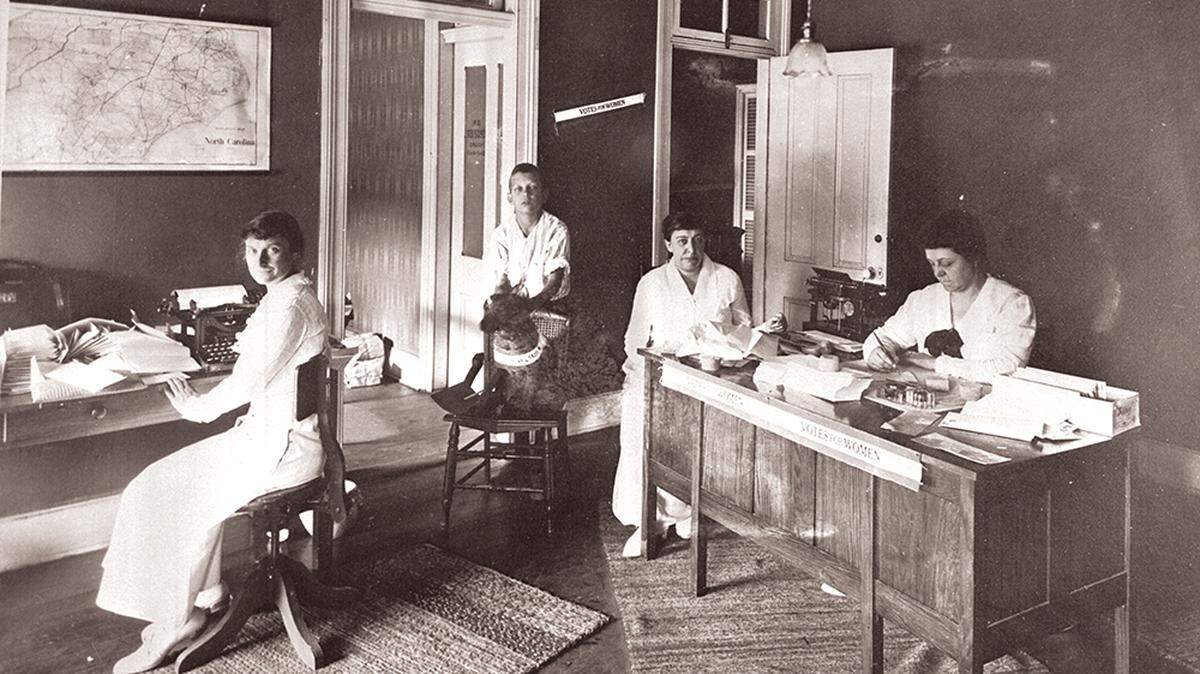
The nation will celebrate “Women’s Equality Day” on Aug. 26, the 100th anniversary of women winning the right to vote with the certification of the 19th Amendment.
But in North Carolina, the math is a little different. The Old North State was in a position to be the deciding state to approve the amendment in 1920, but the vote failed in the state Senate by two votes. Tennessee ratified the amendment the next day. North Carolina didn’t come around to adding its approval until 1971.
So, North Carolina, happy 49th anniversary of the 19th Amendment.
Unfortunately, the state’s straggling on the right of women to vote still lingers in its political makeup. A new report shows North Carolina lags in electing women to state offices despite a surge in women being elected nationwide.
The report, “The Status of Women in North Carolina: Political Participation,” was issued jointly by the NC Department of Administration’s Council for Women and Youth Involvement and the Institute for Women’s Policy Research, a Washington, D.C.-based think tank. It ranks North Carolina 35th nationally in women’s political participation and gives the state a letter grade of D.
The rank and grade are based on voter registration, voter turnout, elected offices held by women and the availability of institutional resources for women to enter politics, such as PACs focused on women and opportunities for political training and mentoring.
During a video panel discussing the findings, Elyse Shaw, a study director with the Institute for Women’s Policy Research, said, “North Carolina has kind of fallen behind.”
Actually, far behind. Shaw said her group’s national index of women in elected office ranks North Carolina 43rd.
Women are half of North Carolina’s population, but make up only 25 percent of the state legislature. Between 2015 and 2020, the percentage of North Carolina women dropped in the state Senate, the U.S. House and statewide elected offices. The Institute for Women’s Policy Research estimates that at the rate North Carolina women are increasing in the General Assembly, women won’t reach parity with men until 2084.
Machelle Sanders, secretary of the state Department of Administration, called out that year with alarm during the panel discussion: “2084! I can’t wait 64 years and I know you can’t wait 64 years and we won’t wait 64 years.”
There are encouraging signs elsewhere. Three of the N.C. Supreme Court’s seven justices are women — including the first Black female to serve as chief justice — and 40 percent of district court judges are women. Women are also in prominent political positions on the local level. Seven North Carolina cities – including the two largest, Charlotte and Raleigh – are led by women mayors.
The share of women in the General Assembly peaked in 2008 at 27 percent, but has since plateaued. It’s not hard to understand why. The state’s lack of progress on affordable child care, universal pre-K and family leave make running for office more difficult for mothers. Extreme gerrymandering has locked male incumbents into their seats and low pay for state legislators makes the job more affordable to independent business people and retirees. And then there’s the problem of what women candidates call “campaigning while female” – campaign trail questions about who is caring for their children and whether they are alternately feminine or tough enough.
A century ago, women successfully fought for the right to make a difference at the polls. But the 19th Amendment did not repeal male chauvinism, dissolve gender stereotypes or guarantee that good old boy political networks would make way for women to run.
Those challenges, though fading, remain for women candidates. Overcoming them requires that more women use what they long ago earned – the right to vote.
This story was originally published August 23, 2020 at 12:00 AM with the headline "100 years after suffrage, NC has fallen behind on electing women."