
College basketball should consider a timeout
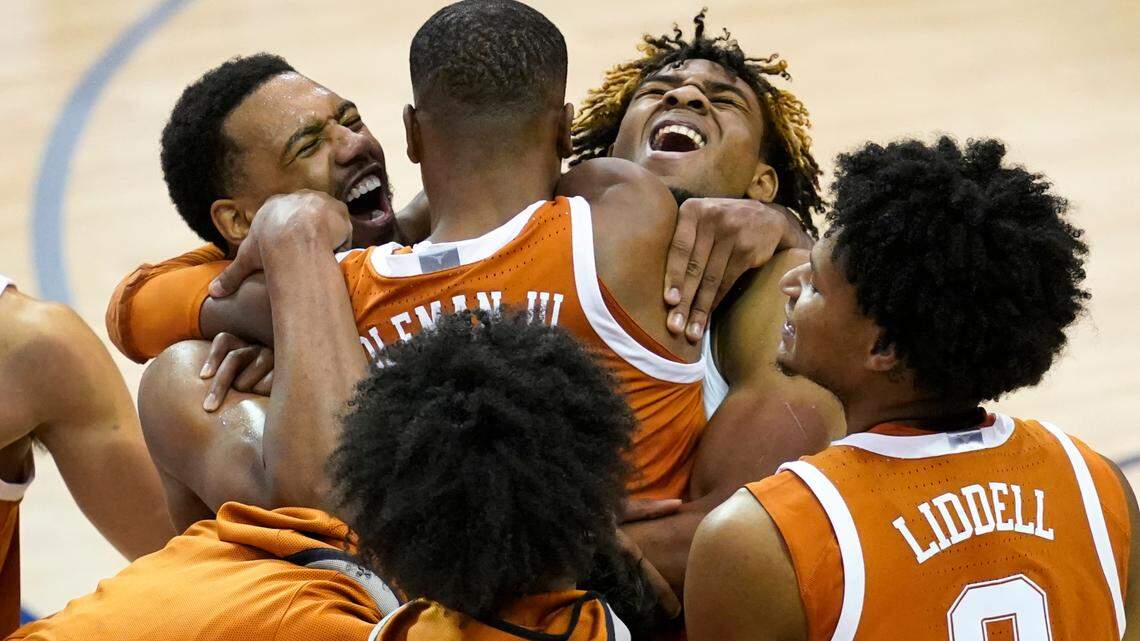
This year, NCAA basketball’s postseason “March Madness” has a counterpoint at the season’s start. Call it December Delirium.
As the worst pandemic in a century engulfs the nation, Division I colleges – with one notable exception – are continuing to play basketball. The Ivy League announced on Nov. 12 that it was canceling all its winter sports. Since then, the U.S. has added 3.4 million COVID cases and more than 30,000 Americans have died.
But big-time programs, dependent on TV revenue, continue to play on – albeit without fans – under protocols less strict than those required by the NBA. Don’t expect the NCAA to call it off. The governing body of college sports relies on the NCAA Men’s Basketball Tournament for more than 80 percent of its revenue. And don’t expect the Atlantic Coast Conference, where basketball is a religion, to shut down.
It’s understandable why the college teams want to keep dribbling through the pandemic. They need the money and their fans, already cooped up by COVID for nine months, need the diversion. But epidemiologists may soon have to cry foul.
As UNC’s men’s basketball team took on Texas on Wednesday in Asheville, the N.C. Department of Health and Human Services reported 4,199 new coronavirus infections and a record 2,039 people hospitalized. North Carolina’s positive test rate hit 11.4 percent, more than double what health officials say is needed to contain the virus.
Nationally, more than 100,000 COVID-19 patients are hospitalized and more than 272,000 people have died since March, the month when the NCAA called off its 2020 basketball tournament and all spring championships out of concern about the virus.
At the time, the NCAA said in statement: “This decision is based on the evolving COVID-19 public health threat, our ability to ensure the events do not contribute to the spread of the pandemic and the impracticality of hosting such events at any time during the academic year given the ongoing decisions by other entities.”
That “evolving public health threat” is now evolving monstrously. By February, if things keep going as they are, federal health officials estimate total U.S. deaths from the virus could be nearing half a million.
Dr. Robert Redfield, director of the Centers for Disease Control and Prevention, this week told a meeting of the Chamber of Commerce Foundation, “The reality is, December and January and February are going to be rough times. I actually believe they’re going to be the most difficult time in the public health history of this nation.”
If the “evolving public health threat” was enough to halt basketball last March, why not now?
Well, TV.
But college basketball’s efforts to collect the TV revenue to which big programs are addicted is getting bizarre. At least a dozen coaches have tested positive, including Syracuse’s Jim Boeheim, Tennessee’s Rick Barnes and Michigan State’s Tom Izzo. The schedule is rife with postponements and teams “pausing activity” because of positive tests. To reduce the risks of long travel, the Maui Invitational tournament was moved from Hawaii to Asheville, where it snowed.
Teams are trying to keep the season going through frequent testing, as required by the NCAA. That may hold down the spread of infections, but it runs up costs to programs. It also raises the issue of why a college basketball player can get multiple COVID-19 tests that many health care workers don’t have regular access to, let alone ordinary Americans who are waiting in lines for hours.
How much college basketball contributes to the spread of COVID-19 may be impossible to measure. But playing on undermines the message from the teams’ own universities, where researchers and doctors are urging people not to travel or gather in groups.
That big-time college basketball continues shows what was already known: Revenue sports are separate from the colleges they supposedly represent. But they are not separate from society and the obligation of all to protect – or at least not endanger – public health.
BEHIND THE STORY
MOREWhat is the Editorial Board?
The Charlotte Observer and Raleigh News & Observer editorial boards combined in 2019 to provide fuller and more diverse North Carolina opinion content to our readers. The editorial board operates independently from the newsrooms in Charlotte and Raleigh and does not influence the work of the reporting and editing staffs. The combined board is led by N.C. Opinion Editor Peter St. Onge, who is joined in Raleigh by deputy Opinion editor Ned Barnett and in Charlotte by deputy Opinion editor Paige Masten. Board members also include Observer editor Rana Cash and News & Observer editor Nicole Stockdale. For questions about the board or our editorials, email pstonge@charlotteobserver.com.
This story was originally published December 4, 2020 at 4:00 AM with the headline "College basketball should consider a timeout."