
The death penalty kills people that no longer exist
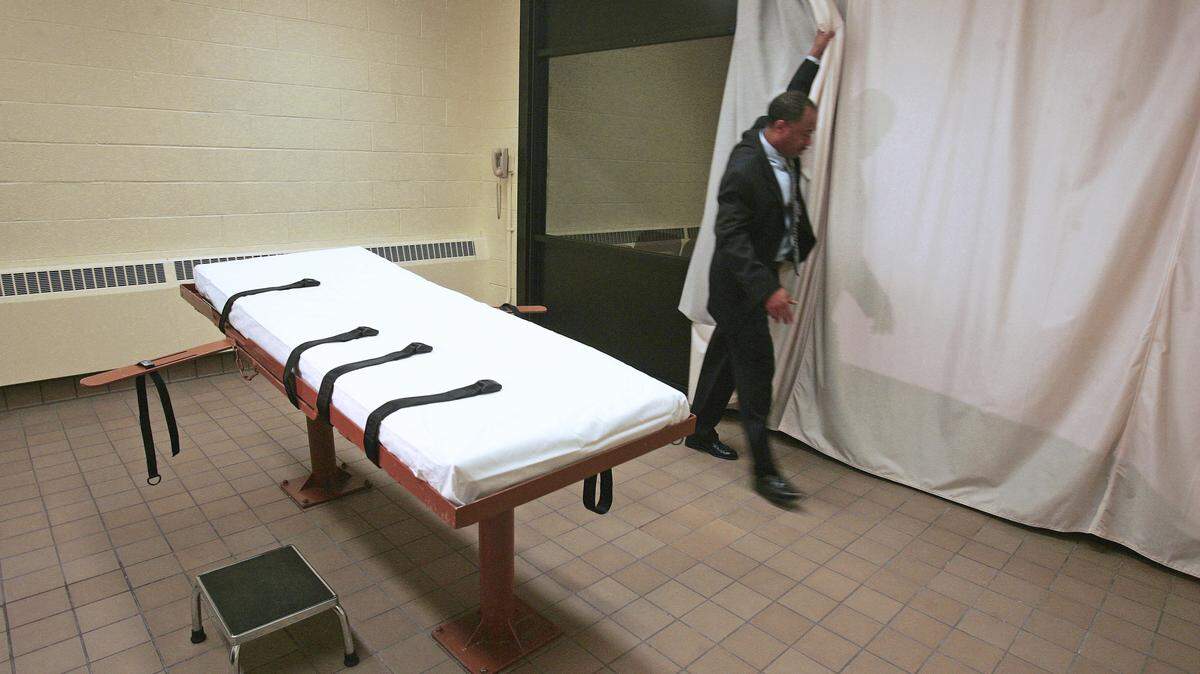
Rob took care of Boots, a stray cat, for the entire year Rob lived at the transitional residence I managed in Buffalo, NY, after his two-decade prison stint for murder. When I read earlier this month that President Donald Trump plans to push forward with an unprecedented five federal executions during his lame duck session, my first thought was of Rob and Boots. The tender connection they shared. The humanity of it.
My mind wandered to Bobby and the lighthouse he made for me out of gravel, sand, and popsicle sticks—Bobby, a soft-voiced man of failing health, who killed three people in a botched robbery 50 years ago. I thought of Bill, Reggie, Richard, and all of the men I served who had committed homicides decades before their release to my care. This list of men has been scrolling through my mind on a loop for days. Mercifully, each one was tried under a jurisdiction that did not allow for the death penalty. Most of them are looking forward to the first, second, or third Christmas with their loved ones in decades, but any one could just as easily be huddled on death row today had their circumstances been even slightly different.
There are many reasons to be against the death penalty, not the least of which being the mounting pile of evidence that it has little to no deterrent effect. Another particularly salient argument against capital punishment, given the on-going congressional battle over COVID-19 relief funding, is that it is wildly expensive. It is also arbitrary, racially biased, and unconstitutional, depending on who you ask. But these are not the best arguments against the death penalty.
The best argument against the death penalty is precisely the one real argument for it: vengeance. Capital punishment is nothing but institutionalized vengeance and anyone who tells you otherwise is a fool or a liar.
Vengeance is not only an obscene and draconian basis for a legal system, but those who preach it belie that they are seeking vengeance against a person who no longer exists. Rob is not the same person he was two decades ago when he killed that young woman. Richard is getting a degree in electrical engineering and spends his free time caring for his ever-growing fish collection. Reggie’s kidneys are failing. Bill got married last year. Prison does not preserve humans in amber. These men grow and learn and change just like anyone. Their brains develop. Life prevails.
When the government killed Christopher Vialva on September 24th, he was not the panicking 19-year-old kid who had made a heinous mistake over two decades ago in Texas. He was not, as the prosecutor had called him during his trial, “a mad dog that needed to be put down.” Christopher had grown into a man of faith and family. He gave and received love at will. He read books and praised god. The same is true of his codefendant, Brandon Bernard, who was executed Dec. 10 at the Federal Correctional Center in Terre Haute, Indiana.
Every man I know who has served time for homicide has shown me nothing but kindness. Each one accepted his decades of punishment and then, incredibly, left prison with profound and enduring humility, remorse, and grace. The government is putting to death five people just like them. If this cannot be stopped, let their deaths at least sensitize us to our worst demons, and return us to our better angels. We should all be outraged. We should all be devastated. Each and every one of us must take personal responsibility for ending federal executions. We must do better than this. We must be better than this.
This story was originally published December 17, 2020 at 7:41 AM.