
Laxity ignited an epidemic in 1885. Trump’s negligence fueled another in 2020.
As Congress and the nation debate a former President’s role in promoting a mob’s insurrectionist invasion of the US Capitol, we should also consider his leadership failures in addressing a pandemic that in one year has killed more U.S. citizens than were killed in combat in four years of World War II.
Failure in dealing with a 1885 smallpox epidemic provides a perspective on the COVID-19 failures in 2020. Smallpox was a highly contagious and deadly viral disease that plagued mankind for centuries. It was partially controlled after the 1790s by Jenner’s introduction of vaccinations with the milder cowpox (vaccinia) virus to promote immunity. Today biological preparations administrated to promote immunity to an infectious disease are known as vaccines.
Unlike the influenza and COVID-19 viruses, the smallpox virus has no natural animal hosts. it was eliminated by a unique effort coordinated by the World Health Organization (WHO).
Finding, and isolating all human smallpox cases worldwide until they were no longer infectious, led to its global elimination by 1980.
I and my contemporaries all had a smallpox vaccination scar on our upper arm from our childhood days in the 1930s because it was required to attend the first grade in schools.
Thanks to the WHO this is no longer necessary.
Dr. William Osler, the renowned first chair of medicine at the new Johns Hopkins School of Medicine, in his landmark 1892 textbook of medicine related that smallpox “smolders here and there…and when conditions are favorable becomes epidemic. Perhaps the most remarkable instance…of the rapid spread of the disease occurred in Montreal in 1885.”
The city had cases of smallpox from 1870 to 1875 “when it died out, in part owing …to the introduction of…vaccination.” It “was free from the disease until 1885. During these years vaccination, to which many of the French Canadians are opposed, was much neglected, so that a large unprotected population grew up in the city.”
On February 28, 1885, a railroad “Pullman-car conductor, who had traveled from Chicago where the disease had been slightly prevalent, was admitted into the Hotel-Dieu (hospital), the civic smallpox hospital being closed at the time.“
“Isolation was not carried out, and on the 1st of April a servant in the hospital died of smallpox.”
After her death, “with a negligence absolutely criminal, the authorities of the hospital dismissed all patients presenting no symptoms of contagion, who could go home. “
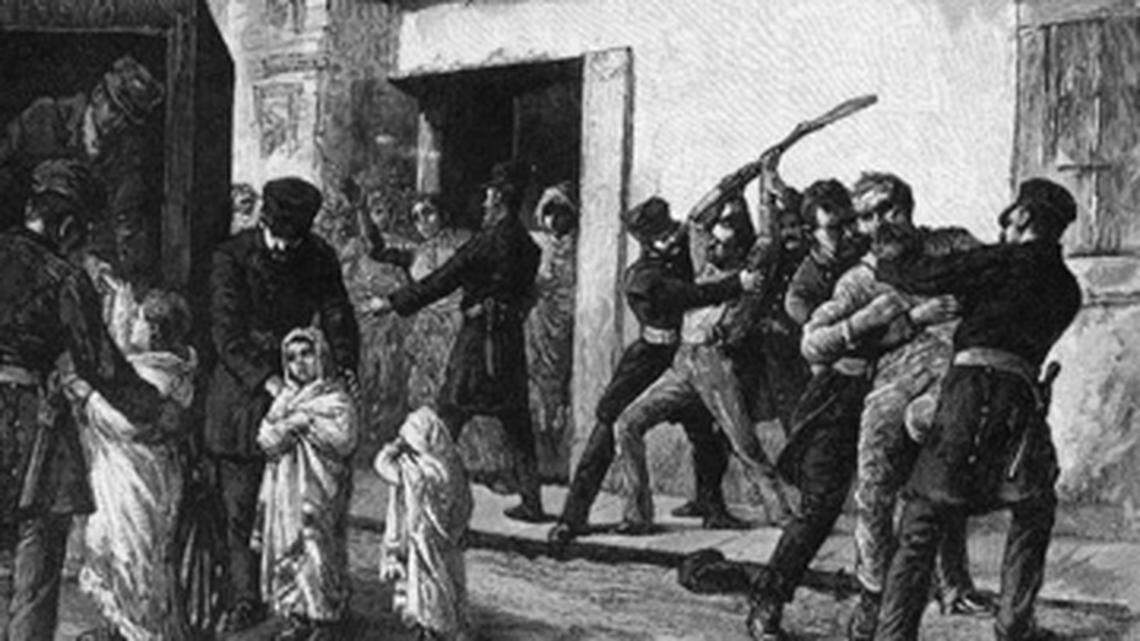
“The disease spread like fire in dry grass, and in nine months 3,164 persons died in the city of small-pox.” This included 2,717 children under 10 years of age in a total Montreal population then of some 200,000 persons.
History has repeated itself as the former president “with negligence absolutely criminal” downplayed the COVID-19 threat, politicized the wearing of masks and social distancing, withdrew the U.S. from the WHO and promoted superspreader events at the White House and across the nation at campaign stops.
As a result, the COVID-19 virus is now spreading “like fire in dry grass” across the nation in rural areas and in cities. Hospitals are overflowing with cases and the fatalities continue.
We are now fortunate to have new leadership as well as sophisticated and dedicated biomedical communities and vaccine manufacturers who have made great progress in rapidly developing vaccines for the COVID–19 virus. These efforts, however, will fall short in 2021 – as they did in 1885 in Montreal – if large segments of the population do not to follow basic public health measures and do not get vaccinated.
Correction: An earlier version of this op-ed said President Trump portrayed the COVID-19 threat as a “hoax.” He used “hoax” to refer to Democratic attacks on his administration’s handling of the outbreak.
This story was originally published February 7, 2021 at 12:00 AM with the headline "Laxity ignited an epidemic in 1885. Trump’s negligence fueled another in 2020.."