
The link between literature and empathetic presidents
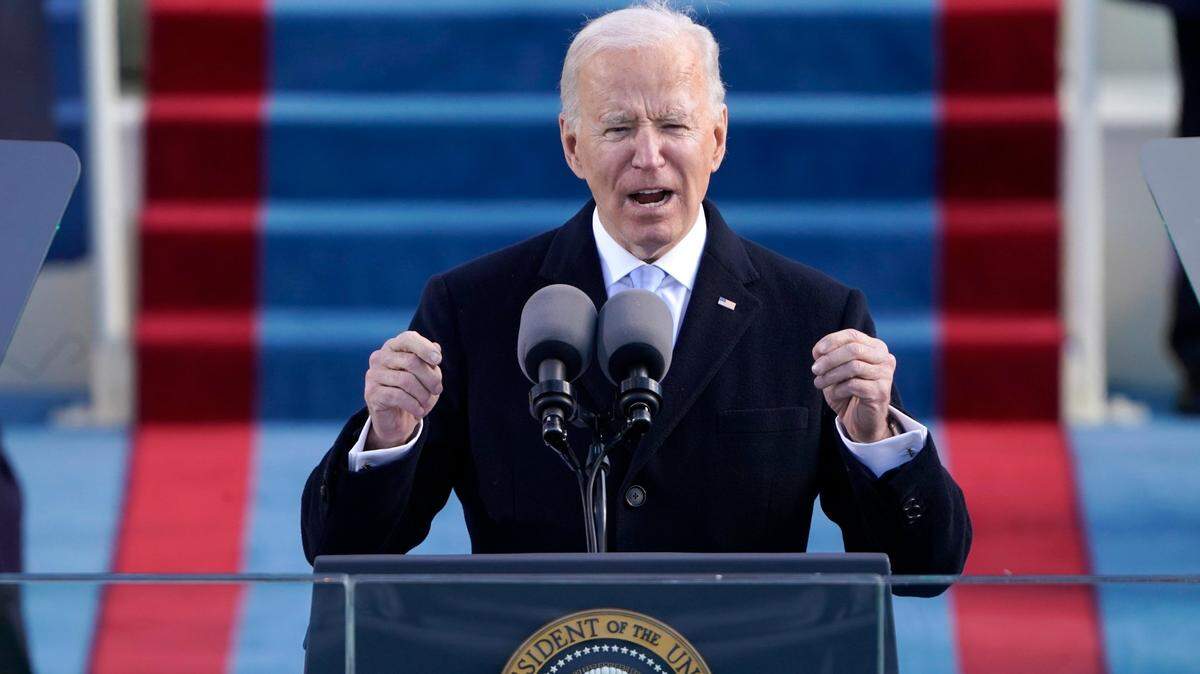
In reading the news coverage of President Biden’s inauguration and the early days of his administration, I am intrigued by the frequent references to his passion for literature, especially poetry, and to his ability to empathize with others. I am reminded of President Theodore Roosevelt, who also was known for his love of reading literary works and his strong sense of empathy. The fact that these two leaders share these traits is more than a coincidence. For both of these men, there is a correlation between their experiences as regular readers of literature and their empathy for people from diverse backgrounds.
President Biden’s love of poetry goes back to his boyhood years in Scranton, Penn., when he discovered the poetry of William Butler Yeats. As a descendent of Irish immigrants, Biden initially took an interest in Yeats because of his reputation as a leading Irish poet. However, the more Biden read Yeats’s poetry, the more he realized that these poems have a universal appeal that transcends their Irish roots. Biden so liked these poems that he would stand in front of a mirror and recite Yeats’s poetry in an effort to overcome his problem with stuttering.
Biden still loves Yeats’s poetry, but now his favorite Irish poet is the Nobel laureate Seamus Heaney. Biden especially likes to quote a stanza from Heaney’s poem “The Cure at Troy.” This poem ends with the lines, “The longed-for tidal wave / Of justice can rise up, / And hope and history rhyme.”
Although Biden’s is known for quoting Irish poets, he also reads poets from other backgrounds, including African American poets. He especially likes the African American poets Langston Hughes, Robert Hayden and his most recent discovery, Amanda Gorman, who read her powerful poem “The Hill We Climb” at Biden’s inauguration.
Like Biden, Republican President Theodore Roosevelt took an interest in literature during his childhood years. As a boy, he liked to read stories and poems about adventurers. As he states in his autobiography, “Even in poetry it was the relation of adventures that most appealed to me as a boy. At a pretty early age I began to read certain books of poetry, notably Longfellow’s poem, ‘The Saga of King Olaf,’ which absorbed me.”
As an adult, Roosevelt read novels and other works of literature on a nearly daily basis. At one point, he compiled a list of his favorite books. It’s very long list, but most of the books on it are works of fiction or poetry. He also liked to read autobiographies, such a Booker T. Washington’s Up from Slavery. He was so interested in Washington’s autobiography that he invited Washington to have dinner with him at the White House, which caused quite a controversy at the time.
In the cases of both Biden and Roosevelt, their reading of literature is related to their ability to empathize with others. Biden’s love of reading and reciting poetry is in itself an empathetic act. Hearing him read Heaney’s “The Cure at Troy,” one quickly realizes that for Biden reciting this poem is akin to entering Heaney’s poetic space. In the process of giving voice to Heaney’s words, he is forming a deep connection with Heaney.
Roosevelt’s love of reading novels and autobiographies gave him insights into the lives of people whose experiences differed vastly from his own. For example, as the son of a wealthy New Yorker, he never experienced poverty firsthand, but by reading Mary Antin’s The Promised Land, he was able to see the world from the point of view of an impoverished but hopeful immigrant.
For both Biden and Roosevelt, their love of literature is inextricably connected to their reputations as empathetic leaders.