
Biden’s immigration changes will bring a big boost to the N.C. economy
Swadesh Chatterjee, a prominent business and civic leader in North Carolina’s Indian-American community, is also a shrewd political investor. He supported Joe Biden for years and never wavered, even as the former vice president fell behind early in his third campaign for the presidency.
“I did not give up on him,” said Chatterjee, a Cary resident and co-founder of the U.S.-India Friendship Council. “It is a great story and I’m glad it happened.”
For Indian-Americans and all who have come, or long to come, to the United States, Biden’s ascension to the presidency is like the arrival of spring after a harsh winter under President Donald Trump. A new sense of immigrants being seen and heard began with the inauguration. Biden took the oath of office with a vice president, Kamala Harris, who is the daughter of two immigrant parents. Her mother is from India and her father is from Jamaica.
Following a president who built his 2016 campaign around erecting a southern border wall, Biden is committed to removing obstacles for immigrants and refugees. He immediately issued executive orders to ease immigration restrictions and reassure many who are at risk of deportation.
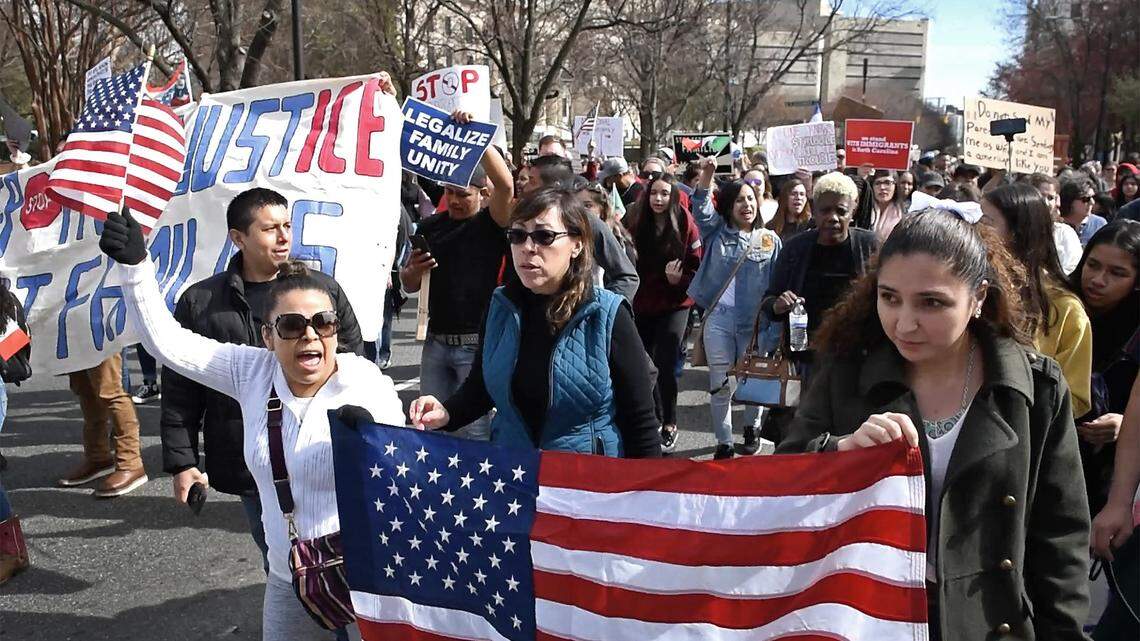
The changes in immigration policy will have a big effect on North Carolina. Immigrants account for 8 percent of the state’s population and represent 11 percent of the state’s workforce. They have an even larger presence in several key industries, with immigrants making up 34 percent of the state’s workers in farming, fishing and forestry, 24 percent in construction and extraction and 20 percent in computer and mathematical fields.
Beyond their contribution to the economy, immigrants enrich American society, adding new dimensions to the culture and embracing the freedoms and opportunities native-born Americans often take for granted. Biden, a descendant of immigrants who fled the Irish famine, is keenly attuned to the idea of America as a nation of immigrants.
More than one-third of the state’s foreign-born residents are naturalized citizens, but another 40 percent, mostly from Mexico and Central America, are undocumented. Some entered the U.S. illegally or overstayed work visas and some were brought into the country as children. North Carolina has an estimated 24,000 people in this latter group, the so-called Dreamers, who are temporarily protected from deportation by the Deferred Action for Childhood Arrivals program. They hope that Biden’s commitment to immigration reform will result in them gaining a path to citizenship.
Trump made the conditions of many immigrants worse through a mix of cruelty and incompetence. He drove those here illegally deeper into the shadows through aggressive sweeps by ICE. Meanwhile, he slowed the already broken immigration system, creating bottlenecks for family reunification, complicating the admission of foreign college students and making it harder for employers to recruit skilled foreign workers.
All that is changing under Biden. In addition to a flurry of executive orders on immigration, he plans to put a major immigration reform bill before Congress.
The new administration can’t fix immigration by simply reducing deportation and easing the legal process of entering the U.S. Immigration laws need to be finely tuned to balance fairness, compassion and the nation’s economic interests. What’s needed after Trump isn’t an opening of borders, but of minds. Before the party was overtaken by Trump’s nativism, Republicans understood the economic value of immigrants, particularly in a nation where the native population is aging. Maybe they can see that value again under Biden.
Immigrants have gone through years of frustration as Congress has failed to pass immigration reform laws and many have gone through years of fear as Trump demonized those who are in the country illegally.
Looking at the changing approach from the White House and its effects on North Carolina, Chatterjee, for one, is optimistic and relieved. “I think we will see some good progress,” he said. “I was concerned about the way we were going.”
BEHIND THE STORY
MOREWhat is the Editorial Board?
The Charlotte Observer and Raleigh News & Observer editorial boards combined in 2019 to provide fuller and more diverse North Carolina opinion content to our readers. The editorial board operates independently from the newsrooms in Charlotte and Raleigh and does not influence the work of the reporting and editing staffs. The combined board is led by N.C. Opinion Editor Peter St. Onge, who is joined in Raleigh by deputy Opinion editor Ned Barnett and in Charlotte by deputy Opinion editor Paige Masten. Board members also include Observer editor Rana Cash and News & Observer editor Nicole Stockdale. For questions about the board or our editorials, email pstonge@charlotteobserver.com.
This story was originally published February 9, 2021 at 12:00 AM with the headline "Biden’s immigration changes will bring a big boost to the N.C. economy."