
NC’s new efforts to scrub at the stain of the Confederacy
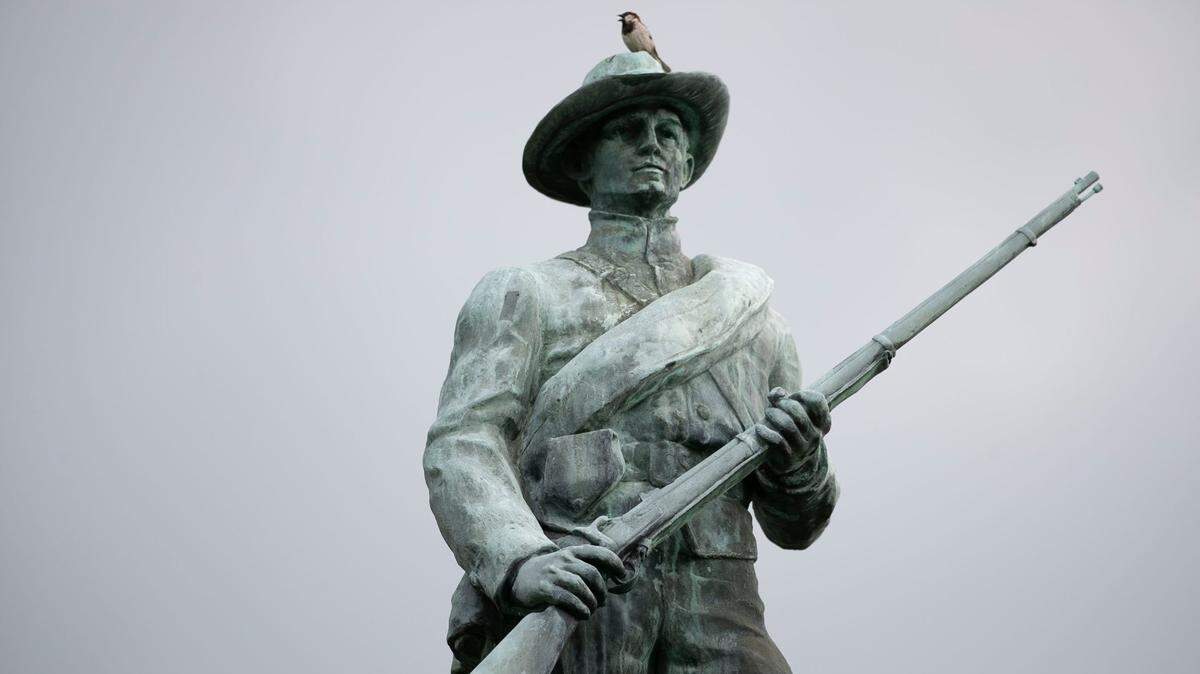
Silent Sam is gone. Unsurprisingly perhaps, I’m glad. More controversially, I’m also grateful to the brave activists who pulled the statue down. They were too idealistic to cower and dissemble like our university leaders. Without the dissenters’ passion, Sam, no doubt, would still be scarring the entrance to the Chapel Hill campus. I’m glad they didn’t listen to their elders.
The North Carolina Supreme Court, in late December, removed the massive portrait of former Chief Justice Thomas Ruffin that had loomed over the justices’ chambers for generations. Ruffin was a notoriously cruel and brutal slaveowner who wrote, in his most famous opinion: “The power of the master must be absolute, to render the submission of the slave perfect.” Images of Ruffin were removed earlier from the Orange County Courthouse and the North Carolina Court of Appeals. In a moving Supreme Court ceremony, Cheri Beasley, our first black female Chief Justice, said:
“It is important that our courtroom spaces convey the highest ideals of justice and that people who come before our Court feel comfortable knowing that they will be treated fairly.”
The bleak symbolism of Ruffin’s shadow, she noted, “is too hard to ignore.”
As if picking up the cue, last month the Division of Motor Vehicles said it would no longer issue license plates containing the Confederate battle flag — because they “have the potential to offend those who view them.” The North Carolina agency will now refrain from spreading a celebratory banner for the slavery-based Confederacy. As Will Rogers put it: “if you find yourself in a hole, stop digging.”
So the world, even in North Carolina, is moving. Still, in a wide array of counties across the state, Confederate monuments enjoy prominent placement on courthouse grounds. Statues guarding the entrance of courthouses were often intended to cast a potent message of terror and subordination to African-Americans who dared, or were forced, to enter.
The North Carolina Commission on Racial and Ethnic Disparities (NC CRED) is therefore launching a new campaign to remove Confederate monuments from courthouse grounds across the Tar Heel State. Paralleling former Chief Justice Beasley’s demand that “courthouse spaces convey the highest ideals of justice,” NC CRED co-founder James Williams explained: “We believe such monuments project legacies of slavery and white supremacy, they have no legitimate place on public property and especially not inside or in front of a courthouse.” They rebut the very idea of equal justice under law.
The National Consortium on Racial and Economic Fairness in the Courts has called for the removal of Confederate monuments from courthouses, noting: “People of color have expressed outrage and offense at having to pass these monuments as they enter courthouses in their communities to obtain services as court users, or to perform their civic duty on a jury, confronting them with (a) duplicitous public message (inviting) them into the ‘Halls of Justice’ but intimidating and discouraging some from their rightful entitlement to full access and fair treatment in the judicial system.”
The N.C. General Assembly is unlikely to be congenial to such reform efforts — being dominated by its white Republican caucuses and having already enacted a monument preservation statute. Then-Senate sponsor Tommy Tucker explained he supported the law because the Civil War wasn’t about slavery, “it was caused by the North and their tariffs over Southern goods.” But most Tar Heels pledge allegiance to “justice for all,” not to Jefferson Davis.