
COVID-19 collides with a N.C. system that incarcerates – and can’t protect – too many
We are UNC law students, working under a rule allowing students to practice as student attorneys in their final year of law school. We are seeking relief for people who are incarcerated, who are near the end of their sentences, and who are at risk of serious illness or death should they contract COVID-19.
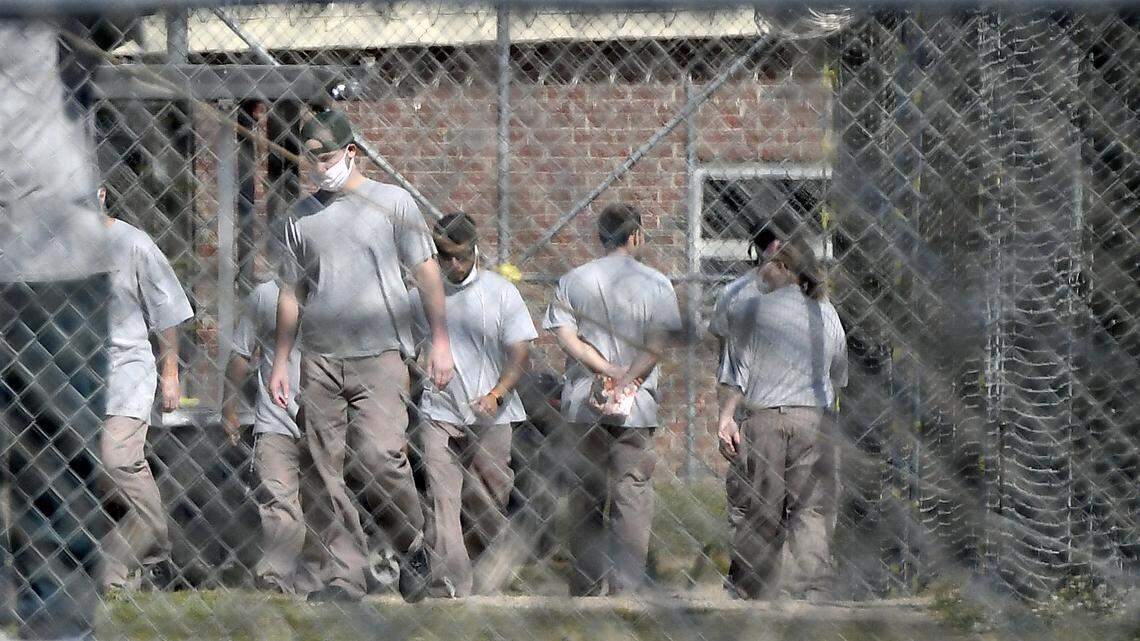
Our clients want a simple assurance: that someone in charge cares about them enough to take whatever steps necessary to ensure their safety. They are incarcerated in Wake Correctional Center in Raleigh, where over one third of prisoners tested for COVID-19 is currently testing positive. Unfortunately, we are now learning that we cannot offer a simple assurance to our clients because we have no evidence to prove that it is true. In turn, our clients, like Jonathan Brooks, are learning to live in a carceral system that has not met its responsibility for their well-being.
In March of 2020, at the outset of this pandemic, North Carolina’s foremost health and medical experts sounded the alarm that our correctional facilities were not equipped to keep either prisoners or staff safe. Their blueprint for pandemic mitigation focused on the elderly, the medically vulnerable, and those at the end of their sentences: preserve space, beds, resources, and lives by expediting release for these deserving people. Still, the state Department of Public Safety refused to meaningfully implement COVID testing until July 2020, and even then only after losing in a series of lawsuits that began in April 2020.
Even with the early warning, little has been done in North Carolina prisons to halt the spread of COVID. Social distancing is impossible: our clients describe eating, sleeping, and being constantly within arms-length of other people. Sanitation is woefully lacking and personal protective equipment, initially non-existent, is still scarce: clients describe having simply received masks that they are expected to occasionally hand “wash” (rinse with water) to sanitize. Before receiving masks, they were provided nothing but extra bars of soap: hardly helpful for a virulent respiratory infection. Predictably, nearly every prison has had an outbreak. These COVID outbreaks affect incarcerated folks, as well as staff, who in turn may spread the disease to their families and friends outside prison walls. Tellingly, COVID announced its arrival in N.C. prisons with the death of a prison nurse.
But what the COVID prison pandemic reveals is more than just an inability or unwillingness on the part of state authorities to keep prisoners safe. It also points directly to what is wrong with our state’s criminal legal system. We have prosecuted a War on Drugs that criminalizes drug use and addiction. We have a “habitual felon” law that penalizes people not only for current conduct but for past behavior.
We know that Black and brown people are more likely, for reasons related to racialized over-policing and implicit bias within criminal courts, to have criminal records. These same people are more likely to suffer from diseases caused by poverty. We have elderly and sick prisoners serving exceptionally long sentences long past the time that they can serve any deterrent or rehabilitative purposes. In short, we lock up too many people for too long – and we are all now paying the price.
This story was originally published February 15, 2021 at 12:00 AM with the headline "COVID-19 collides with a N.C. system that incarcerates – and can’t protect – too many."