
NC criminal justice task force called for 125 reforms. How have we fared?
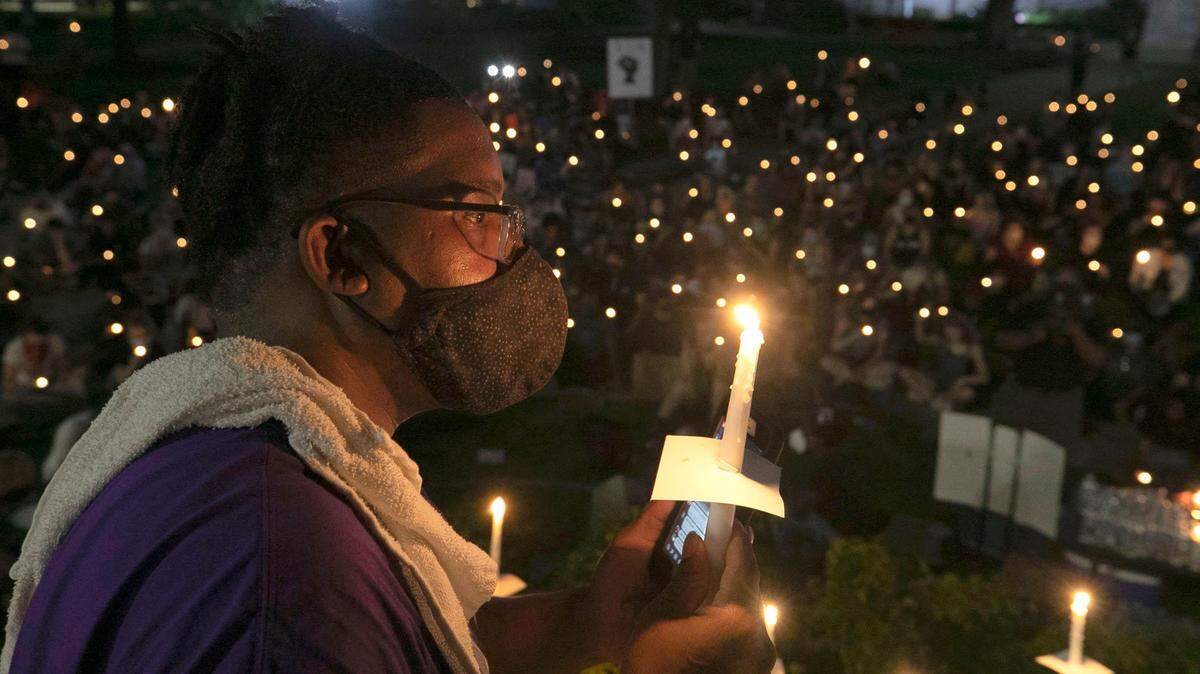
In September, Republican opposition in the U.S. Senate derailed the George Floyd Justice in Policing Act. The proposed law, which passed the House, would have made it easier for the federal government to track and prosecute police who use excessive force, and it would have limited qualified immunity, which shields police in most private civil lawsuits.
Blocking the bill represents a shameful lack of response to broad, nationwide protests calling for police reforms following the 2020 police killing of George Floyd in Minneapolis.
In North Carolina, the response has been stronger, but far short of complete. The governor’s Task Force for Racial Equity in Criminal Justice – a panel created in response to the Floyd killing – delivered 125 recommendations to improve the criminal justice system, including ways to hold police more accountable. On Friday, the panel met virtually to assess how its recommendations and related reforms have fared.
Some reforms have occurred through policy adjustments at the state and local level, but the Republican-led legislature resisted sweeping changes in state law. However, progress was made with Gov. Roy Cooper’s signing of Senate Bill 300. Among its changes, the new law creates a database of officers disciplined for excessive force and other issues that law enforcement agencies can review when hiring, but it is not public. The law calls for the psychological screening of police recruits and requires officers to intervene in cases of excessive force and to report the offense.
State Attorney General Josh Stein, a co-chair of the task force, told the Editorial Board the new law was not all his panel wanted, but it takes key steps forward.
“There is a lot in the bill that is going to enhance (policing) and that, over time, will improve community trust in their police officers,” he said. But he said that there is more to do. “No one has any pretense that we solved all the problems with our criminal justice system,” he said.
That’s easy to see. Police body and dash cam videos are still not public record. The governor still cannot appoint a special prosecutor in police killing cases. Marijuana has not been decriminalized. Children as young as 8 can still face serious juvenile charges. Juveniles can still be sentenced to life without parole.
State Rep. Marcia Morey, a Durham Democrat and former district court judge who serves on the task force, said of the legislature’s actions, “We have half-measures. We addressed topics but we didn’t go far enough. A lot of these issues became political issues.”
One particularly poor response to the Floyd protests was the passage of House Bill 805. It blurred the line between protesters and rioters and would have exposed demonstrators to felony charges based on vague infractions. Gov. Cooper rightly vetoed the bill, saying it was “intended to intimidate and deter people from exercising their constitutional rights to peacefully protest.”
Improving policing and reducing incarceration are two areas where Republicans and Democrats still find agreement. What holds back progress on these issues in Washington is political gamesmanship and presidential politics. In Raleigh, the obstacle is often the influence of groups representing sheriffs and district attorneys whose members are invested in how the system works for them.
Chantal Stevens, executive director of the ACLU of North Carolina, focused on the influence of those law enforcement groups when she addressed the task force members on Friday.
Stevens said, “There is solid support for significant reform from both Republicans and Democrats, but most of these (task force) recommendations will never be adopted unless elected officials are willing to challenge the influence wielded by powerful interest groups that routinely undermine and inhibit real progress.”
The death of George Floyd brought a ringing call for change. Some in North Carolina’s leadership have responded, but more needs to be done. The Task Force for Racial Equity in Criminal Justice has done fine work. It should press on. This year’s legislative half-measures need to become whole.
BEHIND THE STORY
MOREWhat is the Editorial Board?
The Charlotte Observer and Raleigh News & Observer editorial boards combined in 2019 to provide fuller and more diverse North Carolina opinion content to our readers. The editorial board operates independently from the newsrooms in Charlotte and Raleigh and does not influence the work of the reporting and editing staffs. The combined board is led by N.C. Opinion Editor Peter St. Onge, who is joined in Raleigh by deputy Opinion editor Ned Barnett and in Charlotte by deputy Opinion editor Paige Masten. Board members also include Observer editor Rana Cash and News & Observer editor Nicole Stockdale. For questions about the board or our editorials, email pstonge@charlotteobserver.com.
This story was originally published October 3, 2021 at 4:00 AM with the headline "NC criminal justice task force called for 125 reforms. How have we fared?."