
Yes, we must overcome our racial past, but we’re going about it all wrong
Welcome to NC Voices, where leaders, readers and experts from across North Carolina can speak on issues affecting our communities. Send submissions of 300 words or fewer to opinion@charlotteobserver.com.
What the election in Va. showed me
I agreed with many points Sara Pequeño made in “A failing formula for Democrats” (Nov. 7 Opinion), but in one area I think she is off target.
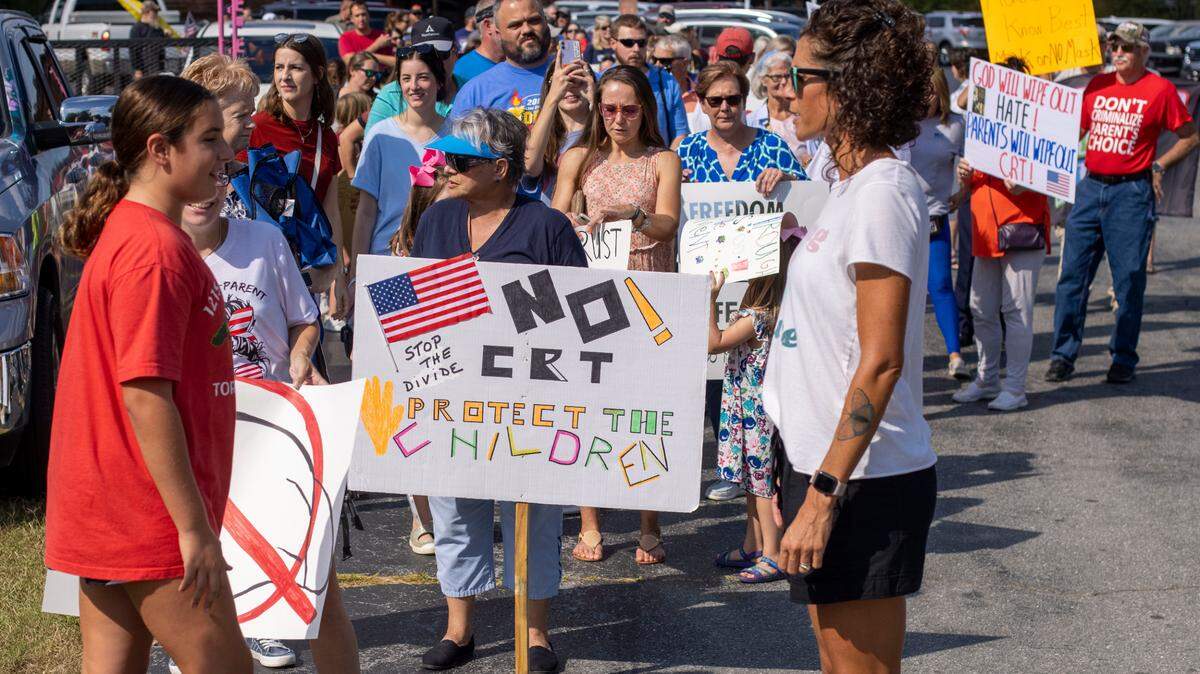
She says the “desire to stop Black history from being taught in schools altogether” is the “root of the critical race theory frenzy.” I am sure there are people who fit that description, or who oppose any effort to teach history that acknowledges the shortcomings of the United States, and these should be confronted. But is that truly all that is going on?
Condoleezza Rice was recently asked about this issue and said “somehow white people now have to feel guilty for everything that happened in the past. I don’t think that’s very productive.” She also said to build the opportunities for Black children “I don’t have to make white kids feel bad for being white.” For expressing this opinion Rice was called “a soldier for white supremacy.”
I think there are two genuine issues feeding this “frenzy” that Pequeño and other progressives need to take seriously. First, is Rice correct, is pushing guilt or complicity unnecessary to motivate people to change society — maybe even counterproductive? Second, is it possible to have a debate along these lines without being labeled a white supremacist before the discussion even begins?
The tragedy of this polarized debate is that there are genuine issues about the legacy of our racial past we need to overcome. Not just slavery or the Jim Crow system that followed, but things like redlining, access to credit and programs like the GI Bill, and the creation of generational wealth needs to be studied and corrected. Access to education, healthcare, housing are issues of today, as well as the past.
But I think the Virginia election demonstrates that there are a finite number of people willing to accept guilt for things they did not personally do and policies they’ve never supported.
To get society to act on the legacies of the past is going to take a different approach than “agree with me or you’re a white supremacist.”
Joe Swain Jr., Carrboro
Expand court for better gun control
The writer is a Charlotte attorney.
The U.S. Supreme Court heard arguments Nov. 3 in New York State Rifle & Pistol Association v. Bruen that threaten further the rights of states and municipalities to enforce reasonable gun control laws and ordinances to protect citizens — further than it did with the precedent-shattering decision a decade ago in D.C. v. Heller.
As American legal history expert Saul Cornell wrote in 2017, “The notion that the Second Amendment was understood to protect a right to take up arms against the government is absurd. ...Gun regulation and gun ownership have always existed side by side in American history. The Second Amendment poses no obstacle to enacting sensible gun laws.” That includes registration, no public carry, stand-your-ground and safe storage laws.
Protests, rallies and public calls for change will not lead to better gun control laws. Hair dryers are more regulated than guns in the U.S. Many otherwise harmless consumer products, such as teddy bears, are subject to a raft of legally-binding federal regulations which cover product testing, hazardous substances, use of lead paint, sharp objects, and so on.
The federal government does monitor the safety of firearms in one relatively narrow respect — guns imported into the U.S. must qualify as being for “sporting purposes.” Some of the factors taken into account are the presence of safety features such as loaded chamber indicators, as well as grip and magazine safety features.
The failure to adequately regulate guns is not the Constitution’s fault. It is our current radicalized Supreme Court — and us. No greater argument exists for expanding the court so it represents all citizens, not the gun lobby.
As Thucydides pointed out millennia ago, the banning of weapons in the city separated the Athenians from the barbarians. No more gun laws means more Columbines or Sandy Hooks. More Sutherland Springs, where a gunman killed 26 people in a Texas church. And more incidents like Las Vegas where the killer fired more than 1,000 rounds in about 15 minutes leaving more than 900 dead or injured.
John Rudisill, Charlotte