
Corporations might love NC’s new tax rate. Average North Carolinians won’t.
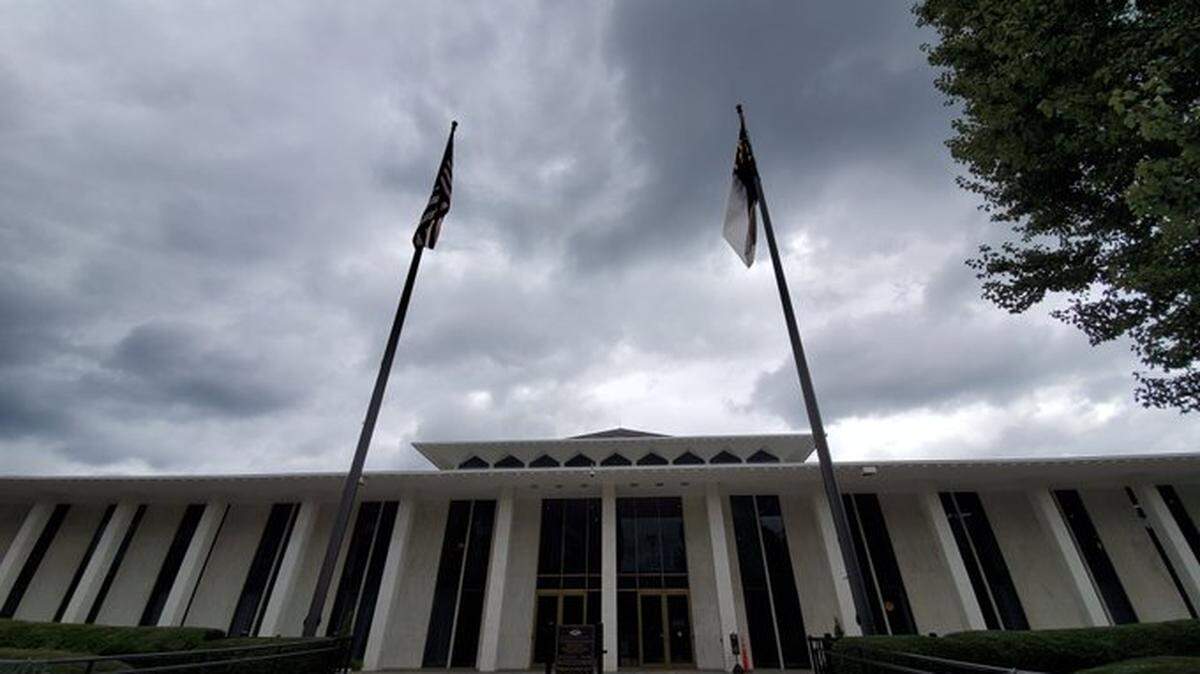
As the Editorial Board wrote Tuesday, the North Carolina state budget has some flaws.
There’s no Medicaid expansion, or paid family leave. There are riders that limit the governor’s and attorney general’s powers. The school funding doesn’t meet requirements set forth by the Leandro case ruling, and pay increases for teachers and other state employees are hardly enough. Planned Parenthood North Carolina and NARAL Pro-Choice NC are concerned about funding of “pregnancy care centers” whose main purpose is to dissuade people from having abortions.
Aside from the issues on how money is spent, a big concern should be how the state’s money is earned, and why the General Assembly feels comfortable letting large corporations come to North Carolina and do nothing to improve our state.
The new budget mandates that taxes on “C” corporations (corporations where owners are taxed separate from the business) decrease gradually, so that by 2029 state corporate income taxes won’t exist in North Carolina. The state joins just two other states — South Dakota and Wyoming, two states with some of the smallest economic output and populations compared to the rest of the U.S. — who don’t have corporate income tax or gross receipts taxes.
North Carolina already has one the lowest corporate tax rates in the country at 2.5 percent. Companies were moving here in part because of this, but they were moving here before, when it was closer to 7 percent a decade ago. Now, the state plans to reduce this rate to 2.25 percent in 2025, then 2 percent, until it reaches zero in 2029.
Instead of creating a staggered tax bracket that may help small businesses with their tax burden, or maybe acknowledging the economic inequality that pervades within the state, this new policy will allow giant corporations to come to North Carolina, exploit our resources, and give us too little in return. It will exacerbate the inequalities between rural and urban North Carolina, when wealthier municipalities can supplement their school funding and infrastructure projects.
Several state Democrats are upset with the destruction of North Carolina’s corporate tax rate. Natalie Murdock, one of eight state senators who voted “no” on the budget and the representative for a portion of Research Triangle Park, says it isn’t something businesses in her district have even asked for.
“When you talk about Apple, Google, and a lot of these larger businesses, they understand that they need to pay their fair share,” Murdock says. “They understand that all of the amenities around their companies are not free. They know their employees want quality public schools.”
No state makes a ton of money from corporate income taxes, but it does take some of the burden off everyday people.
“The [elimination of] corporate income tax creates a structural deficit, which means you know there’s going to come a time that you’re going to need money that you’re cutting off,” Senator Toby Fitch (D-4) says. “The taxpayer is the only way to pay for the goods and services that we have.”
North Carolina’s decision to eliminate corporate income taxes means people, not faceless entities, will bear the burden of keeping the state from falling apart. There’s already a divide in North Carolina’s urban areas versus rural areas based on municipal taxes. Towns and cities in North Carolina fall into disrepair, since there’s no money in schools or infrastructure.
Fitch sees this too; he reminded me that some students will go to poor schools, get good grades, and go to college only to realize they haven’t had a proper education. I’m one of those people.
Sure, it may be possible for corporations to see income taxes targeted their way and head overseas, but that hasn’t happened in California, or New Jersey, or the other states with higher taxes. In part, it’s because these companies know they can’t completely rebuild their organization from scratch. A zero percent corporate tax rate could incentivize them to stay; it could also incentivize them to keep exploiting North Carolina and North Carolinians.
This story was originally published November 18, 2021 at 12:12 PM with the headline "Corporations might love NC’s new tax rate. Average North Carolinians won’t.."