
Why senators like Manchin and Tillis won’t support Build Back Better
Welcome to NC Voices, where leaders, readers and experts from across North Carolina can speak on issues affecting our communities. Send submissions of 300 words or fewer to opinion@charlotteobserver.com.
Manchin, Tillis, others share blame
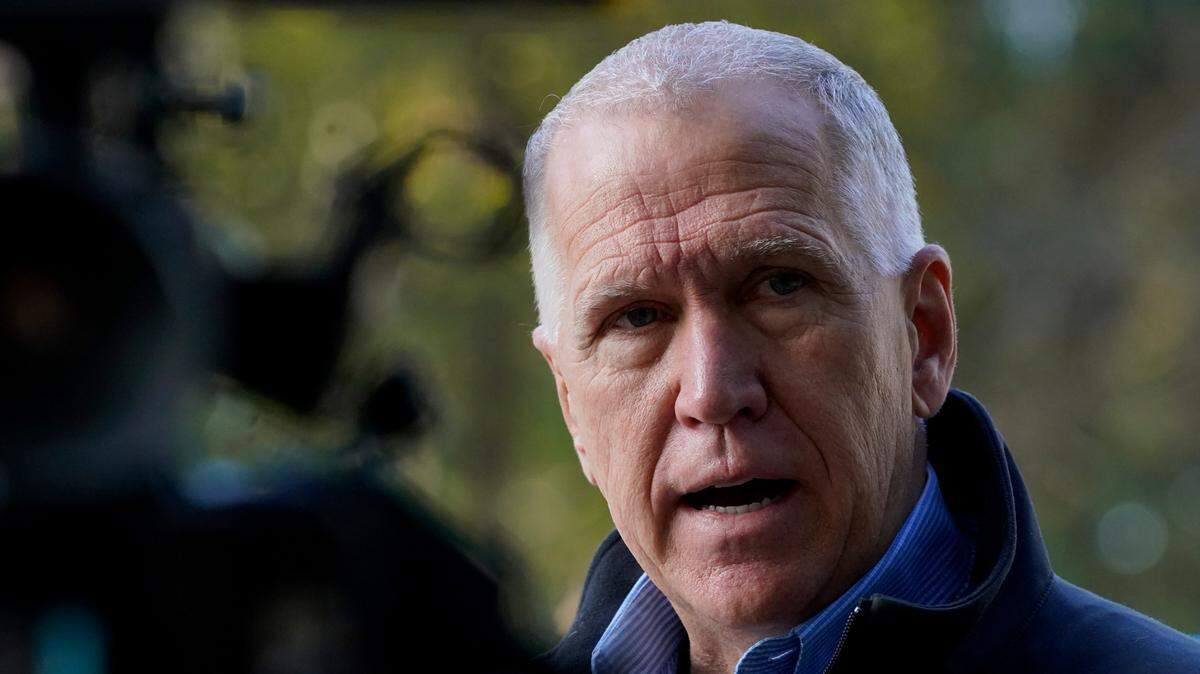
It’s not just Sen. Joe Manchin holding up the Build Back Better Act. It’s 50 Republican senators, including Richard Burr and Thom Tillis.
Senator Tillis thinks the act is just “out-of-control spending,” and “will have drastic impacts on our long-term fiscal viability.” But Tillis wasn’t too concerned about fiscal viability when he helped Donald Trump increase the national debt by almost $8 trillion with the third largest deficit growth in U.S. history.
If Tillis and other wealthy Republican senators and their rich corporate sponsors paid their share of taxes, financial viability would take care of services and growth for blue collar workers Republicans say they represent.
Build Back Better would provide for climate initiatives, universal Pre-K, access to childcare, lower insurance premiums, reduce prescription drug prices, and expand school meal programs, among other things that benefit N.C. families and help them prosper.
Why wouldn’t anyone want this? Is it because Manchin, Tillis, and other senators are too corrupted by special interest to help American families?
John H. Fisher, Hendersonville
H-1B visa program hurts Americans
The writer is an Immigration Reform Law Institute attorney who represents Americans displaced by the H-1B visa program.
Regarding “Visa-related logjams are hurting NC’s tech economy. Here’s the fix,” (Dec. 16 Opinion):
When it comes to replacing high-skilled American workers with cheap, foreign workers, the H-1B program gets five stars.
H-1B visas are available for any occupation that normally requires a college degree, but most go to computer programmers, and it was the tech industry that successfully lobbied Congress to allow employers to replace Americans with imported workers on H-1B visas.
At first, one might think Congress bungled the job Big Tech gave it. The law includes apparent safeguards for American workers, such as requiring that employers pay H-1B workers at least the prevailing wage. But that was an empty show of protection by Congress, as other provisions demonstrate.
For instance, the law provides that when an employer submits a prevailing wage claim the Department of Labor must approve it within seven days as long as the form is filled out correctly. The law prohibits the Department of Labor from reviewing such claims after they’ve been approved, so it’s really just employers themselves who set the “prevailing wage.”
Lest any concern linger that Congress still might have blown it here, the results vindicate its methods. An Indian financial analyst looking at companies in that country that use H-1B workers found that Americans are paid 25-30% more than H-1B workers.
Indeed, if you put together the ability to pay foreign workers much lower wages with the ability to replace Americans with those workers, the result is entirely predictable. Since the H-1B visa was created in 1990, employers have openly fired and replaced hundreds of Americans at a time with H-1B workers.
The most famous example came when Disney replaced about 250 Americans with H-1B workers. Even at the height of the pandemic, the TVA was in the process of replacing Americans with H-1B workers until President Trump intervened.
The H-1B statutes contain other restrictions on enforcement that are helpful in replacing Americans. To be sure, these restrictions also have resulted in massive fraud. The last compliance audit found that over 13% of approved H-1B visas were fraudulent.
In creating the H-1B visa, Congress also had the honor of creating the business of moving technology jobs overseas. Vendors providing “offshoring services” typically use one H-1B worker imported into the U.S. to support about six additional jobs moved overseas (usually to India).
There is no need to “fix” the H-1B program because it already works so well at its intended purpose — replacing Americans with cheap, foreign labor. It is one area of immigration law where Congress accomplished just what it set out to do. Indeed, Congress succeeded so well that, if it ever decided not to hurt American workers, but instead to protect their livelihoods, it would scrap the H-1B program entirely.
John Miano
This story was originally published December 29, 2021 at 4:30 AM.