
Former superintendent: This radical change would keep NC kids safe, in school during COVID
There is growing evidence that many students in our public schools are behind academically, especially students of color. There is also greater evidence of students being impacted emotionally. Teachers are experiencing surging amounts of stress and burnout. And yes, school administrators are looking more and more to the possibility of early retirement.
The COVID-19 crisis calls for transformative change. What is needed is a change in the calcified culture of bureaucrats who promote notions like “that’s not the way we do things” or “it will never work.” A failure to lead in this time of crisis is unacceptable.
So how does one address the COVID crisis while simultaneously improving urban public schools? To operate schools safely I suggest school districts adopt a trimester schedule.
Much has been said — and appropriately so — about protocols for protecting students and staff, like washing hands, social distancing and wearing masks. However, little thought has been given to how the school day and school year might be restructured to address the COVID crisis.
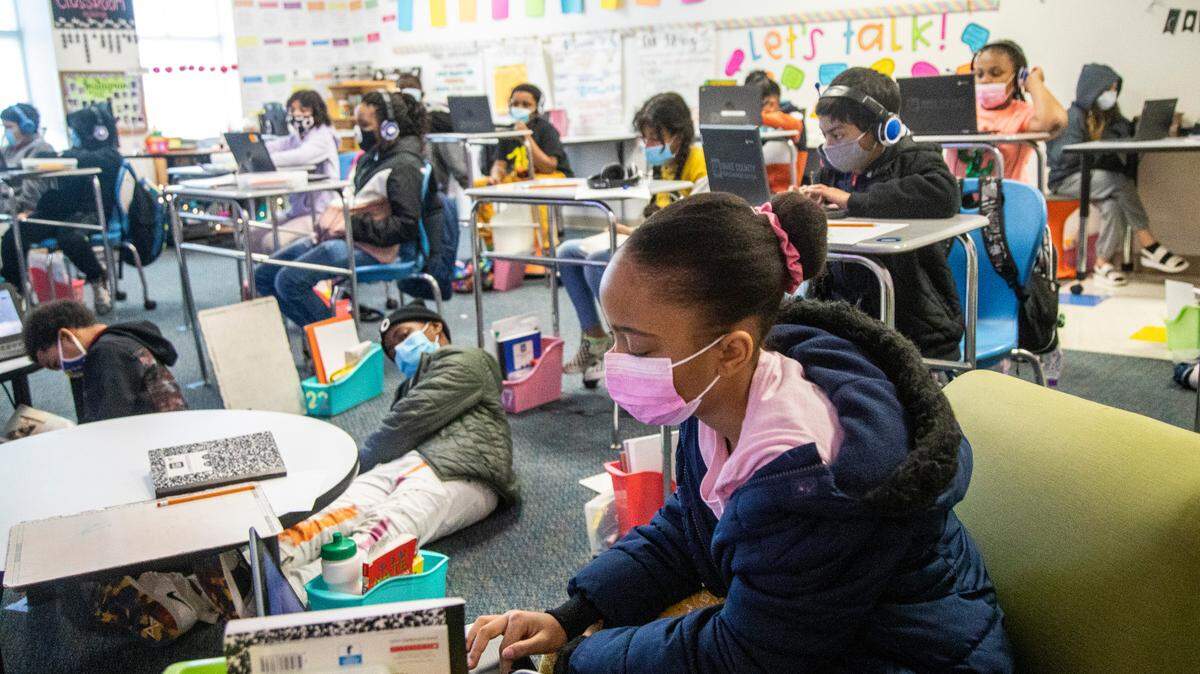
Student population density remains the greatest challenge during this time. From my experience as a former Charlotte-Mecklenburg Schools superintendent and the Associate Superintendent for Elementary Schools in Clark County School District in Las Vegas, I know it is possible to reduce population density while improving outcomes.
The idea of a trimester schedule is not new. There are a few trimester schedules operating mostly in smaller school districts and universities. I successfully operated a small scale trimester pilot program in CMS that accelerated the graduation process and provided needed remediation for select students.
Here’s how a trimester schedule might work for a high school of 2,500 students whose school year normally consists of two semesters. The school would extend its schedule to three trimesters over 12 months, with each one lasting 90 days. They would be labeled “A semester,” “B semester,” and “C semester.” Each student would be assigned one semester.
Each block — similarly labeled “A semester,” “B semester,” and “C semester” — would have approximately 835 students. Each student would attend two 90-day semesters per year. One of the three blocks would take time off while the other two are in session. This way, the student population density is reduced by one-third.
For high schools, each instructional day would consist of 10 class periods, as opposed to the usual six. No student would be enrolled in more than six consecutive courses or periods per day. Each course would be 50 to 60 minutes long. An extended school day of 10 periods would further reduce class size and the number of students on campus at any time.
This example could be applied to elementary and middle schools as well, minus the extended day.
The unique objective of the trimester schedule amid COVID would be to reduce density of student and faculty populations.
The benefits are manifold. Students would receive an optimized amount of instruction each day and year and benefit from the continuity of curricula. Schools could optimize “wrap-around” services for students and safety standards would be more easily met. Student management concerns would also become less of a challenge, thus providing for a better learning environment.
Meanwhile, faculty and staff would have opportunities to earn additional pay beyond their base salaries. Parents would enjoy the predictability, stability and consistency of a normal schedule.
It is time to move away from an agrarian driven school calendar. Under a trimester plan enhanced opportunities for teacher recruitment and retention would increase. Opportunities for students to accelerate meeting graduation requirements and receive remediation would also be bolstered.
The greatest benefit would be the return to a comparatively worry free, safe and healthy school environment for students and staff — an environment with a primary focus on student achievement.