
Another lie about maps from NC Republicans. When will they learn to tell the truth?
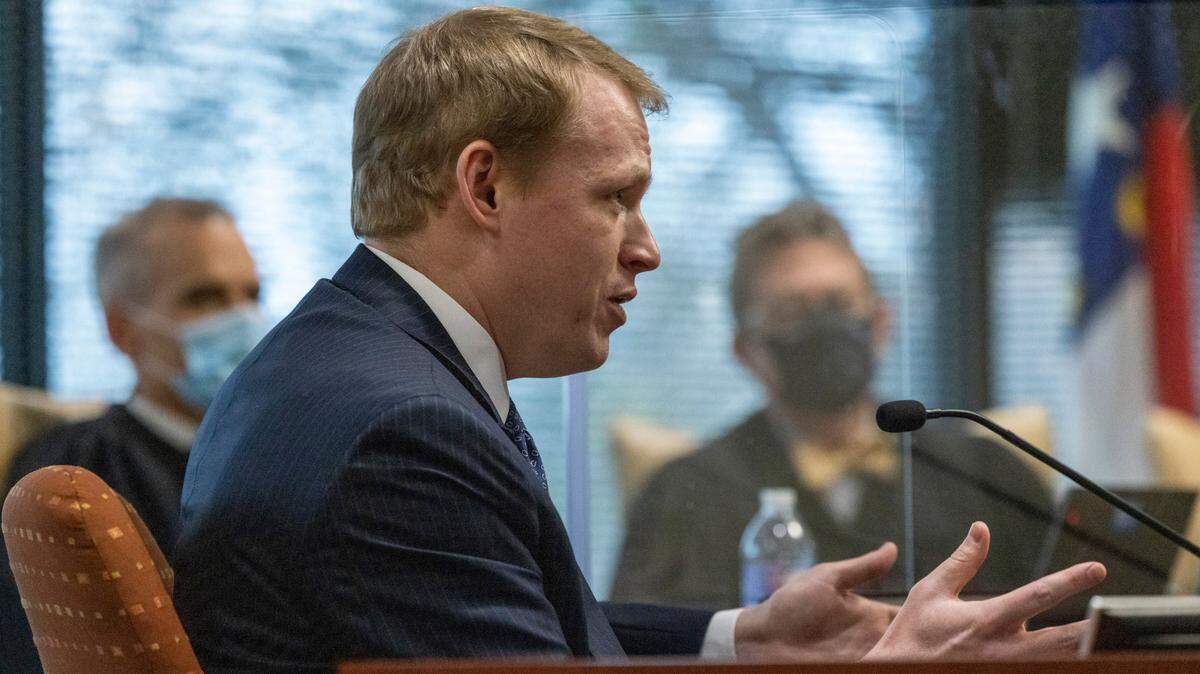
Despite three gerrymandering lawsuits and experts calling North Carolina’s legislative maps an extreme partisan outlier, Republican lawmakers have maintained that this has been the “most transparent redistricting process in state history.”
As it turns out, that was a lie.
Rep. Destin Hall, the House Redistricting Committee chairman, admitted in court this week that he used secret maps, drawn privately by his aide, as a guide when he drafted the new House districts. Hall claimed that these “concept maps” didn’t rely on racial or partisan data and “played very little role” in his official map-making process.
And North Carolinians are just going to have to take his word for it, because we can’t see the maps for ourselves. Conveniently enough, they “were not saved, are currently lost, and no longer exist,” Hall’s legal team said in a court filing. And the aide who created them left his job shortly after the maps became law, so he is no longer “subject to the demands” of the lawsuit.
It’s a revelation that many Democrats and fair maps advocates had suspected to be true. But Hall had, outside of court, denied it. In fact, what Hall said under oath was different from what he had previously told the public and his colleagues on the House floor.
Shortly before the House voted on the maps in November, Democratic Rep. Marcia Morey asked Hall if he referred to or consulted with any outside materials when drawing them.
Hall said no.
“Every part of this map-making process was done in public and was recorded and archived for anyone who would like to go see how the maps were drawn,” Hall said at the time.
Except it wasn’t. In addition to the “concept maps,” Hall admitted in court Wednesday that he and key staffers would retreat to a private room for “strategy sessions” to discuss the maps. These discussions happened away from the cameras, behind closed doors, where audio and video wasn’t being recorded.
Hall lied, but he’s not the only one who did. Every one of his fellow Republicans who knew what he was doing — and went along with it — was part of the lie. It’s a reminder that, no matter what they tell the public, Republicans are too often willing to abandon fair and honest map-making for the sake of winning. And, to be clear, these maps are anything but fair. Rated an “F” for extreme partisan bias by the Princeton Gerrymandering Project, they’re skewed in a way that gives Republicans an unfair advantage in trillions of scenarios, mathematicians say. In the past, at least, Republicans admitted to what they were trying to do — former Rep. David Lewis famously said that giving Republicans a partisan advantage was his goal all along.
North Carolinians can’t be blamed if they have difficulty believing what the GOP tells them about redistricting — and perhaps more. Certainly, the GOP isn’t the only party in North Carolina with a history of engaging in backroom dealing. Democrats also have been less than transparent — and less than honest — with the public about it.
But this deception comes at a precarious moment for North Carolinians and Americans. Trust in government couldn’t be more fragile, and honesty, from elected officials especially, is critical. Yet one year after Donald Trump’s own lies fomented an insurrection, Republicans are still too casual with the truth. They game the redistricting process so that they can win and call it “fair.” They chip away at voting rights by falsely invoking “election integrity.” Those aren’t just white lies; they’re dangerous.
In the end, Hall’s lie is probably not terribly relevant to the path of the case. Regardless of what this panel of judges concludes, the case will almost inevitably head to the N.C. Supreme Court, where it will be decided on larger issues. But this lie — and all of the others — chip away at our democracy. Maps can be redrawn, but trust is harder to regain.
BEHIND THE STORY
MOREWhat is the Editorial Board?
The Charlotte Observer and Raleigh News & Observer editorial boards combined in 2019 to provide fuller and more diverse North Carolina opinion content to our readers. The editorial board operates independently from the newsrooms in Charlotte and Raleigh and does not influence the work of the reporting and editing staffs. The combined board is led by N.C. Opinion Editor Peter St. Onge, who is joined in Raleigh by deputy Opinion editor Ned Barnett and in Charlotte by deputy Opinion editor Paige Masten. Board members also include Observer editor Rana Cash and News & Observer editor Nicole Stockdale. For questions about the board or our editorials, email pstonge@charlotteobserver.com.