
Professors like me at ASU should make more than a pizza delivery driver
Inflation hit 7% in December, but this month Appalachian State University provided faculty a state-mandated annual pay raise of 2.5%.
That amounts to a 4.5% pay cut in real wages. Faculty are expected to get a another modest salary bump in merit pay — the first substantive in a while. The maximum is 4.99%. Those few who will get it will make a .49% advance on inflation. But the rest will keep falling behind.
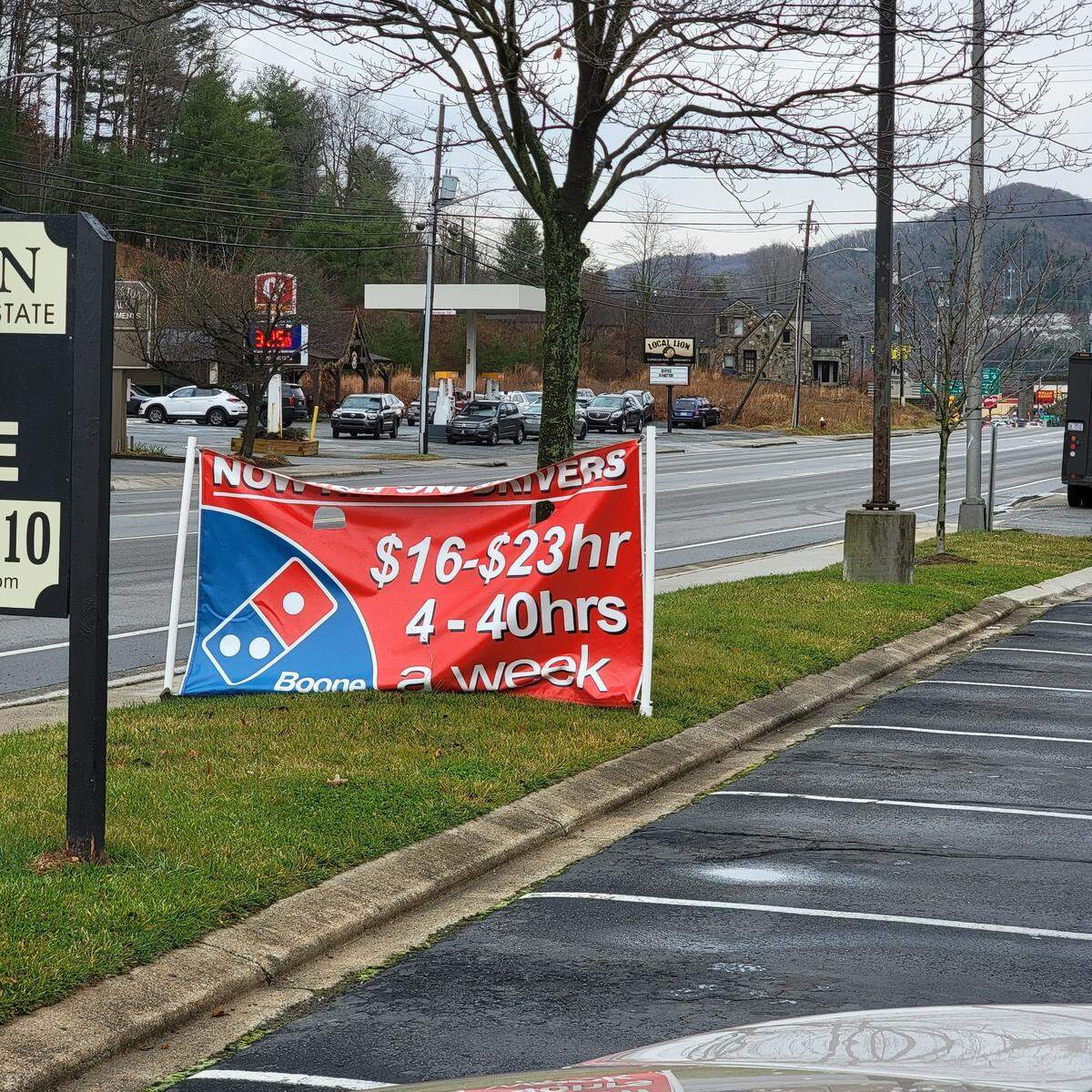
If you leave ASU and head down U.S 321, you might notice a sign at the nearby Domino’s Pizza indicating that entry-level wages are $16-$23 per hour. I was told that includes tips. I asked how much training was required: One day.
At $16 per hour, full-time at 40 hours per week, the annual salary is $33,280. At $23, it’s $47,480.
Training for ASU faculty goes well beyond one day, ranging from five to 10 years of costly university education to become a professor.
Based on the latest public data for ASU, in the History Department where I work, five full-time faculty earn less — some substantially less — than a full-time pizza delivery person earning $47,480. Most of our full professors do not earn twice the Domino’s wage, even those with years of award-winning teaching and published research. In fact, most of my colleagues earn significantly less.
These low salaries come on the heels of a decade-long faculty salary collapse at ASU. According to a recent study from Appalachian’s Center for Economic Research and Policy Analysis, from 2009 to 2018 the average lost purchasing power was $7,919 per year for full professors, $6,939 for associate professors, and $4,388 for faculty overall.
Add that up and faculty across all ranks lost $21,112 in purchasing power annually, associate professors $33,540, and full professors $38,241. The decline has been steady since 2014 when Sheri Everts became Chancellor.
But not everybody at ASU makes Domino’s wages. In 2020, Everts earned $375,098. Provost Heather Norris earned $265,000 and Director of Athletics, Douglas Gillin, $450,000.
Inexplicably, the football coach and his salary are not listed. It might be noted that football is a moneymaker for the TV networks but apparently not for ASU, which subsidizes the athletics program annually through a combination of student fees and the general budget, 22 million in 2019. That’s money that could otherwise be used to raise academic salaries above Domino’s level — and with that raise the quality of the university.
At ASU we regularly get congratulated for our outstanding efforts, from the Chancellor, Provost and Dean. But in the last decade, the congratulations have been accompanied by the steady decline in real wages. As a labor historian, it is rare to find a workplace that says, “Thank you for your good work and as a reward, we’re cutting your salary” but that’s how it feels at ASU.
A university does two things: teach and research. It’s been that way since Aristotle. We train students and contribute to humanity’s store of knowledge. When the Republicans took control of the legislature, they prioritized cutting taxes on the rich and corporations. But in state and local government there’s no free lunch. Income goes down, spending goes down, and public education gets slashed, including the university system.
The Republican legislature’s hold on the UNC Board of Governors allowed them to appoint chancellors and provosts to do their bidding.
But you get what you pay for — a long-run purchasing power decline results in a decline in the quality of education offered to North Carolinians.
Modern economies are technology economies, technology is a product of science and research, and science and research are products of universities. Spend less on universities and you get less — and that includes economic output. Higher salaries attract better faculty and teachers, lower salaries are a disincentive to quality work.
That is why the decline in real salaries at ASU and in the UNC system and the N.C. public school system is so distressing. Pizzas can’t solve America’s problems. Education can. It should not be funded at the Domino’s level.