
NC Republicans offer up another bad map. The court shouldn’t fall for it
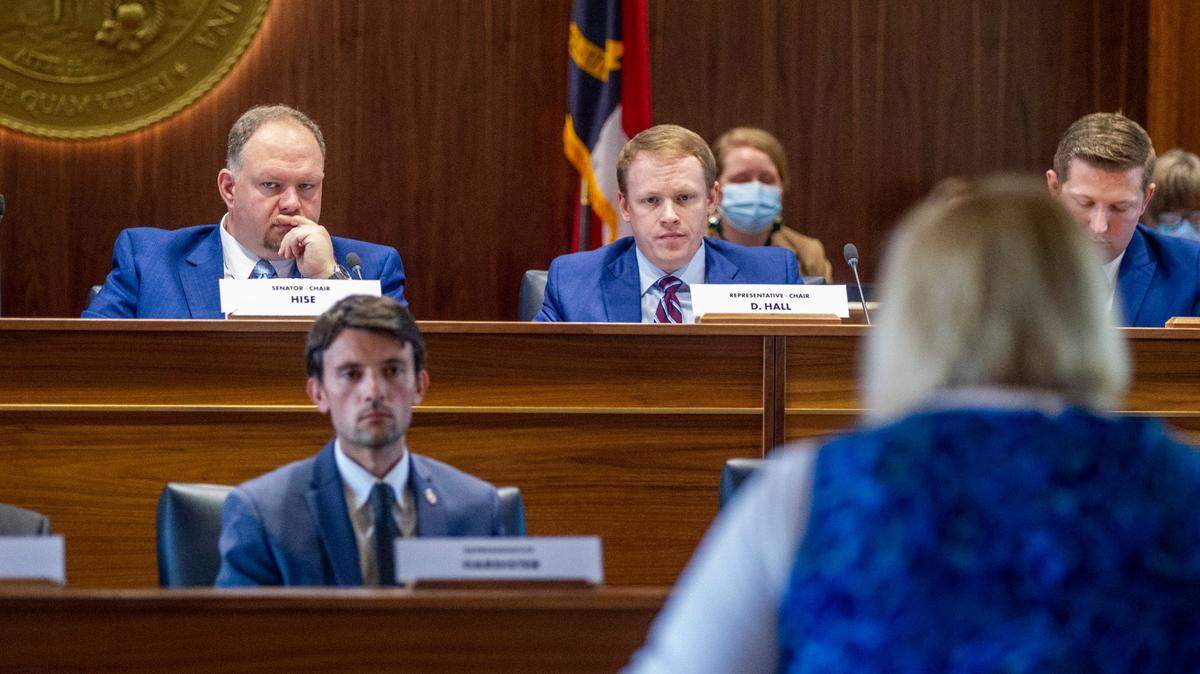
State lawmakers approved a redrawn congressional map Thursday, which Republicans say complies with what the North Carolina Supreme Court ordered when it struck down the previous maps earlier this month.
It doesn’t.
The new map addresses some of the more egregious aspects of the original map, which would have all but guaranteed a 10-4 or 11-3 Republican advantage in North Carolina’s congressional delegation — largely by diluting Black votes in the northeastern part of the state and splitting the three most populous counties more than once.
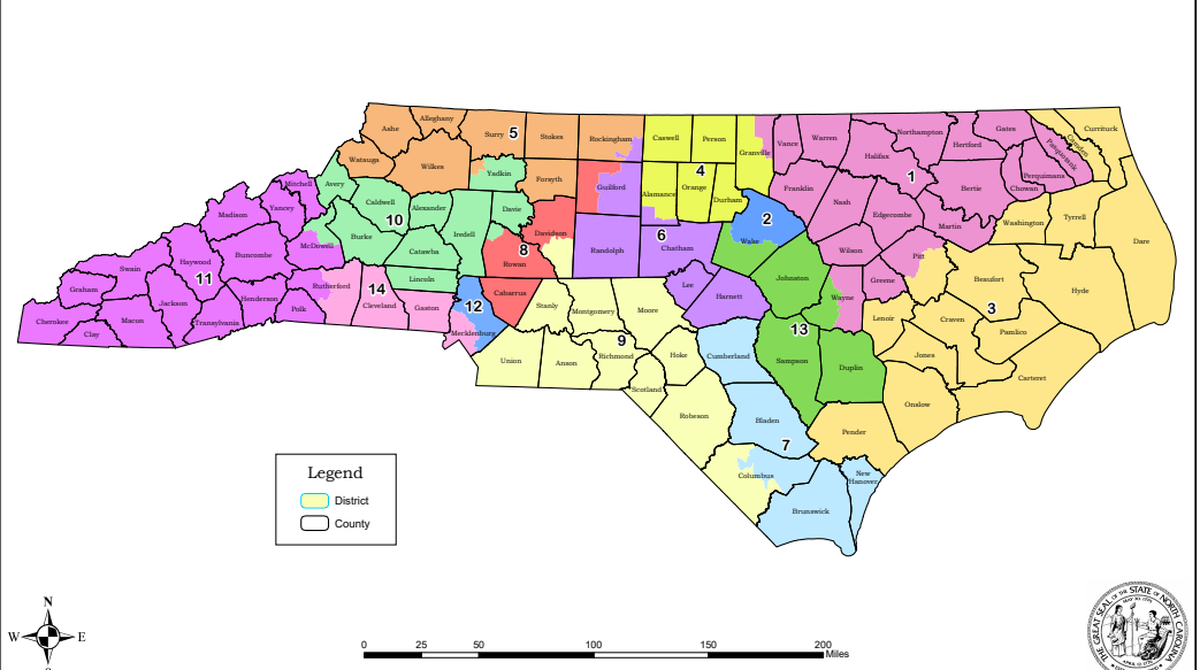
But even if this map is better, it’s still a long way from good. After being redrawn, the state’s 14 U.S. House districts still fall well short of fair. As with previous maps, some of the districts seem illogical. Why, for example, should the three Triad cities — Greensboro, High Point and Winston-Salem — be split into three separate districts? How much does someone living in Wake County have in common with a Duplin County resident? Why is the city of Charlotte sliced in half?
Republicans, however, were pleased with their effort. “While Democrat-run states like New York and Illinois are further entrenching their political power, this remedial map reflects North Carolina’s voters and political landscape, not a predetermined partisan outcome,” Sen. Warren Daniel, a Republican from Burke County who co-chairs the redistricting committee, said in a release. Daniel also said that under the new map, North Carolina would have “four of the most highly competitive districts in the country.”
But those new toss-up districts combine more rural areas with smaller cities and suburbs. One of the stranger combinations would group Cary and Morrisville, two wealthy and diverse suburbs, with hog farming country eastward, the News & Observer reported.
Competitive maps and fair maps are not always the same thing. They’re also not mutually exclusive. Manipulating district lines to artificially create competition isn’t much better than manipulating them to eliminate competition altogether, especially when it divides communities of interest in the process. It’s not fair, and it’s not what the court asked for.
It’s also not what North Carolinians asked for. Since the redistricting process began last year, North Carolinians have begged that communities be kept whole, rather than scrambled and sorted into districts with people who don’t share a common interest. This map openly disregards those wishes.
Unlike the first round of redistricting, which Republicans lauded as the “most transparent redistricting process in state history,” the new map was drawn using a more secretive approach, rolled out and voted on in the same day with almost no time for explanation or debate. Republican leaders said there was no time for public hearings this time around due to the tight schedule mandated by the court, and amendments proposed by Democratic lawmakers on the floor were voted down.
Redistricting is the bedrock of the political process. Poorly drawn maps soil every other aspect of democracy, depriving people of the opportunity to elect someone who is responsive to the needs and interests of their community. That’s why traditional guiding principles such as compactness and communities of interests are critical to the redistricting process, and why they shouldn’t be abandoned now.
Republicans claim these splits are necessary in order to remain in compliance with the court’s order. That’s not true. It is possible to draw maps that strike a reasonable balance between competitiveness and partisan fairness without splitting communities apart, and surely Republicans know that. It may, however, be impossible to draw a map that is both fair and also secures a comfortable GOP advantage. What the court ordered is inherently incompatible with that.
National redistricting expert Dave Wasserman said on Twitter that the proposed congressional map is “still quite a gerrymander.”
“Have a hard time believing NC Supreme Court would accept this,” he wrote.
It shouldn’t. North Carolinians deserve truly fair maps, and it’s become increasingly clear that our Republican-controlled legislature can’t and won’t produce them. Their latest offering reflects the same kind of partisan redistricting that we’ve seen in North Carolina for years — regardless of which party has been in charge — and the court shouldn’t let it stand.
BEHIND THE STORY
MOREWhat is the Editorial Board?
The Charlotte Observer and Raleigh News & Observer editorial boards combined in 2019 to provide fuller and more diverse North Carolina opinion content to our readers. The editorial board operates independently from the newsrooms in Charlotte and Raleigh and does not influence the work of the reporting and editing staffs. The combined board is led by N.C. Opinion Editor Peter St. Onge, who is joined in Raleigh by deputy Opinion editor Ned Barnett and in Charlotte by deputy Opinion editor Paige Masten. Board members also include Observer editor Rana Cash and News & Observer editor Nicole Stockdale. For questions about the board or our editorials, email pstonge@charlotteobserver.com.
This story was originally published February 18, 2022 at 5:00 AM.