
Paul Farmer reshaped public health - and the way I think about Jesus
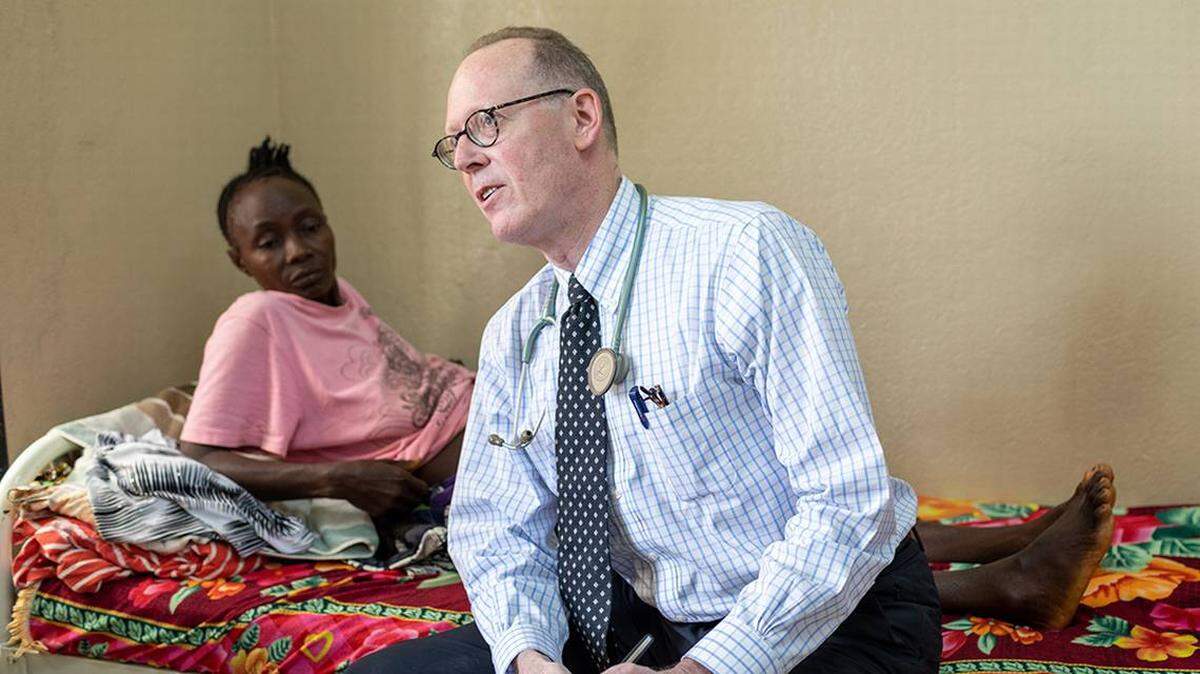
Paul Farmer died Monday. I don’t know if he followed Jesus, but I know he changed the way I do.
A graduate of Duke University, Farmer reshaped the field of global public health. He’s primarily known as a founder of Partners in Health — a network of hospitals and grassroots public health systems he and his colleagues created in Haiti and spread across the globe.
But he didn’t go to Haiti like every other would-be-white-savior to “fix” anybody or anything. Inarguably a genius, what made his work revolutionary wasn’t his brilliance. It was that he told the truth. Not about Haiti or the Haitians, but about America and the Global West. He didn’t imagine a new world, he told the damn truth about this one.
When he began practicing medicine, prevailing wisdom said that drug resistant tuberculosis was untreatable in the so-called developing world. Farmer called crap. He named the imaginary elephant of ignorance and incapability in the room. Not Haitian ignorance or incapability, but Westerners pretending they did not know how to treat disease in Haitian bodies.
When Farmer got invited to tables where policy decisions were being made, he kept telling the truth: Of course we can treat drug-resistant tuberculosis in Haiti. We treat it in the United States, we have the drugs and technology. We can treat drug resistant TB anywhere in any body.
It is not the air in America that makes the drugs efficacious, it’s the resources and policies that grant sick bodies access to treatment. When policy makers said a treatable disease couldn’t be treated, Farmer named what was really happening. Powerful people in the NGO and philanthropy industries were coming together and agreeing that they wouldn’t treat bodies with drug-resistant TB in certain geographical regions — a collusion of pretend impotence designed to make everyone look innocent.
Farmer refused to collude. And when his colleagues fired back that it was a question of resources, conceding that treatment was biologically but not economically possible, Farmer quoted statistics about Halloween costumes and pets. He pointed out that not only are Halloween costumes a multi-billion dollar industry, so are Halloween costumes for dogs. He refused to sit at tables where powerful people pretended there wasn’t enough money to treat curable diseases in some parts of the planet when there was enough money in the world to buy Halloween costumes for dogs.
You shall know the truth and the truth shall set you free, some of us Christians preach that. Farmer lived it.
Farmer warned of the danger of wanting to save the world, “‘we want to be on the winning team, but at the risk of turning our backs on the losers, no, it’s not worth it. So we fight the long defeat.”
Farmer’s philosophy of public health was searingly simple: The well should help the sick. Not the conveniently-located sick or likely-to-recover sick, but all the sick, especially those whose lives are undervalued by policy-makers. The well should help the sick.
Jesus, whose life shows the glory of choosing the long defeat, had a similar healthcare philosophy, “it is not the healthy who need a doctor, but the sick.”
I’m not sure Farmer was a follower of Christ. I’ve read that he practiced Catholicism, but more as a point of solidarity with the people of Haiti than as a matter of belief. Which makes me wonder what exactly we mean when we say someone is a Christian.
Jesus told a story about a landowner with two sons. The father asked his children to go and work in his vineyard. One child said no; the other said yes. But the son who said no went and did his Father’s work, while the son who said yes did nothing. Jesus ended the story with a question — which son did what his Father wanted?
It’s interesting to me how so many Christians believe that following Jesus has nothing to do with our actions, only our words. So many of us believe that grace means what we do is of no interest to God, only what we believe in our hearts and say with our lips.
I don’t know what Paul Farmer believed about Jesus, but I know he spoke truth to powerful people, he leveraged his privilege for the sake of the powerless, he joyfully and creatively fought the long defeat. I know he walked up and down mountains to care for poor sick people. I know his witness challenges me to follow Jesus more faithfully. I don’t know what Paul Farmer thought about Jesus, but I’m pretty sure I know what Jesus thinks of Paul Farmer.