
Committee studying the future of NC public schools wants to return to the past
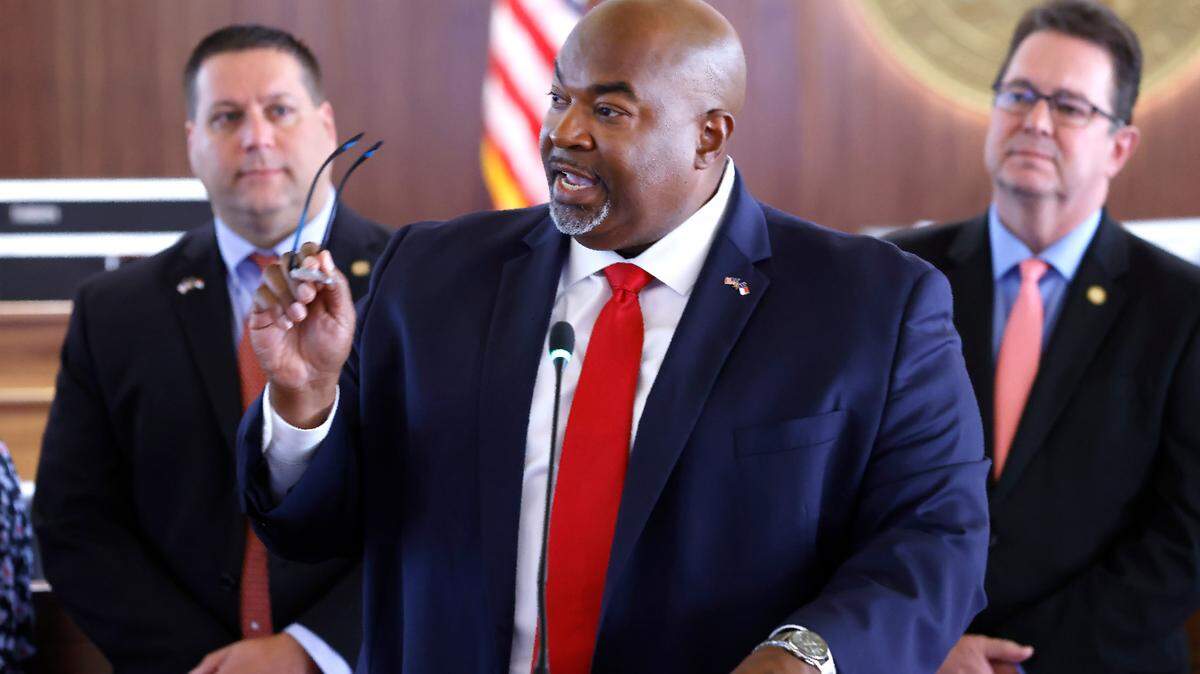
The North Carolina House Select Committee on an Education System for North Carolina’s Future was created to study several factors related to the function of K-12 education in the state. The nine-person committee has been charged with reimagining public schools and transforming how they operate.
Given this alleged purpose, it’s important to understand how our public school system came to be.
The right to a universal tax-supported system of public schools in North Carolina is an artifact of African American activism. Immediately after emancipation, free Black people and white supporters used their political agency to demand access to education — not only for themselves, but for every North Carolinian.
Not long after securing that right, however, an all-white coalition seized control of the state government, imposed segregation, underfunded Black schools, and exerted authority over their curricular program. In this way, the current N.C. House Select Committee assembled to chart the “future” of schools now feels like its stuck in the past.
Just three meetings in, the House Select Committee has presented little that is new. Instead it has rehashed decades-old tropes about public school failures while thinking aloud about ways to establish ideological alignment over the system. At one point, Committee member Rep. Hugh Blackwell suggested reversing the constitutional authority of the State Board of Education by making it subordinate to the Superintendent of Instruction, as well as changing board membership from appointed to elected positions.
A consistent theme so far has been the unmistakable coded-language used by many committee members. It’s like a virtual lexicon of words and phrases weaponized to trigger an emotional response that discredits the subject without providing any supporting details. Whether discussing workforce development or school discipline, numerous dog-whistles were blown carrying significant undertones of racism and homophobia.
Why do they do it? Because it works. The playbook for whipping up moral panic and playing on racial anxieties is battled-tested. In the words of Southern strategy architect and former Nixon advisor, the late-Lee Atwater, “(You) say stuff like, forced busing, states’ rights, and all that stuff, and you’re getting so abstract...a byproduct of them is, blacks get hurt worse than whites.”
Ronald Reagan ran the same game in the ‘80s when creating the trope “welfare queen” to stigmatize low-income single mothers of color. And before you ask, yes, some Black people do it too.
Many on the House Select Committee appear to be fluent in this dialect of denigration. Some of the same actors who decried “divisive concepts” and “teaching racism” in the long session, are back in the short session denouncing “emasculation” and “social engineering.” A poorly-tossed word salad drenched in nonsensical dressing.
The not-so-subtle emphasis recently has been on schools as producers of labor, the lack of parental engagement, and the need for punishing students who are “bad actors.” Lt. Gov. Mark Robinson made that case during a guest presentation that criminal behavior is out of control at schools, despite data showing reportable crimes are down and 94% of suspensions were for noncriminal acts.
All hyperbole aside, here are the actual facts and not the kind found in some fugazi task force: Students of color are 54% of North Carolina public schools enrollment, yet 8 of 9 House Select Committee members are white. While crime and suspensions were down last year, racial gaps have not changed with Black, Native, and mixed-race students disproportionately suspended for subjective offenses.
Most of the districts in the state that are underfunded have a majority-of-color student population, but the legislature refuses to abide by the Leandro ruling.
With a committee seeking to shape education that looks like a photo negative of public schools, in a state where Black and Brown people are the rising majority, there is little reason to believe the future they envision looks much different from the past.
This story was originally published March 6, 2022 at 4:30 AM.