
No, Madison Cawthorn’s ‘orgies’ aren’t going to be his downfall
One of the most overused and empty phrases in politics is “inflection point.” It suggests a radical change in direction and was often used during Donald Trump’s campaigns or tenure in the White House. The “Access Hollywood” tape, his comments after Charlottesville, or his two impeachment trials were considered inflection points, but little changed as he almost won a second term in the White House.
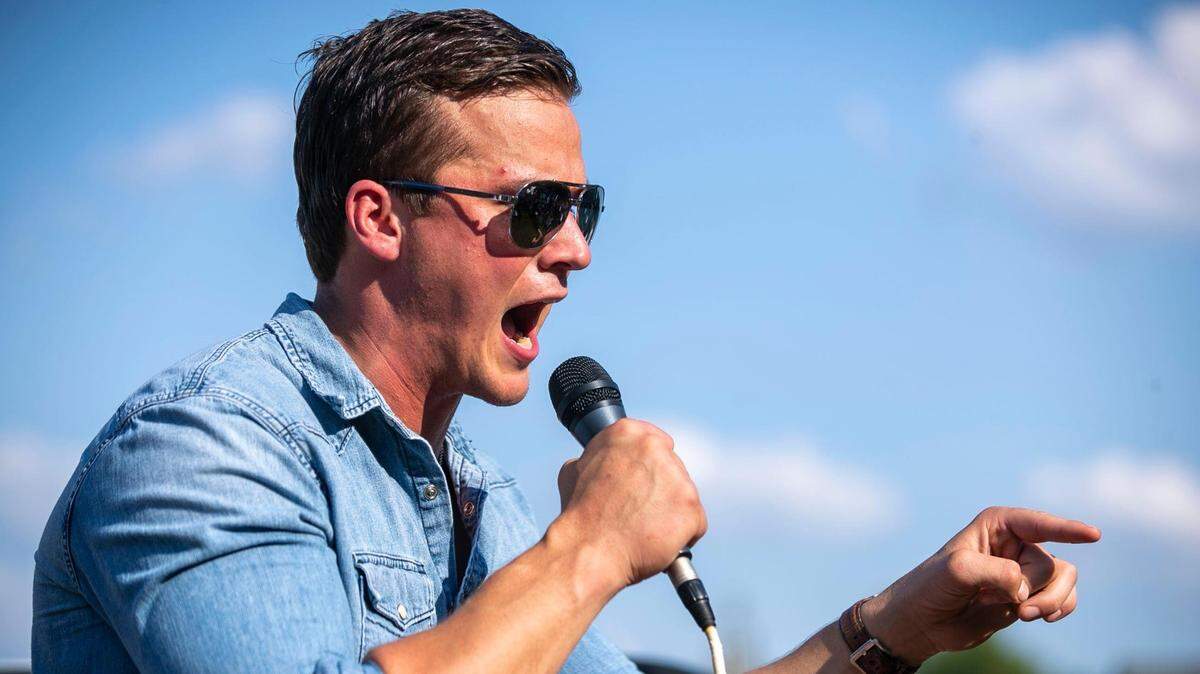
More recently, the term “inflection point” has been applied to controversial North Carolina Congressman Madison Cawthorn, whose comments about fellow legislators engaging in orgies and drug usage even caused House Minority Leader Kevin McCarthy to scold Cawthorn and others across the political spectrum to proclaim him as an embarrassment.
The reality is that there is little that Cawthorn, or other controversial figures in the Republican Party like Matt Gaetz or Marjorie Taylor Greene, can do or say that will create a true inflection point that would endanger their political careers.
There are several fundamental dynamics in politics, generally and within the Republican Party specifically, that suggest Cawthorn’s reelection this year and continued celebrity within national politics will continue, as will those of other controversial politicians.
Anti-elitism has eroded the ability of any single event to affect the political career of insurgents like Cawthorn. The most recent Pew Research Center analysis of American political attitudes demonstrates that almost half of those surveyed have significant concerns about the leadership of their respective political parties.
The reality is that Cawthorn, Greene and others enhance their standing with their followers when they attack elites in Washington, especially within their own party.
After being told by McCarthy that he’d lost the minority leader’s trust because of his statement about orgies and drug usage, Cawthorn never apologized for lying, but instead took the opportunity to attack the Washington “swamp” and the media, saying: “I will not back down to the mob, and I will not let them win.”
Cawthorn’s approach is very much out of the playbook authored by Trump, which equates apology with weakness and ramping up the attack as a sign of strength.
Many Washington and N.C. Republican leaders, including U.S. Sens. Richard Burr and Thom Tillis, have condemned Cawthorn’s statements, with Tillis joining N.C. House Speaker Tim Moore and Senate President Pro Tem Phil Berger in attending a fundraiser for one of Cawthorn’s primary challengers, Chuck Edwards.
In previous political eras, this would have guaranteed the end of Cawthorn’s short political career. But in today’s anti-elitism political environment, the actions of prominent Republicans could backfire and have little impact on Cawthorn’s reelection chances.
A just-released poll of likely Republican voters in N.C. 13th Congressional District shows that, although Cawthorn’s lead over his primary challenger is down, he still has a comfortable 20-point cushion (44%-24%) with less than six weeks until the primary.
The media ecosystem also makes inflection points meaningless. The media landscape is too fragmented to create enough momentum behind any scandal to bring any politician down.
The real issue with the inability of media outlets to create a true inflection point is the lack of trust in them. A new YouGov survey reports that even partisan media outlets like MSNBC and Fox News have lost trust, even among consistent viewers.
The most significant issue with media coverage and its inability to create a true inflection point is the temporal nature of news coverage. Although Cawthorn’s comments generate significant coverage for several days, all outlets had moved on to the next outrageous comment by Greene about Democrats supporting pedophilia.
The idea of inflection points is a mirage in today’s political culture. For partisans, it gives false hope that one of their political enemies will be removed from office. Just as with mirages in the desert, they ultimately disappoint. Cawthorn’s critics are going to be disappointed because his comments do not cause his downfall.