
Former offenders deserve a second chance. I’m proof. But NC makes it hard.
I know firsthand what is possible when people with criminal records are given a second chance, and I know what happens when they are denied in North Carolina.
April is Second Chance Month, a time to highlight experiences like mine and demand investment in the support services we need to rebuild our lives.
When I was released from confinement in 2017, I had high hopes from my prison reentry program. Instead, I felt misled, with few services and little support available to me. I realized that I needed my community to provide services the system did not offer.
Demetrius Lynn at the Local Reentry Council of the Durham Criminal Justice Resource Center was a tremendous help. He connected me with a job and housing resources that went well beyond the services provided by the federal halfway house where I was assigned.
With his help, I was able to overcome the odds after serving nearly nine years in prison for a drug crime.
Reentry should be a seamless process. In reality, there are around 38,000 laws nationally creating economic and social barriers for individuals reentering society.
People often face a temporary or permanent ban on their housing applications because of a specific criminal charge. In my case, I was convicted of a felony three presidents ago, when George W. Bush was still in office — and I still have a difficult time today finding housing from anyone who isn’t an absentee slumlord.
The Local Reentry Council is different. They provided career training and helped me to get a commercial driver’s license, which, with the encouragement of N.C. Supreme Court Justice Anita Earls, Judge Dave Hall, and Umar Muhammad, led me to my current position at the Southern Coalition for Social Justice. The SCSJ is a nonprofit law firm dedicated to helping people with reentry and expungement of charges.
At SCSJ, I’ve been able to put my knowledge and experiences to work. I helped create the “Your First 48” program to provide accurate reentry information for the crucial first days after release so that people in Durham County can more easily start to rebuild their lives.
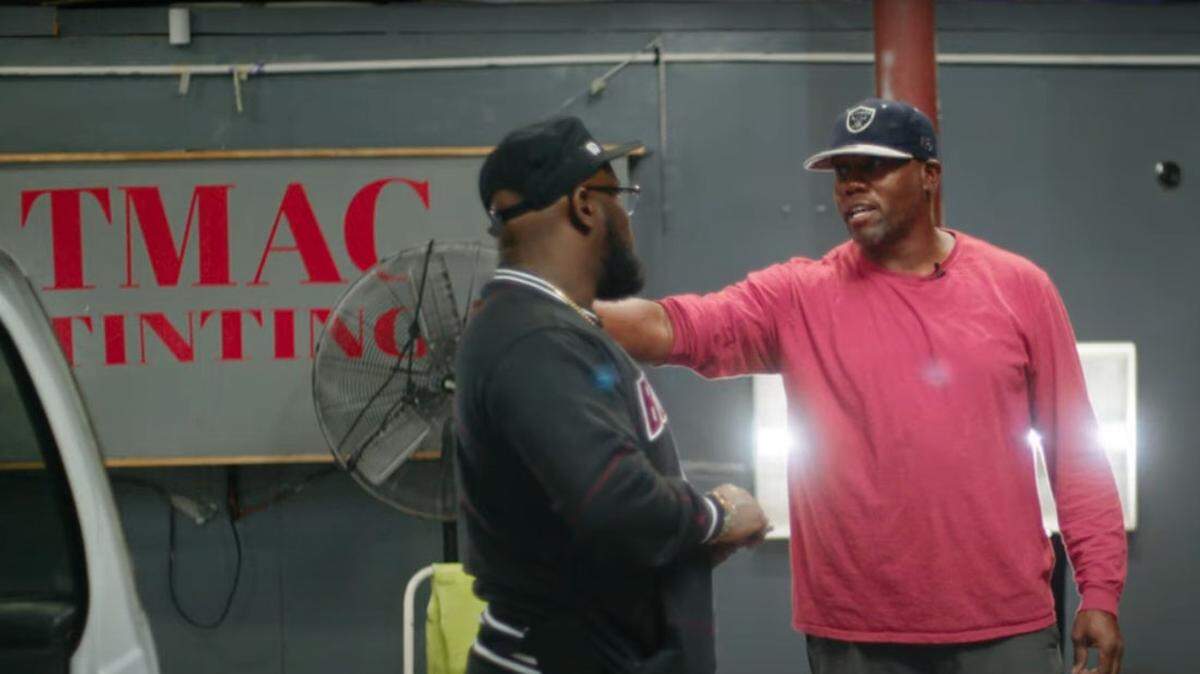
This month, we premiered a short documentary, “A Day in The Life with Sala Abdallah” to shine a light on the hidden pillars of my community who played a major role in my reentry transition.
The video features local reentry heroes like Demetrius, TMAC Tinting owner Roy “Buzzie” Hubbert, and Maurice Wilson, owner of Fo Sho Clothing. In my community, they are the first people to talk to when you get out of prison. They — not the N.C. Department of Corrections — helped me find a job, a car, and clothing.
Buzzie was formerly incarcerated, and often says: “The only reason why I stole was because I was hungry.” Buzzie now has 18 employees, 15 of whom have criminal records but no new charges.
But even Buzzie can’t escape a system stacked against people reentering society. While he has a proven track record of helping the community, he is still not allowed to use Durham facilities for his mentoring program because of his past charges from two decades ago.
I pay it forward now too. I’ve helped people secure long-term employment. I drive all over Durham dropping off “Your First 48” pamphlets and Umar Muhammad Clean Slate tool kits so more people can get their records expunged so they can access housing and job opportunities. The tool kits are named after my cousin, a reentry activist.
After I got out of prison, I had no idea I would become a community organizer and a reentry specialist. I am proof that second chances come with a world of possibilities.