
Another CMS superintendent is gone. It’s time for some bigger changes
As Charlotte-Mecklenburg Schools continues to flounder amid a sea of crises, a new leader will be brought in hopes of keeping it afloat. But that may not be enough.
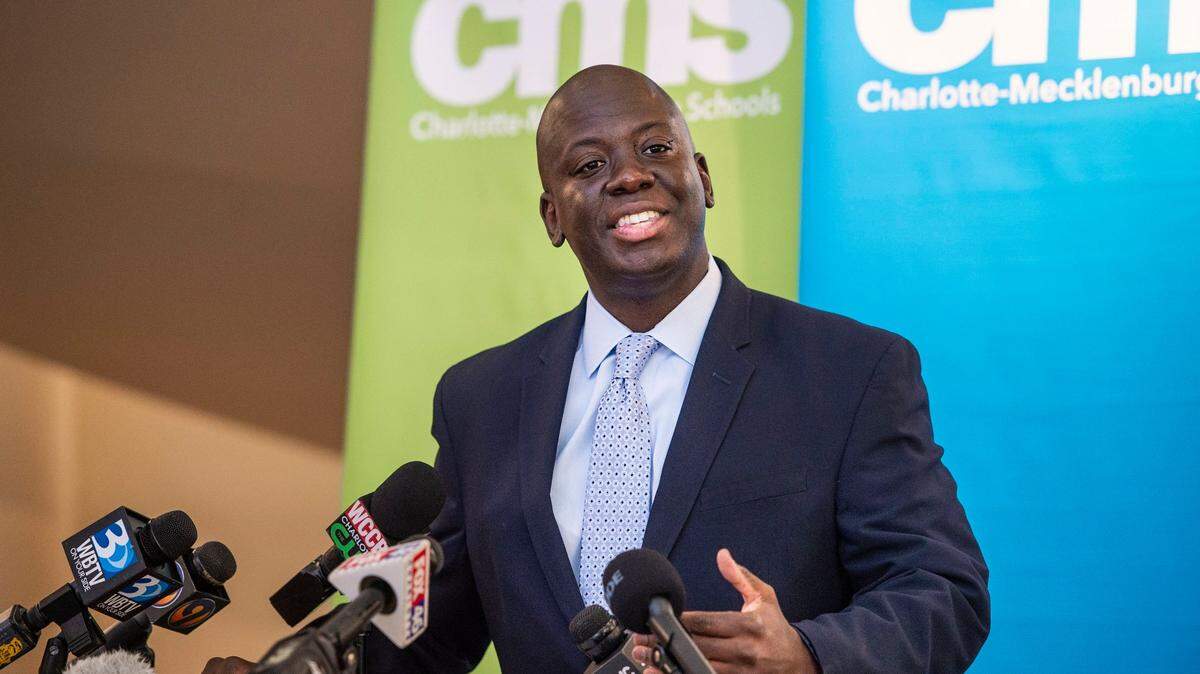
The Charlotte-Mecklenburg Schools Board of Education voted at an emergency meeting Tuesday to terminate the contract of Superintendent Earnest Winston in what chairperson Elyse Dashew called a “difficult decision.”
The list of CMS struggles under Winston’s leadership is substantial, and his response to them has been underwhelming. He has not been particularly forceful or innovative as a leader, promising bold action on things like student outcomes and school safety but rarely following through. It’s undermined the public’s confidence in CMS and in Winston especially.
That lack of confidence is likely due in part to Winston’s lack of public assertiveness, a contrast with at least some past superintendents. That includes Clayton Wilcox, who Winston replaced as superintendent in 2019. Wilcox was a more voracious leader, but he was flawed and often acted unilaterally, such as when he opted to change the background check process for new employees.
When Wilcox was abruptly suspended and forced to resign by the school board without explanation, the board appeared to want a different kind of leader to replace him — one it could direct as opposed to one who acted without the board’s consent. And in hiring Winston, that’s exactly what they got. The board chose not to conduct a search before that hire, and many, including the Editorial Board, expressed concerns about Winston’s lack of experience. The school board unanimously backed Winston, anyway, and board members said he had their “full trust.”
Now, more than two years later, Winston has lost the trust of both the public and the school board, and it no longer seems possible for him to recover.
“We believe that a different leader is needed to shore up this district and place our students on track to achieve high goals in literacy, math and career and college readiness. Student outcomes are what matters most,” Dashew said at Tuesday’s meeting.
The challenges that marred Winston’s tenure as superintendent did not start with him, and they won’t end with his departure. But he has struggled to navigate them. When weapons found on CMS campuses or buses reached a 10-year high in the first half of the school year, part of Winston’s solution was to spend $442,000 on clear backpacks, which now may or may not be distributed to students after warning labels about cancer-causing chemicals were found on them.
In the classroom, the effects of the COVID-19 pandemic has exacerbated already severe achievement gaps, and a majority of CMS students failed state exams for the 2020-21 academic year. In the eyes of many, the district’s decision to prolong remote learning during the pandemic is to blame.
Students and parents also have been frustrated by the district’s tardy response to sexual assault, particularly Title IX reforms that they say CMS has been slow to implement.
All of which is not solely the superintendent’s fault. Many of Winston’s decisions required the cooperation or approval of the board, and framing Winston as a scapegoat won’t help achieve the kind of changes board members claim to want. The board should recognize that it got what it wanted, but not what the district and its families needed, when it hired the inexperienced Winston in the first place. A new approach, as well as big changes on the board itself, are in order.
For now, the school board should look for a strong, independent leader, one who brings innovative and fresh approaches to challenges both old and new. CMS will be searching for its seventh superintendent since 2011, and unlike in the past, the search must be transparent and invite public input. Over the years, leadership transitions in CMS have been shrouded in secrecy. The results, once again, have been disastrous.
BEHIND THE STORY
MOREWhat is the Editorial Board?
The Charlotte Observer and Raleigh News & Observer editorial boards combined in 2019 to provide fuller and more diverse North Carolina opinion content to our readers. The editorial board operates independently from the newsrooms in Charlotte and Raleigh and does not influence the work of the reporting and editing staffs. The combined board is led by N.C. Opinion Editor Peter St. Onge, who is joined in Raleigh by deputy Opinion editor Ned Barnett and in Charlotte by deputy Opinion editor Paige Masten. Board members also include Observer editor Rana Cash and News & Observer editor Nicole Stockdale. For questions about the board or our editorials, email pstonge@charlotteobserver.com.
This story was originally published April 19, 2022 at 8:02 AM.