
What Trump Republicans want will bring misery for middle-class and others
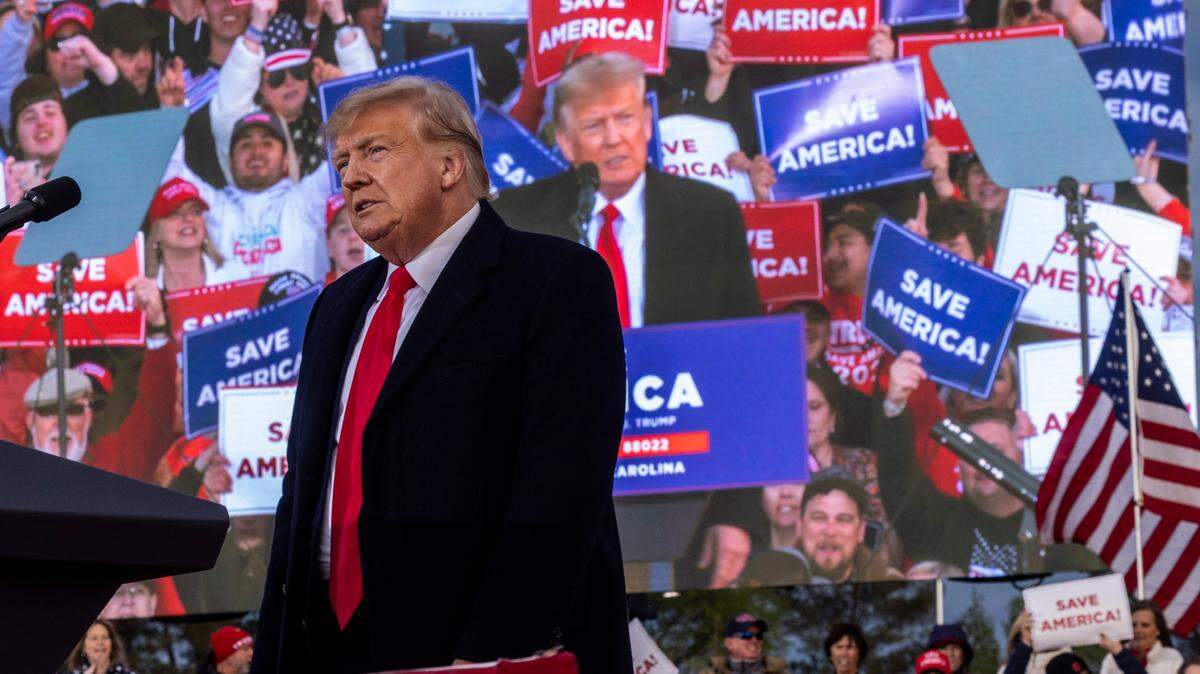
Efforts to sabotage the Biden presidency continue with remarkable numbers of average Americans susceptible to the big lies being perpetrated by conservative Trump Republicans — with the complicity of a large majority of GOP members, including many in Congress.
Capitalizing on our short-term memory loss, right-wing pundits and politicians blame the inherited economic distress on the Biden administration and characterize efforts at recovery as “socialist” intrusions by “big government.” They decry what they depict as an assault on the virtues of individual freedom, independence and self-reliance — bedrocks of the American experience.
Their prescriptions for righting the ship of state? Lowering all forms of taxation, reducing the size and scope of government and public services, and reducing, or eliminating any regulatory oversight of commerce and markets.
The resurgent Republicans promise a more vigorous pursuit of what they tout as unfettered “liberty,” insulated from loathsome governmental constraints. In truth, their agenda amounts to a perverse expression of social Darwinism — “survival of the fittest.”
But the prosperity of the very “fittest” tends to correlate with differences in race, gender, family history, education, physical and emotional health, and patterns of employment opportunity. Those not encumbered by circumstances beyond their control often can and do succeed, with hard work and determination.
The matrix envisioned by the conservative agenda would diminish the socioeconomic prospects of those left behind due to no discernible personal fault. More often than not, poverty is a product of circumstance, not character.
Economic data shows that among industrialized nations the U.S. is distinguished by the large and growing gap between rich and poor. The percentage of families struggling to survive with disposable income below the poverty level is a national disgrace. Meaningful healthcare is beyond the reach of millions, and shocking numbers are ill-housed, poorly nourished and deprived of effective education. And the middle class, historically the population upon which national vitality is believed to depend, has steadily declined in numbers and real income.
Regrettably, the attitude of many members of the wealthy elite is reminiscent of a once popular British trade union slogan, “I’m all right, Jack, I’ve got mine, and the heck with the rest of you.”
Because they can afford private academies in place of public schools, private vehicles instead of public transit, a single-family home in place of public housing, and unlimited access to extraordinary medical care, they see no need to participate in tax-funded programs of benefit to the less fortunate. Taxation is deemed to be a form of “theft,” a punitive exaction that unjustly penalizes financial success and rewards the allegedly indolent.
By limiting its access to revenue, radical Republicans propose to “starve the beast” of government. The impact of the conservative tax-cutting agenda would not be limited to dismantling the safety net of those in legitimate need. It would also cripple government oversight capable of forestalling the endemic excesses of unfettered capitalism, in which cost-containing competition and consumer protection are trumped by monopoly, fraud and greed.
Surely it is abundantly clear by now that a viable democracy is sustainable for the long term, within the context of a capitalist, free-market economy, only when the private sector and the government effectively collaborate to sustain broad-based public well-being on which national success depends.
If pending elections produce a conservative ascendancy, equipped to enact the agenda of tax-cutting, curtailed public services, and wholesale deregulation, the critical collaborative balance would be jeopardized.
Perhaps the ensuing misery among members of the working and middle classes would at last produce a “class warfare” mentality of sufficient vigor to redress the imbalance through political action. Or perhaps that salutary process will not come about until wider-spread economic and social pain becomes even more acute for a growing majority of the “left behind.”