
Dialogue, not silence, will heal the breach at UNC
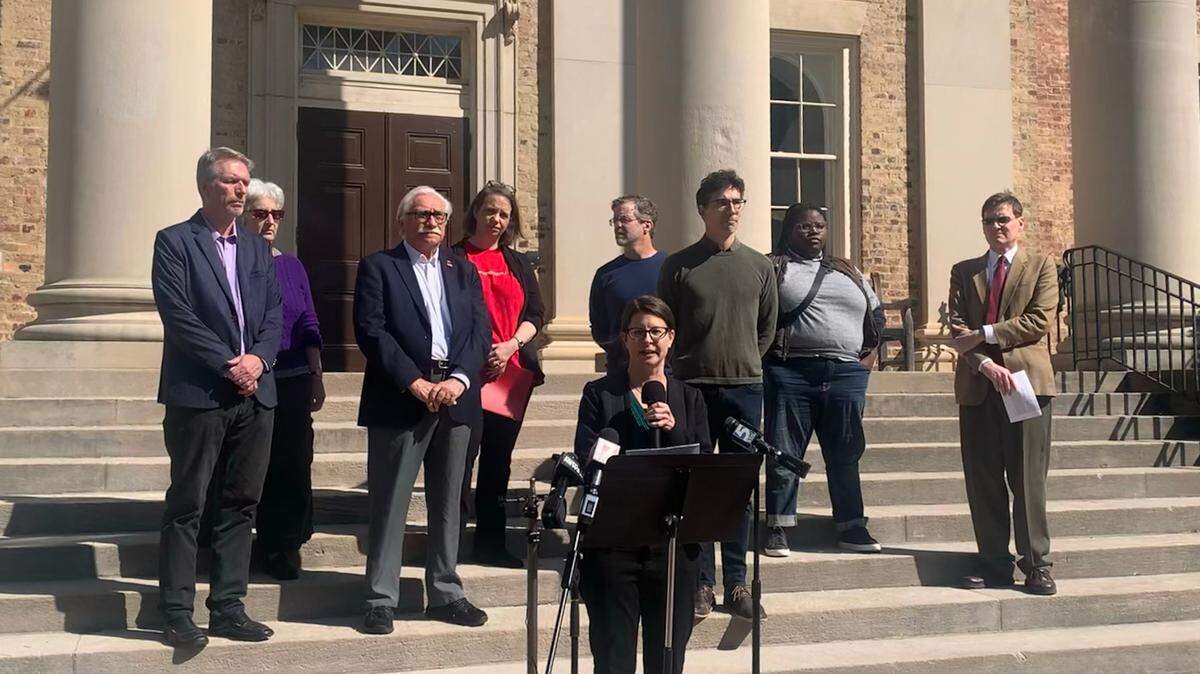
The American Association of University Professors issued a critical report last week on the University of North Carolina System that focused on political meddling in campus affairs, limitations on academic freedom and institutional racism, but the most telling part was what was not said.
The introduction to the 36-page report includes this sentence: “UNC system president Peter Hans, Board of Governors chair Randall Ramsey, UNC–Chapel Hill Chancellor Kevin Guskiewicz, and UNC–Chapel Hill Board of Trustees chair David Boliek declined to be interviewed.”
That those four said nothing says a lot.
A respected higher education organization commissioned a group of professors from universities outside of North Carolina to find out what was causing controversies that have drawn negative national attention to UNC. In response, UNC’s top administrators were silent. Hans limited his response to a letter issued by Kimberly van Noort, the UNC System’s senior vice president for academic affairs. Guskiewicz could not be reached for comment.
Administrators who run UNC-Chapel Hill and the 17-campus system may actually want to show more respect for the faculty’s role – Guskiewicz, after all, is a former UNC-CH faculty member – but Republican lawmakers who determine the university’s funding and their appointees are more interested in monitoring faculty than conferring with them.
Meanwhile, UNC may receive a formal sanction from the AAUP, an action expected to come in June. The sanction is only a opinion, but the AAUP’s opinion matters, particularly when professors consider taking a job.
Michael Behrent, an Appalachian State University history professor and president of the North Carolina AAUP, said that a sanction by the national group “could pose serious recruitment challenges for this system with all the consequences that come with that for its reputation, the quality of its degrees and so on.”
Poor faculty morale also hurts retention. And that effect may already be surfacing.
Many employers are losing workers because of COVID disruptions and the Great Resignation. But UNC’s losses show a worrisome spike. UNC officials reported last month that faculty and staff turnover across the UNC System is about 40 percent higher than the average of the last four years.
While administrators may discount the opinions of faculty and their national organization, they do pay close attention to what the true masters of the UNC System think. Those are the leaders of the General Assembly’s Republican majority and the politically connected people the legislature appoints to the UNC Board of Governors and the Board of Trustees on each campus.
Those masters have chilled academic freedom by shutting down three university-based centers focused on poverty, the environment and voter engagement. They created a fiasco around the removal of a Confederate statue from the entrance to the Chapel Hill campus. They’ve warped the selection of chancellors with cronyism. And they have fed an atmosphere of distrust and racial tension that exploded around the failed hiring of Nikole Hannah-Jones at the UNC School of Journalism and Media.
Many of these incidents could have been avoided had UNC respected faculty members enough to give them a strong hand in running the institutions of which they are the essential part. Instead, conservative politicians and their appointees regard the faculty as liberal indoctrinators of the youth.
Victoria Ekstrand, a professor at UNC’s School of Journalism and Media, pointed the way to fixing this situation at a news conference announcing the release of the report. She said, “Let us shine lights on these facts in this report and have a good and robust debate about them. Only a commitment to an open marketplace of ideas can cut through the fear that chilling effects instill.”
UNC’s leaders should listen to their professors. They’ll learn something.
This story was originally published May 3, 2022 at 4:30 AM with the headline "Dialogue, not silence, will heal the breach at UNC."