
Now more than ever, we must cultivate free expression on campus
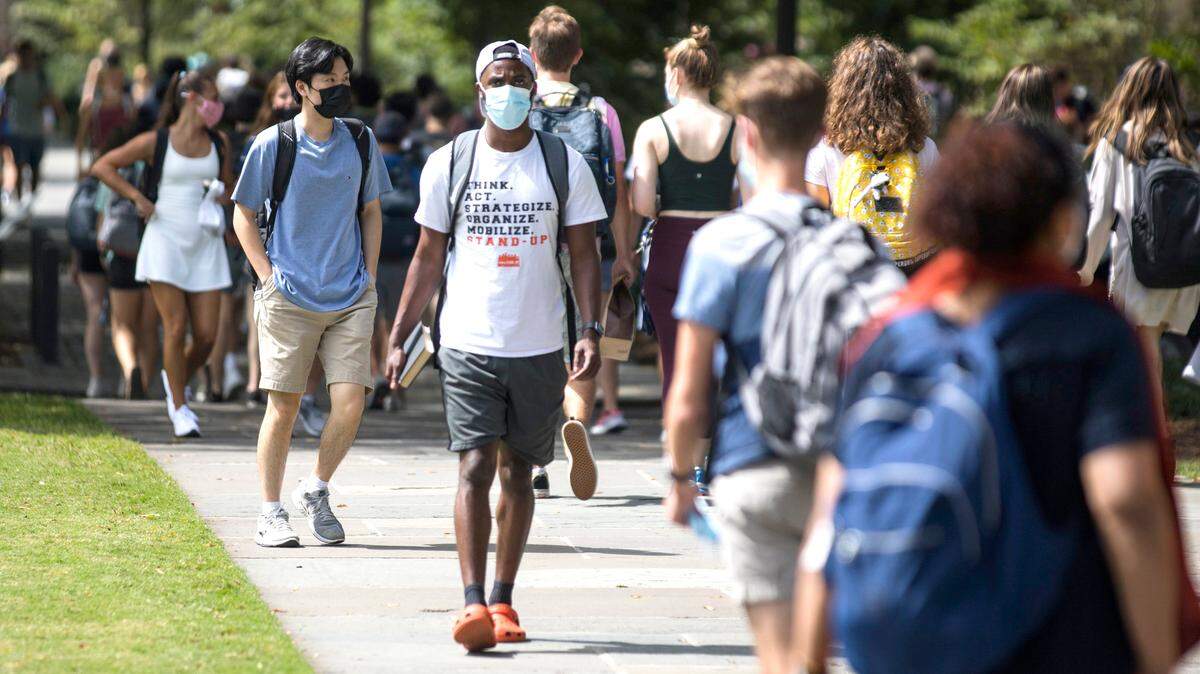
I said a lot of dumb, ill-considered things in college. Mostly because I was 19, and also because that’s part of the point of college.
In any given week, I remember being asked to share thoughts on foreign policy, moral philosophy, the ethics of journalism, the role of race in literature, and the fundamental fairness of capitalism. I was also learning to do my own laundry; it was an ambitious time!
Blessedly for me, all of that took place just before the dawn of social media and the widespread adoption of smartphones. My half-formed thoughts on life and politics stayed in the classroom, my friends’ dorm rooms, or in pen-and-paper journals that remain locked in a trunk somewhere in my attic, destined for a burn barrel if I ever decide to run for office.
Today’s students aren’t so lucky. They’re tackling the same fraught subjects under the glare of near-constant surveillance from their peers, or worse yet, giving into the temptation to share undergraduate insights with the world via Twitter, TikTok, Facebook, or some other app tuned for viral outrage.
This has not been great for the campus political environment.
“We find that a significant number of students have concerns about stating their sincere political views in class and have self-censored because they were concerned about the potential reactions, especially from peers,” a team of faculty researchers said in a just-published survey about free expression on UNC System campuses. At the same time, “students across the political spectrum want more opportunities to engage with those who think differently.”
That disconnect between the desire for open-minded debate and the reality of fraught self-censorship is not unique to college campuses, but a reflection of the broader political culture in America. The same “exhausted majority” that pollsters have found sitting on the sidelines of America’s culture wars also exists among North Carolina’s students, according to the survey.
“The people who are most engaged have the most hostile political stance in many ways,” explained Tim Ryan, a political scientist at UNC-Chapel Hill and one of the study’s authors.
Those hard partisans dominate the discussion and drive others into ‘spirals of silence,’ where moderate majorities go quiet in the face of vitriolic reactions from the extremes.
The author and Brookings Institution researcher Jonathan Rauch talked about this phenomenon during a lecture at Duke University earlier this year, calling it a threat to the fundamental mission of higher education.
“Respectful disagreement is where knowledge comes from,” he explained. “But intense polarization makes us weaker.”
The UNC survey offers plenty of reason for hope. Even on campuses dominated by left-leaning students, there was a strong desire to hear from more conservative speakers and engage in “low-stakes activities designed to build trust and understanding.” That means more classroom discussions where everyone agrees to put their phones away and assume good faith, along with a willingness by administrators to defend both faculty and students from online outrage.
Students need the chance to build trust and test ideas without the glare of an outside audience.
“People are much more likely to open up with people they have a meaningful relationship with,” Ryan said. “Most students are curious, but many are not committed to a political side.”
That curiosity is exactly what we should want from our college students and what we should cultivate in ourselves.
I’ve spent a lot of time in the last few years talking to scholars and civic activists who work on reducing political polarization, and they almost always point to curiosity as an antidote to extremism. “Students are hungry for an environment where they can share their views and be heard,” Rauch said during his talk at Duke. “It doesn’t take that many people to change the culture for the better.”