
NC legislators need lunch cost solution for public school students
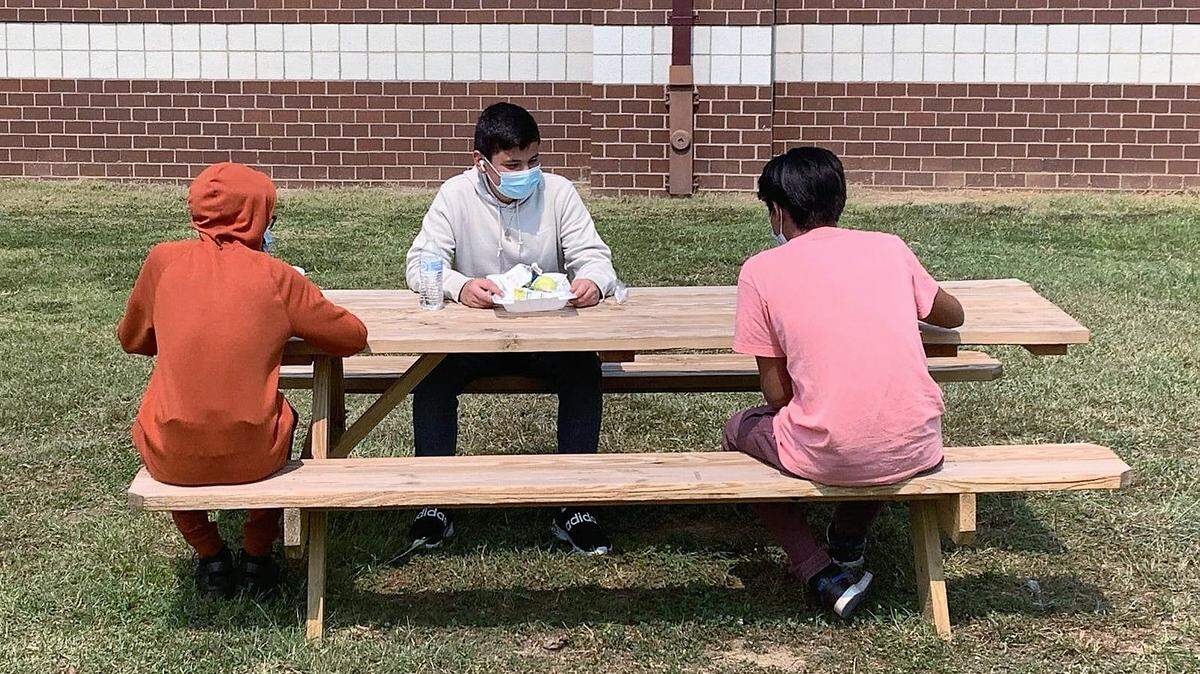
Schools have been returning to normal, for better or for worse, over the last two years. The next “normal” comes at the end of June, when the federal government will let the sun set on universal free school lunch. For people who work in education policy, the impending cutoff has been a concern for months.
School lunches are stereotyped as unappetizing and unhealthy, but they are also a way to combat the 30% of children in North Carolina who live in “economically distressed” households, and face food insecurity as a result. About 860,000 of North Carolina’s public school students are eligible to participate in free or reduced lunch programs — about 60% of all public school students.
A presentation in a General Assembly meeting by Lynn Harvey, the director of the North Carolina Department of Public Instruction’s Division of School Nutrition and District Operations, detailed how cutting off these programs and returning to normal would be “catastrophic” for the state’s school lunch program, since a decrease in students eating school lunch means less money going back into the program. She was met with resistance from Republican lawmakers, including Rep. Jamie Bowles (R-Moore), who said that the “socialization” of school lunch takes responsibility away from families that should be providing food.
So what do we do about children possibly going hungry if they can’t afford school lunch?
There’s anecdotal evidence that students who need help already fall through the cracks of eligibility — which makes sense when you think about places like Mecklenburg County, where there’s a backlog of SNAP benefit applications, a program that also involves enrolling students in free lunch automatically. All Title 1 schools already offer free lunches for everyone, and that won’t change when the COVID funding runs out. But not all students who need help attend Title 1 schools. It’s unclear how many students are in need of a cheaper or free lunch option and not getting it.
Despite pushback in committee, two bills have been introduced in the state Senate, as well as one bill in the N.C. House, that would make free breakfast and lunch available to all North Carolina students. The bills give different estimates for how much the cost: the Senate bills estimate it’ll cost around $92.7 million to fund breakfast and lunch, while the House estimates that it’ll be closer to $159.2 million for both. It’s a lot of money, but Kris Nordstrom, a senior policy analyst at the North Carolina Justice Center, said the former number would be about a 1% increase on the current schools budget.
“There’s a moral argument that kids deserve free and nutritious and delicious breakfasts and lunches in schools, because they deserve free nutritious and delicious breakfasts and lunches,” Nordstrom said, “because they’re children.”
We agree, but we’re uncertain free lunches for everyone is the most efficient way to get there. There are other options: the state could adjust the goalposts and allow students whose families make more than 185% of the poverty line to also participate in reduced-price lunch. There’s also the Community Eligibility Provision (CEP), which allows schools who qualify to offer free lunch for all students. Under President Biden’s stalled Build Back Better plan, the CEP threshold would have been lower, allowing more schools to participate. Lots of schools, however, currently can’t afford to participate.
With COVID money going away, North Carolina lawmakers and school officials should promptly explore how best to ensure that needy students aren’t going hungry during their school days, as nutritious meals have been linked to better cognitive function and ultimately, better test scores.
Wanting students to be fed in a place where they spend so much of their time should not be controversial, no matter what you think the solution should be.
BEHIND THE STORY
MOREWhat is the Editorial Board?
The Charlotte Observer and Raleigh News & Observer editorial boards combined in 2019 to provide fuller and more diverse North Carolina opinion content to our readers. The editorial board operates independently from the newsrooms in Charlotte and Raleigh and does not influence the work of the reporting and editing staffs. The combined board is led by N.C. Opinion Editor Peter St. Onge, who is joined in Raleigh by deputy Opinion editor Ned Barnett and in Charlotte by deputy Opinion editor Paige Masten. Board members also include Observer editor Rana Cash and News & Observer editor Nicole Stockdale. For questions about the board or our editorials, email pstonge@charlotteobserver.com.
This story was originally published June 6, 2022 at 4:00 AM with the headline "NC legislators need lunch cost solution for public school students."