
‘We didn’t learn’: Watergate counsel hears history echo as Jan. 6 hearings open
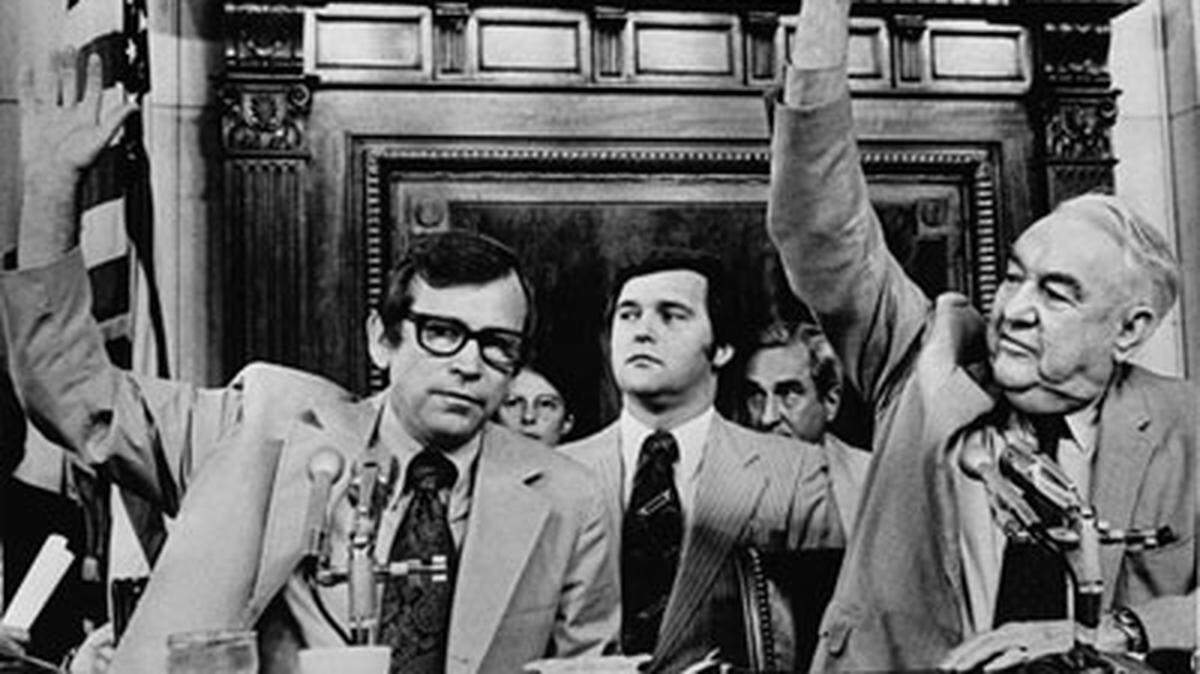
Rufus Edmisten is looking forward to the Jan. 6 committee hearings that open Thursday evening, but he’s also looking backward.
Edmisten, the former North Carolina attorney general and secretary of state, served as deputy chief counsel to the Senate Watergate Committee, whose dramatic hearings in the summer of 1973 galvanized the nation and led to the resignation of President Richard Nixon.
The hearings to be conducted by the House select committee investigating the Jan. 6, 2021, attack on the U.S. Capitol by supporters of former President Donald Trump will have echoes of the Watergate story. Congress is again trying to uncover whether the president committed crimes related to his pursuit of a second term.
“It looks like we are back in Watergate days and maybe even worse,” Edmisten said. “We didn’t learn the lessons.”
Edmisten, who at 80 is still practicing law in Raleigh, realizes that what remains so fresh to him is unknown history to younger generations. He said he gets asked about the scandal by young reporters “who wouldn’t know Watergate from livermush. It’s like someone like me trying to remember what the Teapot Dome scandal was.”
Yet the historic events are more relevant than ever and even some of the players are gathering again. Edminsten and 125 others who had roles in the Watergate hearings and the coverage will convene in the Senate Caucus Room at the U.S. Capitol on June 17 for speeches and reminiscing.
Edmisten, who served on the staff of of the late North Carolina Sen. Sam Ervin, the Watergate Committee chairman, vividly recalls the unfolding of Watergate. Ervin was planning to subpoena Nixon to get tapes of secretly recorded White House conversations, but first he wanted to see if the president would surrender them voluntarily. The senator turned to Edmisten and said, “Get the president on the phone,” startling his young aide. Edmisten recalled, “He said it like, ‘Go get a loaf of bread.’ ”
Edmisten did manage to get Nixon on the phone, but after he connected the call to Ervin he knew the conversation was going badly because when the folksy Democrat from western North Carolina “got excited about something, his eyebrows would go up and down like windshield wipers.”
The committee ended up issuing a subpoena for the tapes – the first ever issued to a president from a conressional committee – and getting them.
During the Trump administration, officials and advisers defied subpoenas. Some are still resisting calls to from the Jan. 6 committee. When anyone balked at a Watergate Committee subpoena, Ervin would threaten to send U.S. Marshals for them and lock them up in the basement of the U.S. Capitol
“Now it’s like a piece of paper you throw in the wastepaper basket,” Edmisten said. He’s also dismayed by the broad claims of executive privilege by former Trump advisers. “That’s not in the Constitution,” he said. “That’s made-up law.”
Edmisten said such stonewalling undermines congressional oversight of the executive branch and represents a “total breakdown of the separation of powers. We thought we had done something about that with Watergate. That has to be put back together.”
Another difference between the Watergate and Jan. 6 investigations is the role of North Carolinians. Ervin was widely admired for his overseeing the bipartisan probe. Raleigh lawyer Gene Boyce, assistant chief counsel to the Senate Watergate Committee, helped uncover the existence of Nixon’s White House tapes.
Now a North Carolinian, former Rep. Mark Meadows, who served as Trump’s chief of staff in the months leading up to the Jan. 6 storming of the U.S. Capitol, is being questioned about his role in the attempt to block certification of the 2020 presidential election results.
“The tables are turned, in a sense,” Edmisten said. “There are no North Carolina heroes on the side of seeking the truth right now.”
This story was originally published June 9, 2022 at 4:30 AM with the headline "‘We didn’t learn’: Watergate counsel hears history echo as Jan. 6 hearings open."