
Hearing shows Trump’s election lies led to Jan. 6. NC Republicans spread them.
On Jan. 6, 2021, a mob descended on the U.S. Capitol, seeking to disrupt the joint session of Congress gathered to officially certify the results of the 2020 presidential election.
Fueled by baseless claims of election fraud proliferated by former President Donald Trump and other Republicans, the mob breached and vandalized the building, forcing Congress into recess.
But this isn’t just about what happened on Jan. 6. It’s about everything that happened before that, and everything that’s happened since.
The U.S. House committee investigating the Jan. 6 insurrection held its second public hearing Monday, in which it discussed Trump’s “Big Lie” that the 2020 presidential election was stolen — and how that laid the groundwork for the riot.
On election night, the committee said, a drunk Rudy Giuliani told Trump that he should just claim he won, insist that vote counting stop and declare that everything was fraudulent.
So that’s what Trump did, even as other advisers repeatedly warned him against it.
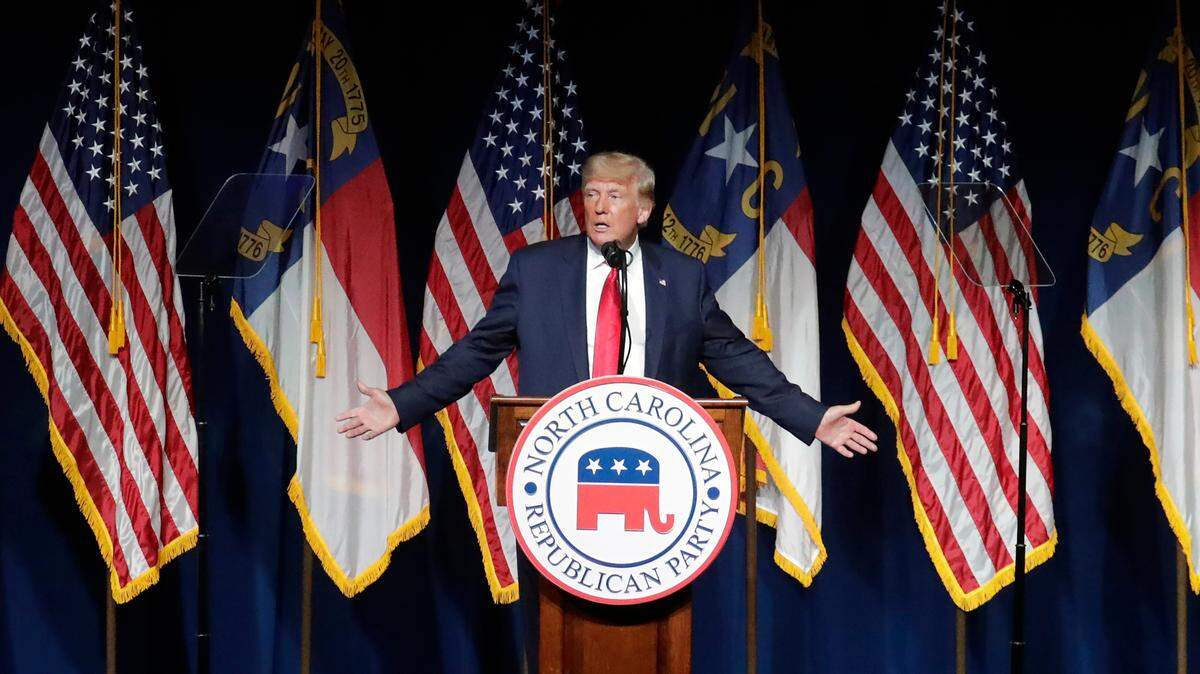
Here in North Carolina, some Republicans pushed a similar narrative. They wanted Donald Trump to be declared the winner in North Carolina even as tens of thousands of ballots had yet to be counted. North Carolina Republican Party Chairman Michael Whatley held news conferences and protests outside the state government complex in Raleigh, and outside the Mecklenburg County Board of Elections in Charlotte, complaining that the “Democrat-controlled State Board of Elections” was “playing games with the data.”
Republican lawmakers also echoed Trump’s lies:
- On Nov. 12, 2020, House Speaker Tim Moore tweeted photos of his trip to Pennsylvania for the “ballot count oversight and elections integrity effort,” complete with posters that read “STOP THE STEAL” and “Fraud Squad Welcome!”
- In December 2020, all but two Republicans representing North Carolina in the U.S. House of Representatives formally backed a Texas lawsuit that falsely claimed the 2020 presidential election was “tainted” with fraud and should be overturned.
- Seven members of the North Carolina congressional delegation — all Republicans — voted against certifying election results on Jan. 6.
- U.S. Rep. Ted Budd was among the first to announce he would vote against certification, writing a letter to his colleagues in December 2020 asking that they join him “in this fight.”
- Ahead of the vote, U.S. Rep. Dan Bishop shared an eight-page “report” blaming Democrats for a national effort to “weaken ballot security, undermine positive identification of voters, and provide opportunities for post-election ballot-box stuffing.”
Of course, undermining trust in legitimate elections has long been strategy for North Carolina Republicans. For years, lawmakers have insisted that voter fraud is a very dire threat, despite all evidence to the contrary. Federal prosecutors spent four years investigating voter fraud in North Carolina, only to find that almost none exists. And since the 2020 election, Republican state lawmakers have made a number of attempts to change the rules of mail-in voting, scrub supposedly fraudulent voters from the state’s voter rolls and inspect voting machines to see if they had been tampered with.
Even those who did not explicitly endorse Trump’s fantasies failed to publicly denounce them, opting for silence instead. Some Republicans who were once election deniers have since acknowledged that Joe Biden is, in fact, the legitimate president, and say they respect the outcome of the election. Some of them still do not.
But most of them nonetheless seem to remain loyal to their party leader, Donald Trump, the same man who stoked the conspiracy that the 2020 election was stolen from him and concocted a plan to try to overturn it. Trump is still repeating this lie, even saying he’s going to write a book about it titled “The Crime of the Century.”
Perhaps this is why Republicans don’t want you to watch the hearings — they don’t want you to think about how the lies Trump told sound exactly like their own.
BEHIND THE STORY
MOREWhat is the Editorial Board?
The Charlotte Observer and Raleigh News & Observer editorial boards combined in 2019 to provide fuller and more diverse North Carolina opinion content to our readers. The editorial board operates independently from the newsrooms in Charlotte and Raleigh and does not influence the work of the reporting and editing staffs. The combined board is led by N.C. Opinion Editor Peter St. Onge, who is joined in Raleigh by deputy Opinion editor Ned Barnett and in Charlotte by deputy Opinion editor Paige Masten. Board members also include Observer editor Rana Cash and News & Observer editor Nicole Stockdale. For questions about the board or our editorials, email pstonge@charlotteobserver.com.