
NC trained physician: The US needs more immigrant doctors like me
Growing up in Nigeria, I saw a lot of suffering. The country’s healthcare system is fragmented, and few people — even those with resources — are able to access quality care. When my father-in-law had a stroke last year, he couldn’t find a hospital that had access to a CT scan. It took hours of driving around Lagos to find a facility that could treat him. He was lucky — not many Nigerians have the ability to do this.
Seeing this broken system motivated me to study medicine at the University of North Carolina at Chapel Hill when I moved to the U.S.
Today, I’m an obstetrician and gynecologist in Houston, where I deliver approximately 200 babies a year and care for women throughout their pregnancies and beyond. I have a passion for public health, and I believe socioeconomic health disparities and access to care are some of the most pressing issues of our time.
This is why I’m worried about the American medical system. The healthcare sector has lost nearly half a million workers since the start of the pandemic, according to the U.S. Bureau of Labor Statistics. Burnout and depression are rampant.
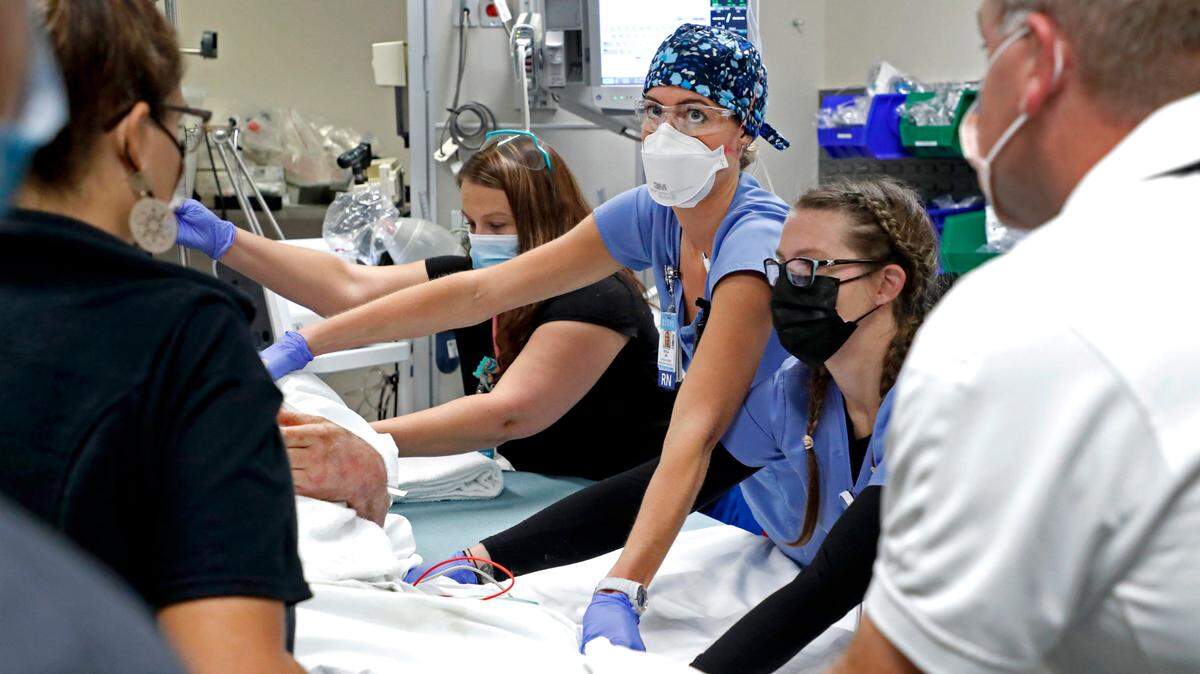
When the pandemic first hit, my colleagues and I not only continued to work while much of the country stayed home, but with PPE in short supply, we had to make our own masks out of blue surgical wrap.
Things have improved since then, but month after month of COVID surges has taken its toll. Online, I frequently see physicians discussing the grueling hours and high stress working conditions. They share how unappreciated they feel. Many say they’re planning to leave the medical profession.
Even before the pandemic, the shortage of doctors in the U.S. was expected to reach 140,000 by 2033, according to the Association of American Medical Colleges. North Carolina needs approximately 1,800 additional family physicians in the next decade to meet the health needs of its growing population, and 88% of North Carolina’s rural counties are already considered “medical deserts.”
Welcoming more internationally-trained physicians to the U.S. can help, and the Healthcare Workforce Resilience Act, which was introduced in the Senate last year, would do that. The bill calls for recapturing up to 40,000 visas from previous fiscal years for foreign-born nurses and doctors, bringing over nurses who are stuck overseas due to backlogs, and allowing physicians working in the U.S. on temporary visas to become permanent residents and serve where they’re needed.
Healthcare already relies heavily on foreign-born workers. Nearly 40% of home health care aids, 30% of physicians, and 16 percent of nurses were born abroad. Immigrant physicians are more likely to serve in rural, under-served areas, and we bring a unique set of experiences to improve patient care.
Many immigrant physicians have dealt with public health crises in their native countries, and most speak multiple languages, enabling them to translate for a patient population that grows more diverse every year. I myself am trilingual. I speak English, Spanish and Igbo, one of Nigeria’s primary languages. When a Nigerian patient comes in who only speaks Igbo, I’m one of the few people who can communicate with them.
I was pregnant in March 2020 when the pandemic arrived. I was terrified of the virus, but I couldn’t let my patients or my team down. I knew that hundreds of people were counting on me. I didn’t take that lightly. My upbringing has showed me how lucky we are to have access to this nation’s incredible healthcare advancements and technology. But we cannot take the people who work in healthcare for granted. My U.S.-born colleagues rely on the physicians at our hospital from Jamaica, the Philippines and Central America. Without them, we’d all suffer.
We must support our healthcare professionals and that means hiring the best individuals who want to serve, no matter where they come from.
This story was originally published July 27, 2022 at 12:08 PM.