
NC abortion provider: We can’t let our state become like Ohio

Dr. Caitlin Bernard, an OB-GYN in Indiana, has faced widespread, unfounded attacks from anti-abortion politicians and organizations for providing essential health care. For doing her job.
Although abortion remains legal in North Carolina today, including for minors, we could soon follow in Ohio’s footsteps.
Our bodily autonomy is not guaranteed here, and the situation in Ohio and Indiana reveals the tragic consequences of the post-Roe era where patients — even young people — are forced to travel hundreds of miles for essential health care and doctors are baselessly harassed for doing their job.
As a proud OB-GYN and abortion provider, I have been horrified to learn that despite the trauma patients are enduring and the healthcare they are seeking right away, states like Ohio are forcing patients to travel out of state to have an abortion. This is not a singular circumstance. Abortion bans have forced people to unnecessarily travel for abortions for years.
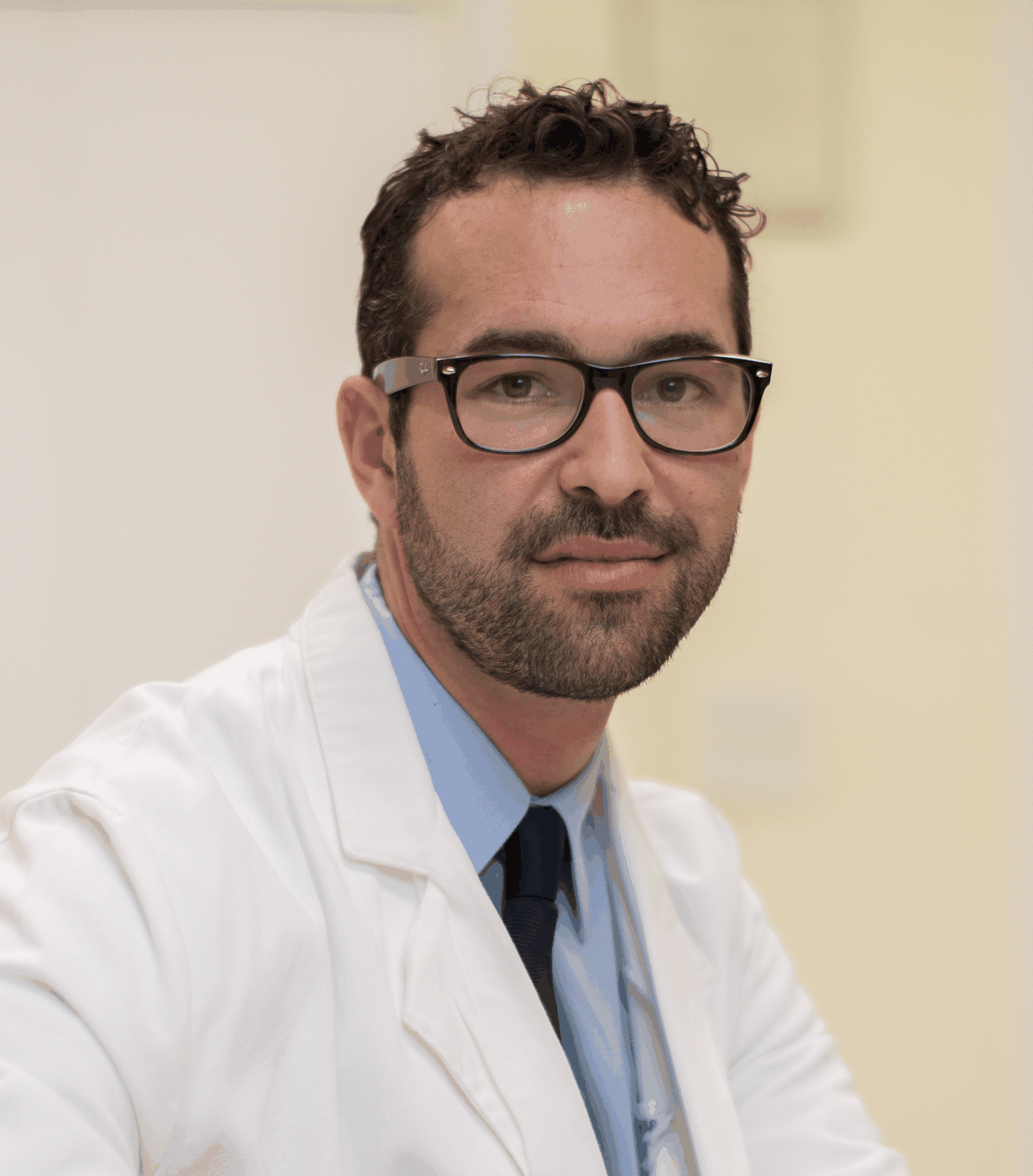
When my colleague Dr. Bernard of Indiana provided expert care, elected officials smeared her name in an attempt to intimidate abortion providers and scare them out of providing legal, safe healthcare.
Taking care of children who have been raped is one of the toughest parts of my job as an abortion provider in North Carolina. In addition to the unimaginable trauma that these young people endure, shame and stigma often prevent them from seeking medical care and assistance from trusted family or friends.
Minors often delay seeing a healthcare provider about their pregnancy because they are unaware they are pregnant or are scared to disclose the pregnancy or the circumstances surrounding it, especially if they are sexually assaulted. State requirements for survivors to report instances of sexual abuse to the police in order to get healthcare ignore the lived experiences of people being disbelieved, punished and targeted by police and the state.
I am currently able to provide safe abortion care for patients and families faced with these tragic circumstances in North Carolina. I am also able to care for many other patients who find themselves pregnant, but determine this is not the time to start or grow their family. I am able to care for patients whose fetus receives a devastating diagnosis, and they decide to end a desired pregnancy.
As we witness states quickly move to ban abortion, including for children and survivors of sexual assault, I worry that the kind of compassionate healthcare I am able to provide patients could be short-lived, not only for North Carolinians but for the hundreds of people forced to travel here to have an abortion.
History tells us that the current legislative leadership in Raleigh will stop at nothing to push abortion out of reach for the people in this state if not try to ban it entirely. Anti-abortion lawmakers in the General Assembly have already publicly indicated their intent to pass more restrictions on reproductive health care should they secure the votes they need in the November elections to override Governor Cooper’s veto. We should take them at their word.
State lawmakers in Ohio and many of our neighboring states have already taken autonomy away from people, families, children and survivors of sexual assault. These politicians have taken control of people’s lives, bodies, and futures. I fear that North Carolina will be next if we don’t vote for candidates who vow to protect our reproductive freedom in November.