
Mick Mulvaney: What I learned from testifying before the Jan. 6 committee
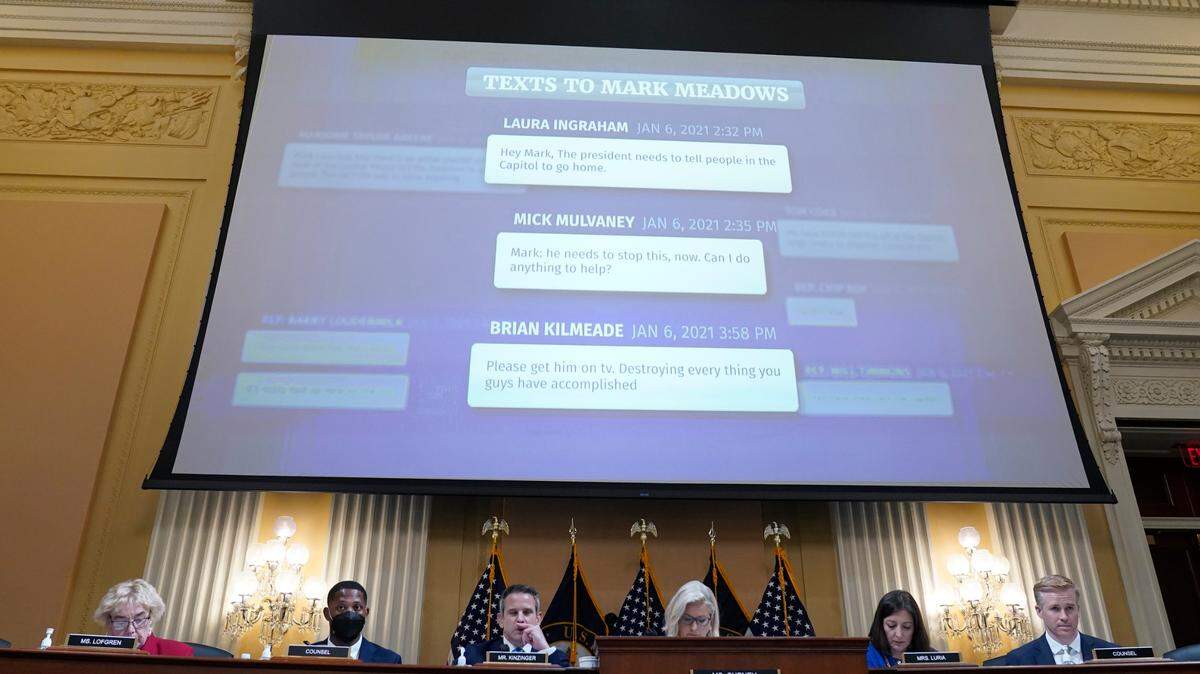
Last month in these pages I encouraged people, especially Republicans, to watch the Jan. 6 committee’s televised hearings.
I did that as a former member of the Trump administration, and as someone who had defended the former president for more than a year after the Capitol riots. I wrote it as a critic of the members of the House select Jan. 6 committee, of its structure, and even its very existence. I wrote it as a former Republican member of Congress who believes that Jan. 6, 2021 stands as a dark day in our nation’s history.
But I also wrote it essentially as an outsider looking in.
That changed July 28, when the committee called me to testify. After being interviewed by the committee, my basic premise — that it is terribly flawed, but still producing something of value — has only been reinforced.
At first, it seemed there was little I could tell the committee relevant to its inquiry. I had some texts and tweets on the day of the riot, and I provided some general background into how a West Wing operates; how people might get into, or excluded from, meetings with the president, for example. Nothing too interesting.
What I also had, however, was some insight into the days after the 2020 election. I had been a national co-chair of Catholics for Trump, was a media “surrogate” for the campaign on television, and was involved in a few leadership phone calls as votes were still being counted.
Along those lines, the committee had a text I had sent shortly after Nov. 3, 2020. At that point, Arizona still had not finished counting votes, and I was still publicly making the case that there were enough votes outstanding to allow Trump to win that state.
However, on a campaign phone call, the head of the Republican National Committee, Ronna McDaniel, commented that Trump had lost Arizona. I was stunned. I immediately texted her, Jared Kushner, and others from the campaign: “I’m getting this sinking feeling that everyone other than me thinks we have lost this election. I am out there telling everyone we haven’t. If people know something I do not, I would appreciate it if you would let me know. It is better for me not to do TV, and keep my mouth shut, than to do TV and say we have a chance when the people in the know know that we do not.”
One case the committee has been trying to make in the hearings is that people at the campaign knew Trump lost the 2020 election and told him so. Indeed, many have already testified to exactly that. The committee will likely use my text as additional evidence on that point.
Would that text have seen the light of day but for the committee? Unlikely. Might it convince people that even members of his innermost campaign circle knew that Trump had lost the election? Perhaps.
But the text is truthful and accurate. And it was coming from someone who not only voted for the president, but worked in his administration and campaigned to get him re-elected. If it helps anyone make up their minds, on their own, that Trump lost the 2020 election, then it has some value.
The committee itself was exactly what I had expected. It was professional: the staff lawyers who interviewed me were diligent, courteous, and well-prepared. But it was undeniably political: the committee does not exist to determine whether Donald Trump’s face should go on Mount Rushmore; it exists to try to damage him politically. And there is certainly no one on the committee who considers it their responsibility to defend him.
To the contrary, every single person involved most likely believes it is their job to make him look bad. The committee even went so far as to prohibit me from recording my own testimony — arguably so that they can control the narrative of the information that gets out.
But the committee is bringing facts to light that people would otherwise never see. That doesn’t change just because it is biased. If it sheds light on the truth of Jan. 6, then it has value.
People should watch, and make up their own minds.
This story was originally published August 5, 2022 at 5:00 AM.